Request a Demo
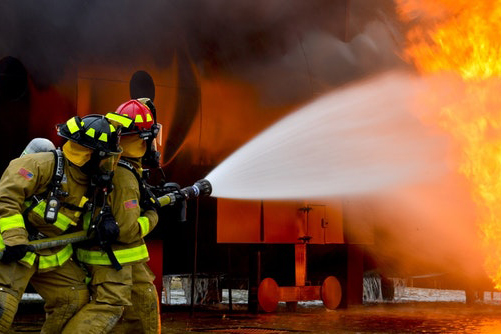
Singapore’s National Environment Agency (NEA) issued a circular on March 15, 2024, announcing its decisive steps to eliminate the use of fire-fighting foams that contain PFAS chemicals listed under the Stockholm Convention. Industry stakeholders are encouraged to familiarize themselves with the upcoming eliminations of such fire-fighting foams and take the necessary actions to ensure compliance.
As a party to the Convention, Singapore aims to eliminate and/or restrict production and use of persistent organic pollutants (POPs). Three groups of PFAS chemicals are listed under the Convention, with time-limited exemptions for usage in fire-fighting foams for PFOA, its salts and related compounds and PFOS, its salts and related compounds. The exemptions under the Convention will expire in December 2025. Moreover, there is no exemption under the Convention for the usage of PFHxS, its salts and related compounds in fire-fighting foams.
Consequently, starting from January 1, 2026, Singapore will phase out the import and use of firefighting foams containing PFOA and PFOS, including their salts and related compounds. After January 1, 2026, fire-fighting foams containing these three PFAS chemicals will still be allowed only if the concentrations of the trace contaminants within the foams are below the respective threshold limits as shown here:
PFOA, its salts and related compounds: 25 ppb
PFOS, its salts and related compounds: 10,000 ppb
PFHxS, its salts and related compounds: 100 ppb
To ensure compliance, companies storing or using fire-fighting foams containing PFOA, PFOS, PFHxS, their salts, and related compounds at or above the respective threshold concentrations will be required to engage the services of Toxic Industrial Waste Collectors (TIWCs) licensed by the National Environment Agency (NEA), which are capable to safely collecting and disposing of such fire-fighting foams.
The NEA also provides a list of affected materials, for more specific information, see the table below.
List of HS and Product Codes of the Affected Materials | |||
Chemical | HS Code | HS Description | Product Code |
Perfluorooctanoic acid (PFOA), its salts and related compounds | 38130000 | Preparations & Charges for FireExtinguishers & Charged FireExtinguishing Grenades (KGM) | PCDPFA111 |
84241010 | Fire Extinguishers for Aircraft Use (NMB) | ||
84241090 | Other Fire Extinguishers (NMB) | ||
Perfluorooctane sulfonic acid (PFOS), its salts and related compounds | 38130000 | Preparations & Charges for FireExtinguishers & Charged FireExtinguishing Grenades (KGM) | PCDPES111 |
84241010 | Fire Extinguishers for Aircraft Use (NMB) | ||
84241090 | Other Fire Extinguishers (NMB) | ||
Perfluorohexane sulfonic acid (PFHxS), its salts and related compounds | 38130000 | Preparations & Charges for FireExtinguishers & Charged FireExtinguishing Grenades (KGM) | PCDPFH111 |
84241010 | Fire Extinguishers for Aircraft Use (NMB) | ||
84241090 | Other Fire Extinguishers (NMB) | ||
These measures underscore Singapore's commitment to environmental protection and align with the objectives of the Stockholm Convention. By phasing out fire-fighting foams containing PFAS, Singapore aims to mitigate the potential risks posed by PFAS chemicals and contribute to global efforts to reduce the presence of POPs.
The NEA’s official circular is available here.