Request a Demo
The chemical sector plays an important role in modern society, and its output value accounts for 7% of the world's total GDP and creates around 1 billion jobs globally, beyond all this the outputs of the chemical sector are ubiquitously found in all aspects of daily life. In China, the output of the chemical sector accounts for 12% of GDP, which implies that its development is of great importance to economic development. However, the pollution problems inherent in chemical enterprise are serious and in recent years, the occurrence of high-profile accidents has underscored the numerous issues facing China’s chemical sector. To mitigate against some of the most deleterious impacts of China’s vast chemical sector the government has come up with a policy of sequestration. To explain further, China has designated large plots of land in areas of low environmental risk and far away from heavily urbanized areas. These plots of land know as chemical parks will be the home for the majority of China’s hazardous chemical enterprise in the future.
Hazardous chemical manufacturers in densely populated urban areas that do not meet the minimum safe distance requirements are required to be upgraded to local standards, relocated to standard chemical parks or closed down under the national guidance [1]. Small and medium-sized enterprises (SMEs) and large enterprises with major risks are required to complete the relocation and transformation by the end of 2020, and the rest should relocate before the end of 2025. More than 80% of hazardous chemicals manufacturers need to relocate and/or transform before the end of 2020, according to Han Jingyou, researcher of Ministry of Industry and Information Technology (MIIT). “Chemical parks are key to relocating chemical manufacturers and stimulating transformation. So the construction of these chemical parks has a significant impact on the development of the enterprises located within,” he said at 2019 China Chemical Industry and Chemical Park Forum (Chemlinked News [2]), “more attention should be paid to the construction of chemical parks”.
By the end of 2018, there were around 670 chemical parks in China, 14 of which were ultra-large parks with an output value over 100 billion yuan, according to China Petroleum and Chemical Industry Federation (CPCIF). “China chemical park has entered a new stage of high-quality development”, said Li Shousheng, president of CPCIF. Gu Xiulian, the Vice Chairman of the Standing Committee of the Tenth National People's Congress also affirmed the achievement of chemical parks. “The construction of China's chemical park started relatively late, but the speed of development is quite fast, and it has become the important carrier for the high-quality development of the petrochemical industry.” She also emphasized that rectification of issues such as low utilization of environmental resources and weak governance should be prioritized.
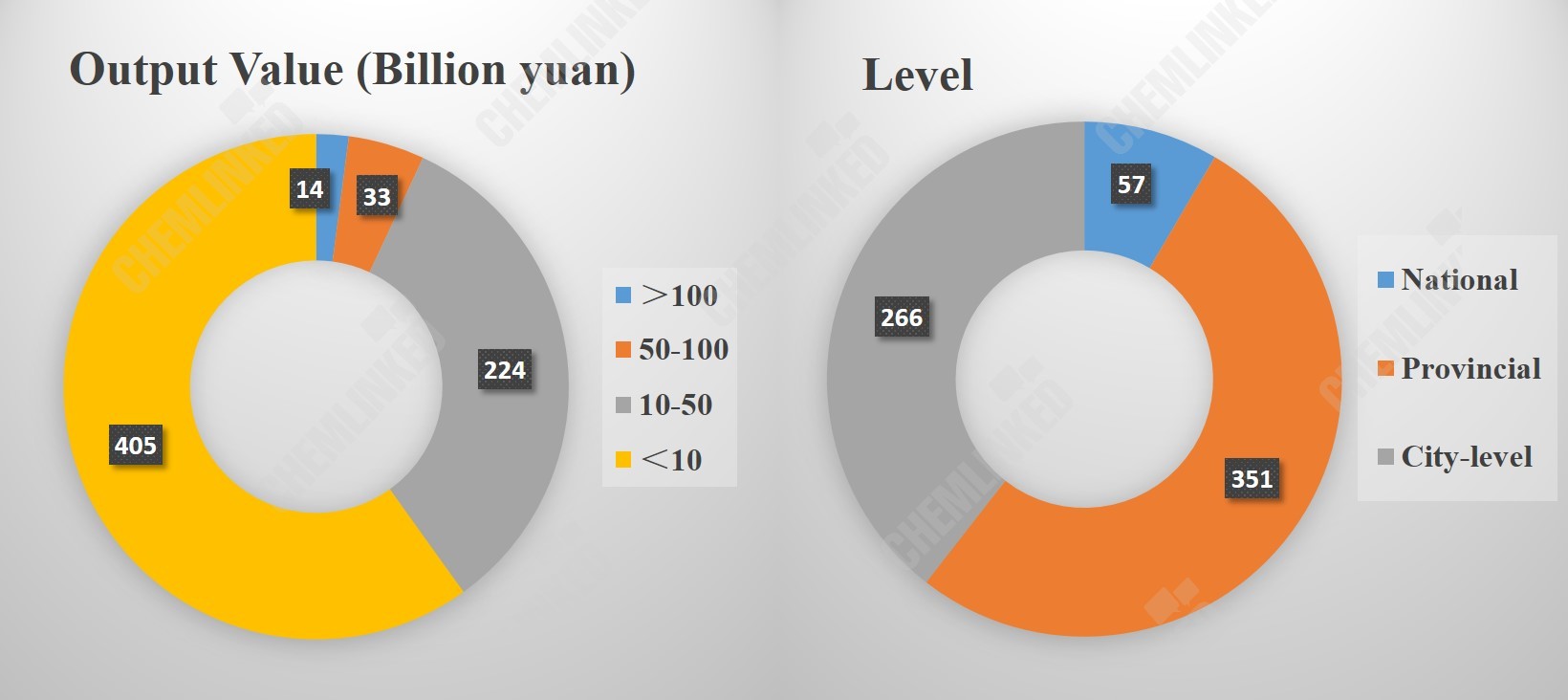 Figure 1. Distribution of China's chemical parks
Li Shousheng also listed the major problems in the high-quality development of china chemical parks:
Infrastructure and resource issues
Management is not standardized
Agglomeration effect is not significant
Social responsibility needs to be strengthened
Infrastructure and resource issues
Due to the lack of overall planning chemical parks face problems such as poor layout and lack of important. In China, many chemical parks are filled with manufacturers of primary products and raw materials, and lack manufacturers of mid-range and high-end products. Enterprises in the park have no connection and cannot form an optimized industrial chain, which is not conducive to the long-term development of the park. This is an important reason for the decentralization of resources, capital and markets, and leads to a lack of core competitiveness.
Management is not standardized
Affected by the level of economic development in different regions, industrial basic resources and market conditions, the level of development of China's chemical industry parks is uneven, which makes it difficult to carry out standardized management. Especially for management of safety and environmental protection, including logistics transportation management, production scheduling management, safety responsibility supervision, waste disposal, digital and intelligent management etc. Compounding this issue is a paucity of reference standards regulating activities within chemical parks, issues which are further exacerbated by lack of a management agency to undertake primary oversight and ensure enterprise responsibilities are fulfilled and management personnel are of sufficient quality. The strict development of chemical park construction and access standards and the establishment of a standardized management system will help to improve the current situation.
Agglomeration effect is not significant
Generally, the larger scale and the agglomeration effect are the biggest advantages of chemical parks. However in most chemical parks there is insufficient coordination and cooperation between enterprises. To ensure high-quality development, chemical industry parks must operate under a new model of mutual benefit including cooperation on supply of raw materials, logistics, centralized supply, unified waste management, unified management and comprehensive utilization of resources to give full play to the advantages of chemical parks.
Social responsibility needs to be strengthened
In order to enhance the public's recognition of the chemical sector, it is necessary to strengthen the awareness of enterprise social responsibility. Responsible Care, the global chemical industry's unifying commitment to the safe management of chemicals throughout their life cycle, is being widely promoted in China. Zhu Ji, the chairman of AICM, called on all enterprises and parks to work together to carry out responsible care in his speech. “Responsible Care is a globally recognized standard for the chemical industry, which is based on safety, environmental protection and health. The goal is to create a harmonious environment for the chemical industry and society, enhance public awareness and confidence in chemical industry, and ultimately promote the sustainable development of the chemical industry.”
With the joint efforts of the government, parks and enterprises, China is now embarking on a new era of chemical sector reform with chemical parks earmarked to play a pivotal role. According to a press release [3] made by the State Council Information Office, recent work related to the chemical park includes visiting and evaluating parks, constructing hazardous chemicals safety risk monitoring and early warning system and formulating the safety risk investigation guidelines, etc. At the same time, provincial governments are also being urged to speed up the development of relevant guidance documents for the construction and evaluation of chemical parks.
In such a rigorous reform environment, the chemical industry is facing many new challenges and encountering new opportunities. On one hand, with the construction of a new system in chemical parks, manufacturers will enjoy the convenience of the park and optimize their production processes through cooperation with other companies in the park. On the other hand, for some manufacturers, the large costs involved in upgrading or relocating to a park is a major burden. Small and medium-sized enterprises (SMEs) are particularly vulnerable as they often lack both the technical capacity required to comply with stringent technical requirements and the finances needed to buffer the cost of transforming their production conditions to meet new standards. For SMEs working in highly competitive segments of the industry particularly sectors with supply/production overcapacity, closing down could be the only option.
Reference:
[2] Chemlinked News
[3] Press Conference