
 Request a Demo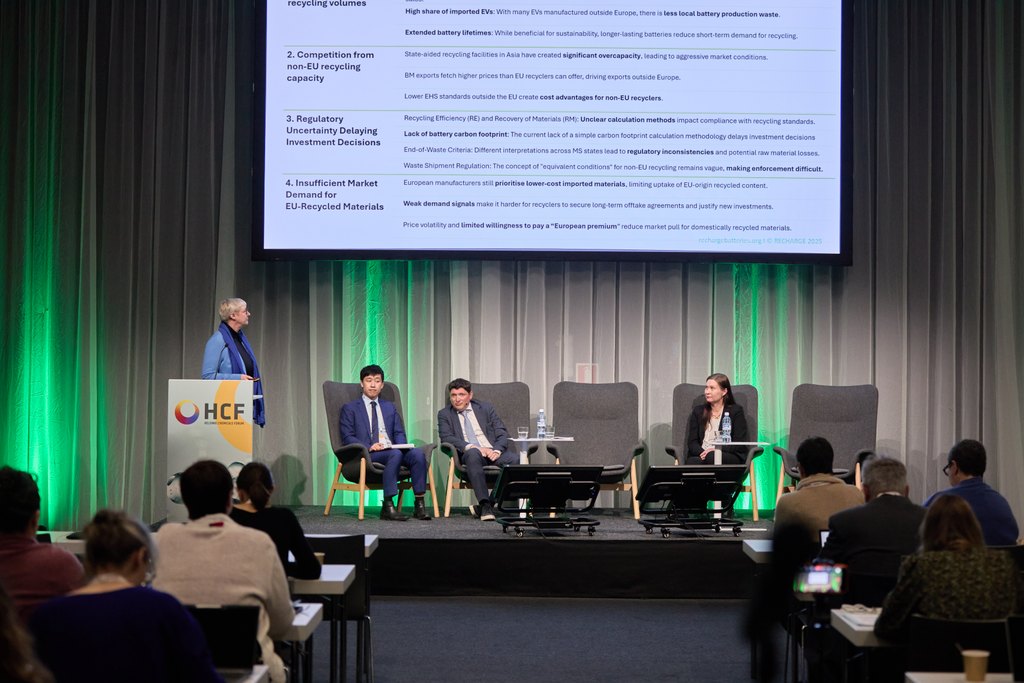
The transition from fossil fuels to a renewable energy economy has ushered in the "Age of Metals," where batteries serve as the cornerstone of clean mobility and industrial decarbonization. However, as the demand for electric vehicles (EVs) and stationary storage scales, Europe faces a dual challenge: ensuring a stable supply of critical raw materials (CRMs) and establishing a truly circular value chain.
At the Helsinki Chemical Forum 2026, held on April 15, a panel of experts convened to discuss the alignment of battery and recycling regulations to maximize the reuse of these essential materials.
The discussion highlighted that while the EU Battery Regulation is a global trailblazer, significant hurdles remain in its practical implementation. The panel, moderated by Raymond (Director at REACH24H/ChemLinked), brought together voices from industry associations, research institutions, and the European Commission to bridge the gap between regulatory ambition and industrial reality.
Building a Domestic Value Chain and Strategic Autonomy
A recurring theme throughout the forum was the necessity of a value chain approach to secure Europe’s strategic autonomy. James Watson, Director General of European Metals, emphasized that the future of European industry depends on its ability to develop domestic capacity for both primary production and recycling. According to industry estimates, Europe needs approximately 15 new recycling facilities for battery-related CRMs by 2030 to meet current benchmarks.
However, building infrastructure is only half the battle. The industry is currently grappling with a "leakage" of valuable secondary materials. "Black Mass"—the shredded remains of batteries containing lithium, cobalt, and nickel—is frequently exported to regions outside Europe, such as China and India, where buyers can often offer higher prices. This trend undermines Europe’s circular economy goals and its efforts to reduce import reliance.
To maintain true metal autonomy, Watson argued that Europe must move beyond setting targets and focus on aggressive implementation. This involves not only speeding up the permitting process for new mines and recycling plants to under 15 months but also bridging the massive financial gap between the EU and global competitors like the US and China. The experts called for the creation of robust industrial support mechanisms, such as production-based subsidies and guaranteed off-take agreements, to ensure that domestic recyclers can compete with international buyers who currently outbid them for European scrap.
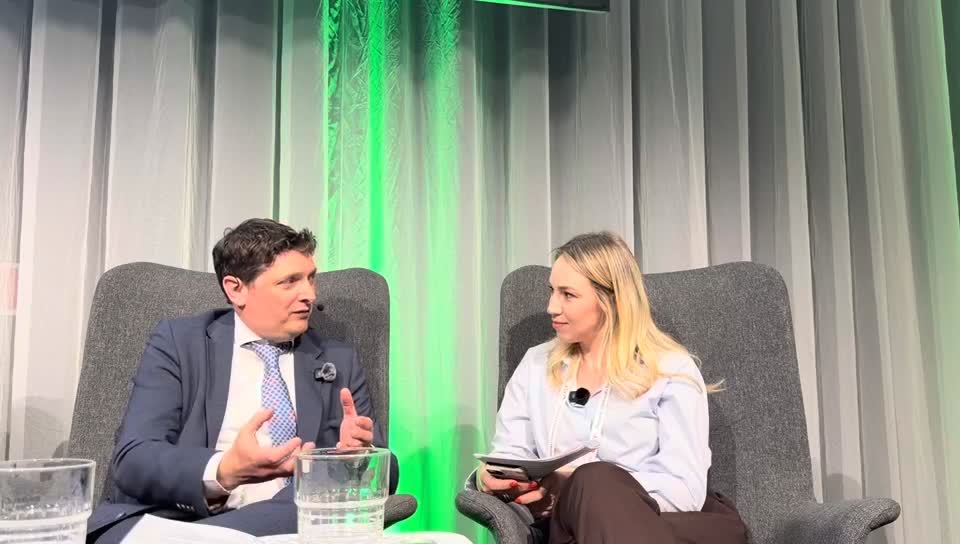
In our exclusive interview with Watson, he emphasized the need for a "made in EU approach" that works with like-minded partners while developing European off-takers, with the battery business being a prime example of an industry that needs boosting. He pointed to the Industrial Accelerator Act as recognition that "batteries are part of our today," noting that policy frameworks must enable collaboration with leading companies from China, Japan, and South Korea while ensuring European success.
Furthermore, the digitalization of waste tracking is seen as a critical tool to enforce "due diligence" and ensure that materials like Black Mass are processed within the Union rather than being leaked to third countries.
Harmonizing the Single Market for Waste
The effectiveness of recycling is often stifled by administrative fragmentation across EU member states. An expert pointed out that "silly rules"—such as specific blue ink requirements in Austria—hinder the movement of battery waste across borders. Ilka von Dalwigk from RECHARGE noted that it is currently easier to ship black mass to Indonesia than to transport it between neighboring European countries.
Alexander Wilgas, the Policy Officer at the European Commission (DG Environment), acknowledged these frustrations. He highlighted that the upcoming Circular Economy Act, expected by the end of 2026, aims to address these bottlenecks by fostering greater harmonization and digitalization. The goal is to create a seamless Single Market for Waste where materials can flow efficiently to high-quality recycling centers, regardless of national borders.
Science-Based Risk Management vs. Hazard-Based Restrictions
A point of contention remains the regulatory approach to chemical substances within batteries. Industry representatives advocated for a risk-based approach rather than one solely focused on intrinsic hazards. Since batteries are sealed units, the actual exposure risk to hazardous metals like lithium or cobalt during their use phase is minimal.
Watson argued for more "regulatory pragmatism," suggesting that overly restrictive hazard-based policies could inadvertently stifle the very technologies needed to fight climate change. The industry calls for a balanced framework where environmental protection is upheld through rigorous risk management without compromising the competitiveness of the European battery ecosystem.
"We are highly in favor of environmental protection. What we are asking for is a more pragmatic, science-based approach that looks at risk, not just hazard." — James Watson, European Metals
Technical Innovation and the Role of R&D
From a technical standpoint, the recycling landscape is becoming increasingly complex due to diversifying battery chemistries. Päivi Kinnunen from VTT Technical Research Centre explained that while high recovery yields are achievable for Nickel-Manganese-Cobalt (NMC) batteries, Lithium Iron Phosphate (LFP) batteries present a different economic challenge due to the lower value of their constituent materials.
Innovation must therefore focus on:
Impurity Management: Ensuring secondary materials meet the high-purity standards required for new battery manufacturing.
Value Chain Integration: Exploring synergies between mining waste and battery recycling to maximize material recovery.
Pilot Infrastructure: Providing companies with the facilities to scale up new technologies from the lab to industrial application.
As Europe moves toward the 2031 and 2036 milestones for recycled content targets, the alignment of regulations will be the deciding factor in the success of its green transition. For the industry, the message is clear: circularity is no longer a "nice-to-have" but a core requirement for survival in a resource-constrained world. By aligning battery and recycling regulations, Europe can turn its end-of-life batteries into a strategic reserve of critical materials, securing its place at the forefront of the global energy transition.
Exclusive Interview:
Our journalist Ola Lilaj also sat down with James Watson from the European Metals Association, diving deeper into regulatory challenges and opportunities for battery recycling. The video clip can be accessed below: