Request a Demo
On February 6, 2023, Singapore Standards Council published the revised GHS Implementation Rules. They are:
SS 586-2: 2022 Part 2: Globally harmonized system of classification and labeling of chemicals – Singapore's adaptations
SS 586-3: 2022 Part 3: Preparation of safety data sheets (SDS)
The revised standards adopt the requirements set out in GHS Rev. 7, with combustible dust elements included from GHS Rev. 8. They took effect on February 6, 2023 with a two-year grace period.
In this article, ChemLinked will dive into the key changes in SS 586-2 and SS 586-3 and offer tips for compliance with the revisions.
SS 586-2
GHS classification (See Table 1-4)
Including sub-categories 1A and 1B, pyrophoric gas
Adding a new physical hazard class — desensitized explosives
Changing the application scope of Cat. 4 of flammable liquids
| 2014 version | 2022 version |
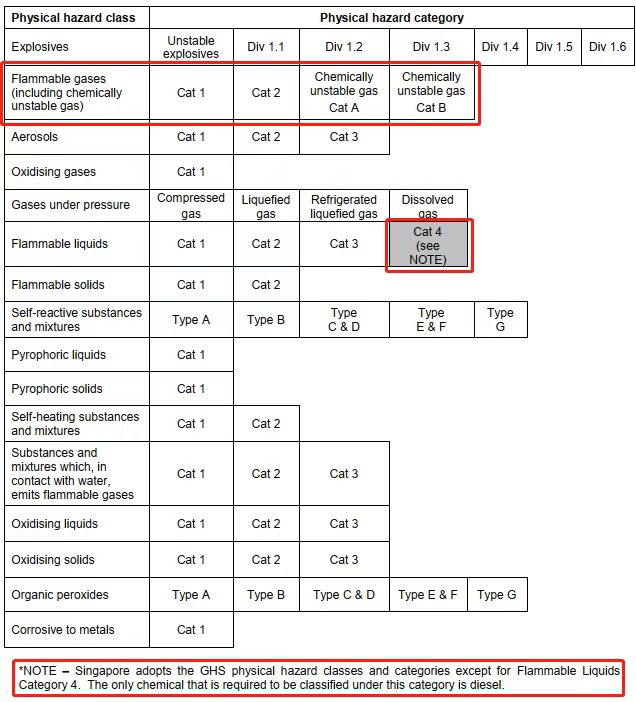 | 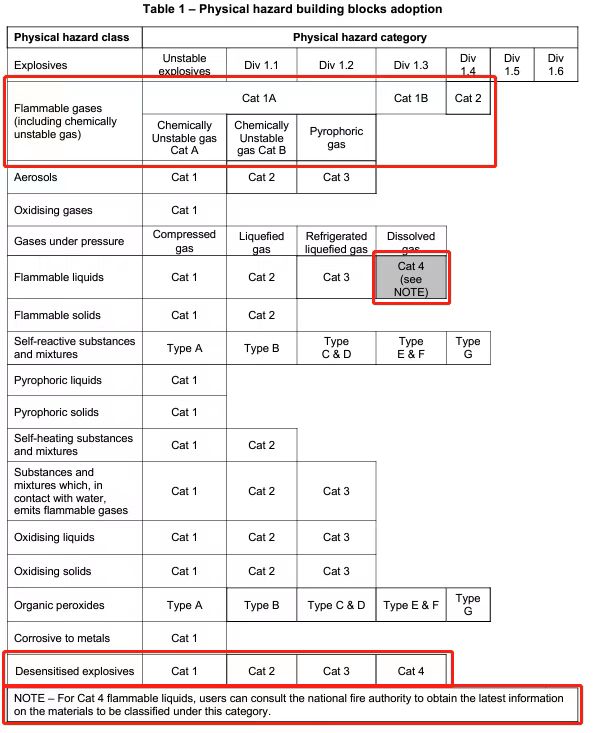 |
Table 1 – A comparison of 2014 and 2022 version of SS 586-2 on GHS building blocks
Consolidating generic cut-off value* for Acute toxicity hazard class at 1%
Adding generic cut-off value for Aspiration hazard (Cat.1) at 1%
* Generic cut-off value is the threshold of any classified impurity, additive or constituent in a substance or mixture, above which the substance or mixture is classified.
| 2014 version | 2022 version |
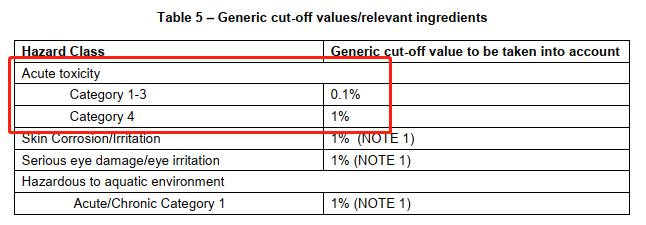 | 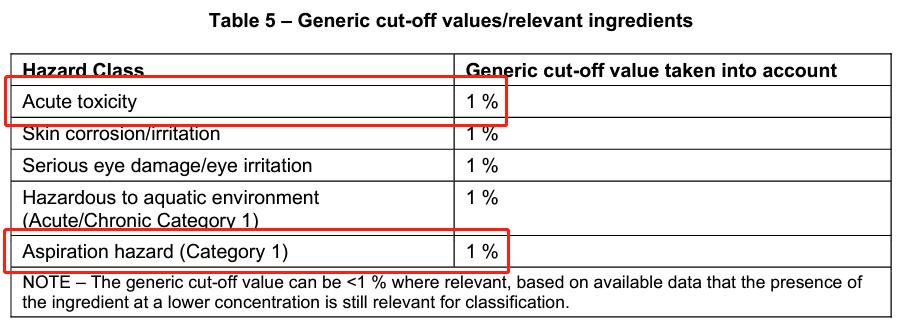 |
Table 2 – A comparison of 2014 and 2022 version of SS 586-2 on generic cut-off values
Introducing sub-categories for the classification of mixtures containing carcinogens and reproductive toxicants
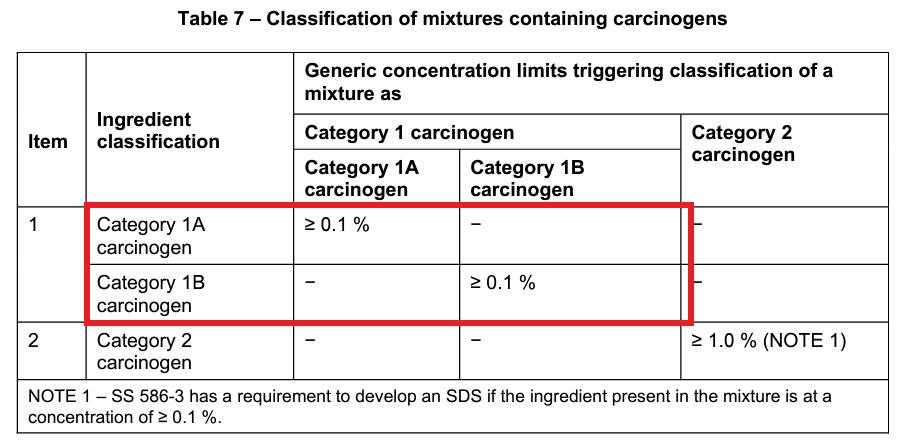 Table 3 – Classification of mixture containing carcinogen
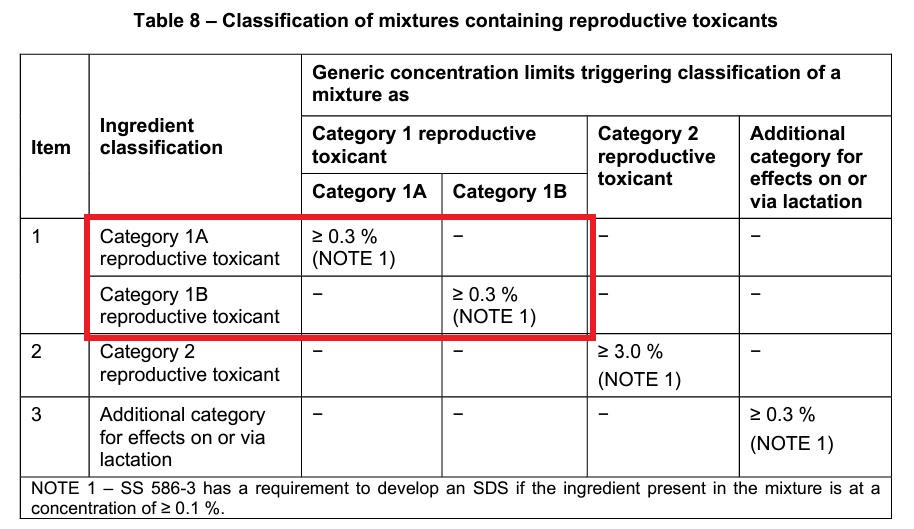 Table 4 – Classification of mixture containing reproductive toxicant
2. Labeling requirement
Including warning statement on combustible dust explosion hazard in label
Adding a new sub-section to provide clarity on in-process sample labeling
Inserting a new section to elaborate on labeling for goods stored in workplaces for domestic use and export respectively
Adding Annex B to illustrate examples of labeling for chemicals supplied in small containers/packaging (See Figure 1 and 2)
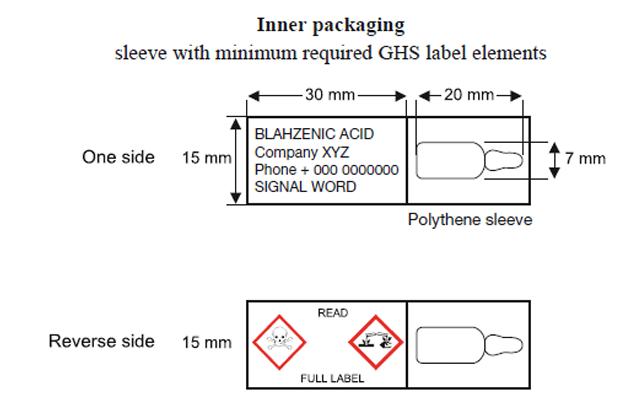
Figure 1 – Example of labeling for small packages
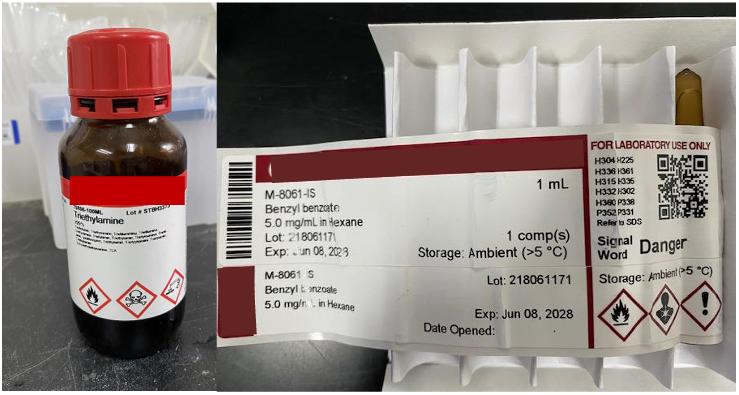 Figure 2 – Example of labeling for small containers
SS 586-3
SDS cut-off limits** (See Table 5)
Consolidating the SDS cut-off limits for Acute toxicity (Cat 1-4) to 1%
Adjusting Aspirational hazard (Cat 1) from 10% to 1%
**SDS cut-off limit is the threshold of any classified constituent in a substance or mixture, above which an SDS is required, and included within the SDS.
| 2014 version | 2022 version |
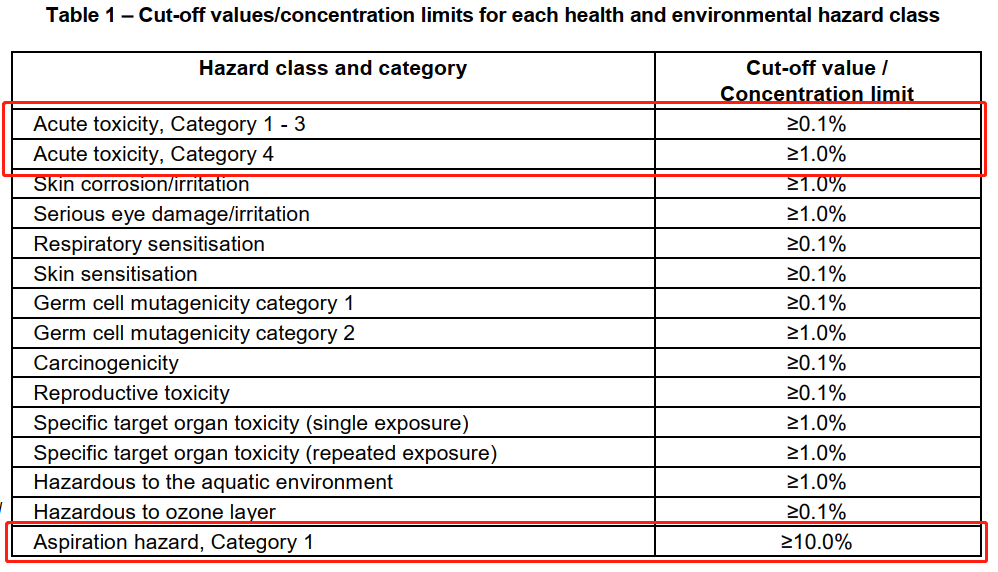 | 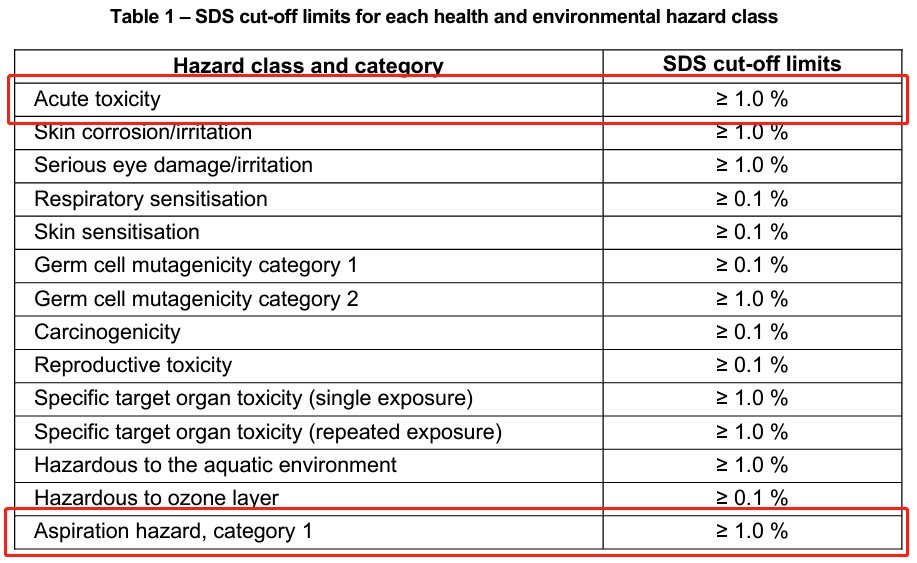 |
Table 5 – A comparison of 2014 and 2022 version of SS 586-3 on SDS cut-off limits
2. SDS content
| Section | Key changes |
Section 2 – Hazard identification |
|
Section 5 – Firefighting measures |
|
Section 9 – Physical and chemical properties |
|
Section 14 – Transport information |
|
3. CBI protection
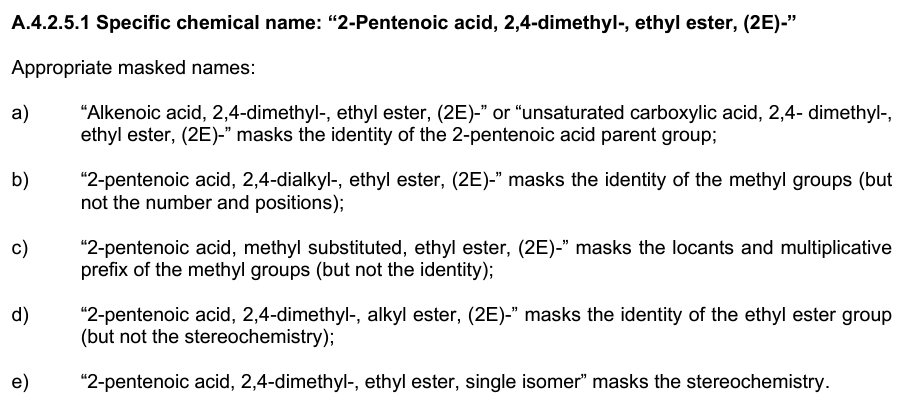
Amending Annex A to introduce conditions of masked names for confidential business information (CBI)
An example of a masked name is shown below:
Recommended actions
Reassess the hazard class of your products based on the revised GHS classification and generic cut-off value.
Evaluate whether an update to your SDSs is necessary by reviewing the assessment results of your products' GHS classification and comparing them to the latest SDS requirements.
Review the changes in labeling content and format to check if your labeling is compliant with the latest labeling requirement.
Select masked names for your products considered as CBI if necessary.