Request a Demo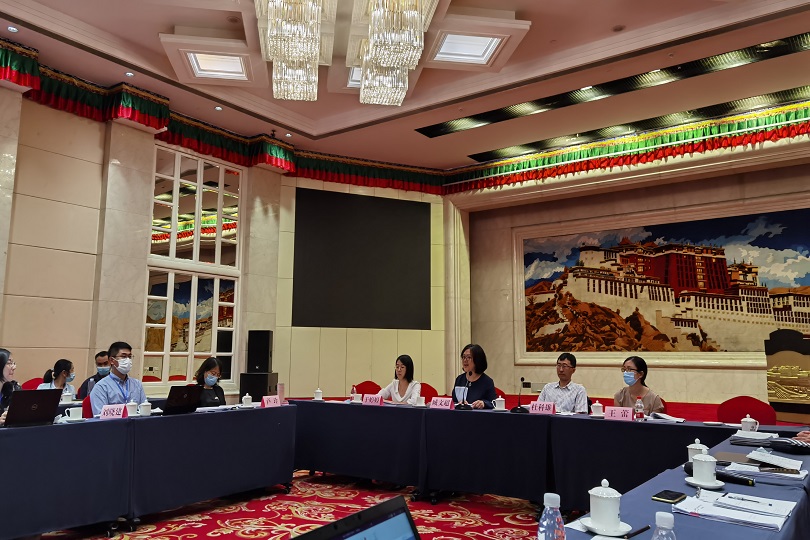
On September 4th, 2020, in the final hours of a two-day workshop on environmental management registration of new chemical substances, representatives from enterprises and laboratories nationwide expressed their concerns over the Measures for the Environmental Management Registration of New Chemical Substances (MEE Order No.12) [1] and the Guidance on Environmental Management Registration of New Chemical Substances (Draft) [2]. The workshop was held by Solid Waste and Chemicals Management Center (SCC) under the Ministry of Ecology and Environment (MEE).
Quest for More Exemptions
Several representatives, mostly from pharmaceutical companies like STA Pharmaceutical and Asymchem, suggested that the definition of “research” could be further clarified and narrowed down, so that an exemption or a grace period would be granted to new chemical substances which are used in laboratories for scientific research purposes.
They held that, for one thing, chemical substances used in laboratories are usually in smaller volumes and pose less environmental risks; for another, it could take plenty of time for an R&D-oriented enterprise to prepare for even simplified registration of such substances. They also wondered whether any pharmaceutical intermediates and excipients could be exempted from registration or notification requirements.
Doubts Surrounding PBT Substances
Many representatives made comments on the criteria for determination and screening of persistent, bioaccumulative and toxic (PBT) chemicals. For instance, a representative from Honeywell argued that the criteria in the draft Guidance are not sound enough and need to be improved based on international practices.
Another representative argued that more and more products are designed to be persistent for the sake of their function, and asked whether any adjustment could be made in the risk evaluation criteria for substances with only persistence.
Calls for Diversified Data Sources
Data sources are another focus of attention among industry players. Representatives from P&G, Merck, BASF, Porton, etc. hoped that non-testing data, such as those from quantitative structure–activity relationship models (QSAR models), read-across approaches and literature, can be used for more data items.
A representative from BASF took bioaccumulation data as an example to illustrate her worry about laboratory capacity. Since bioaccumulation data is needed for simplified registration applications, which will take up a considerable share of all applications, the huge testing demand will pose formidable challenges to laboratories in terms of their resources and capacity. But the problem will be readily resolved if alternative approaches can be adopted to obtain bioaccumulation data.
Questions on Extension of Information Protection
According to the draft Guidance, after the validity period (up to five years) of information protection ends, businesses are allowed to apply for an extension for a maximum of another five years when certain conditions are met.
However, it is also specified that where one or more holders of registration certificates or record notification receipts who intend to apply for the extension of information protection fail to submit the extension applications on time, the extension of information protection shall not be approved. One representative questioned the necessity of demanding submissions from all holders/recipients, because it can be difficult — if not impossible — to require joint actions from them if they are market competitors.
Responses from SCC
Mr. Du Kexiong, Deputy Head of the Division of Chemicals of the SCC, addressed some of the concerns at the workshop.
First, for the much-craved exemptions for low-volume substances or those used solely for research purposes, Mr. Du pointed out the difficulties in regulating them and thus concluded that it might not be feasible to set up such exemptions. Adjustments can be made to the provisions on pharmaceutical intermediates and excipients if sufficient argumentation materials are provided.
Second, he reaffirmed that the general principle of dealing with PBT substances has been established, as the new scheme is focused on addressing substances in large volumes and with large environmental risks. The authority is asking for more data, not tightening regulation on such substances.
Third, Mr. Du explained the rationale behind the data requirements laid out in MEE Order No. 12 and the draft Guidance, and promised that they will mull over the necessity of bioaccumulation tests in light of the opinions and comments they collected. In addition, the MEE is also considering setting up exemption conditions for requirements of chronic toxicity data and carcinogenicity data.
Lastly, with regard to extension of information protection, Mr. Du stressed that materials illustrating the necessity of extension must be provided. Where the substances in question have any environmental or health hazard, public scrutiny needs to be involved and EU’s requirements for information protection can be used as reference.
The public consultation on the draft Guidance ended on September 6th, and the official version is expected to be published in the coming months. ChemLinked will keep close watch and inform you of any developments.