

 Request a Demo
China has one of the largest chemical industries and markets in the world and the connection between China and international market is vital for both. After being merged with Zhoushan Port this September, Ningbo Port became the largest port in the world and the most important port for the import and export of chemical substances in China. After the Tianjin Explosion this August, an even greater volume of chemicals are imported and exported in Ningbo Port stretching the supervisory and enforcement capacities of port customs authorities. During REACH24h’s Chemical Regulatory Annual Conference 2015 in Hangzhou, Mr. Zongtao Wu from Ningbo Entry-Exit Inspection and Quarantine Bureau detailed the management and supervisory protocols and procedures used for hazardous chemical substances at Ningbo Port and gave some practical advice to industry concerning hazardous chemical import and export.
The import and export of hazardous chemical substances are supervised by the Port based on three major legislations:
Law of Import and Export Commodity Inspection and the implementation regulations
Regulations on the Control over Safety of Hazardous Chemicals (Decree 591)
Notice on Issues Related to Inspection Supervision of Import and Export of Hazardous Chemicals and Package (Notice No.30 [2012] of AQSIQ)
These three form the legal basis for supervision of both import/export and management of hazardous chemicals. The chemical substances managed by Inspection and Quarantine authorities fall into two major categories:
Chemicals that are listed in the Catalogue of Entry-Exit Commodities Inspected and Quarantined by the Competent Entry-Exit Inspection and Quarantine Authority (abbreviated to “Catalogue of Inspection and Quarantine”).
Other hazardous chemicals and packages that are currently not listed in the Catalogue of Inspection and Quarantine but are listed in the Inventory of Hazardous Chemicals (2015) (Please see CL articles for more details about the 2015 revision of the Inventory)
These chemicals have to be notified prior to entry and exit and then the inspection and quarantine authorities will conduct the on-site examination. Samples will be sent to qualified laboratories for further examination if necessary. After the inspection and examination, the competent authority will provide a Clearance Sheet for Outbound Goods if the chemicals meet the standards and regulatory criteria. If not, the importer or exporter will receive the Notice for Unqualified Outbound Goods or Inspection Certificate.
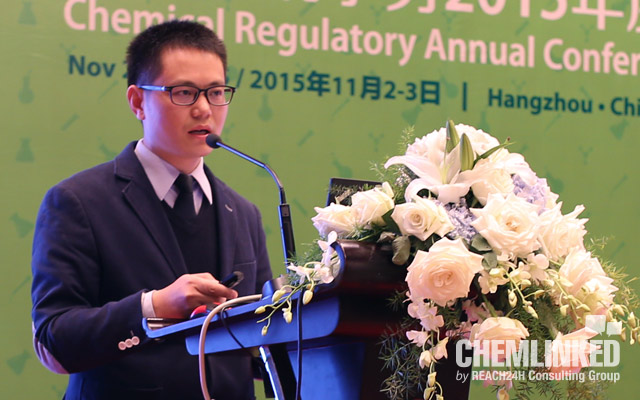 Mr. Wu also shared some information and experience from his practical work at Ningbo Entry-Exit Inspection and Quarantine Bureau. In 2014, 449 batches and 1093 thousand tons of hazardous chemicals were determined unqualified at Ningbo Port. The total value of the goods reached 1.2 billion US dollars. According to the Ningbo port statistics, 662 reasons were cited as causative reasons for inspection failures, most significant of these were:
79% of the disqualifications were due to the unqualified SDS and other safety labels and signs.
Unqualified packages are also a major reason for failures. The problems include:
Leakage of the packages
Poor quality of the packages
The quality and characteristics of the package conflict with the requirements in the contracts.
Mr. Wu urged the enterprises to fully understand inspection and quarantine requirements and put real effort into compliance work to avoid unnecessary financial losses and disruption of trading activities.




