Request a Demo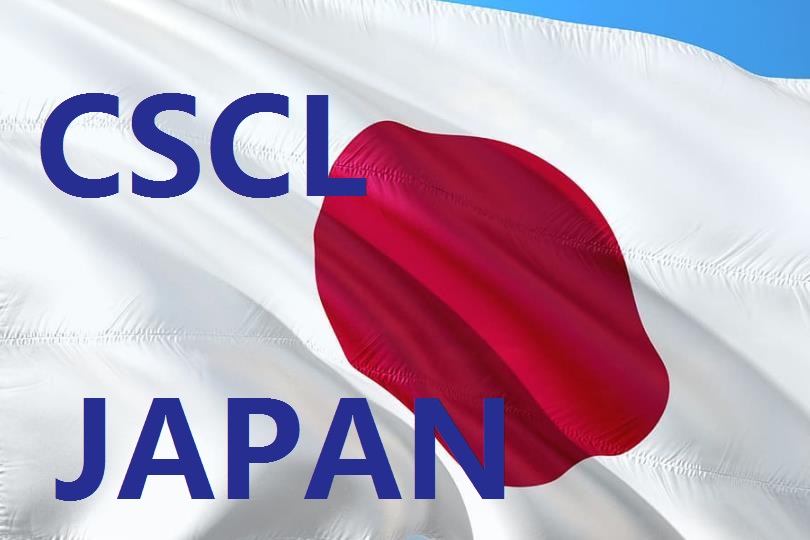
In Mar 2017, Japan’s government voted and passed the amendments to the Chemical Substance Control Law (CSCL) proposed by the Ministry of Economy, Trade and Industry (METI) and Ministry of Environment (MOE). The amendments included two major parts, which are two newly added chemical categories named “specified general chemicals” and “specified new chemicals”, and a newly introduced concept named “environmental release amount”.
According to the implementation plan of the Ministry of Economy, Trade and Industry (METI) and Ministry of Environment (MOE) issued in Dec 2017, the amendments regarding “specified general chemicals” and “specified new chemicals” would take effect on Apr 1st, 2018. But it wasn't until Feb 7th, 2018 that METI published the draft of the determination standards for “specified new chemicals” for public consultation. The standard is expected to take effect along with the amendments on the same date and the consultation period will last for a month.
The determination of the “specified new chemicals” is based on the determination methods for new chemicals which were published on Apr 22nd, 2011. If a chemical meets any of the following 3 standards, then it would be regarded as a “specified new chemical”:
Any of the evaluations in II.(3-1) of the determination methods is below 5×10⁻⁴mg/kg/day;
One result in (i) and (ii) is strongly positive and the other is positive and above;
The PNEC in II.(4-1) are:
Below 3×10⁻⁴mg/L for All 3 chronic toxicity tests; or
Below 3×10⁻⁵mg/L for 2 chronic toxicity tests and 1 acute toxicity test; or
Below 3×10⁻⁵mg/L for 1 chronic toxicity test and 2 acute toxicity tests.
Notes:
II.(3-1) includes a series of determination standards for screening toxicity tests.
(i) means the Ames test using bacteria under II.(3-1).
(ii) means the chromosome mutation test using mammal cells or Mouse Lymphoma TK Assay (MLA).
II.(4-1) includes a series of determination standards for eco-toxicology tests.