Request a Demo
The global economic and political environments are currently under immense pressure, and the conflicts between REACH-like compliance requirements and industry pressures are gradually becoming apparent. As reflected in the 15th Chemical Regulatory Annual Conference (CRAC) theme, "Together we break barriers", authorities in various countries are exploring different approaches to address industry concerns.
During this year’s CRAC on November 16, Ms. Zhang Peipei, a technical expert from REACH24H Consulting Group, provided an update on the latest developments and trends in REACH-like chemical regulations, including those in the United Kingdom, Turkey, South Korea, Switzerland and Brazil.
UK REACH, after extending its deadline, has proposed an alternative transition registration model (ATRm) that aims to implement more targeted management without the need to hold a complete replica of all the registration data on chemical substances held under EU REACH. Ms. Zhang said this means that Great Britain registrants may no longer be required to submit a complete set of toxicological data after the transition period, reducing the costs to industry associated with buying or accessing EU hazard information. However, the reduction in registration requirements does not signify relaxed regulatory requirements. The new model will set out a management blueprint by refining the information on "use and exposure" in Great Britain. More details are expected to be disclosed early next year.
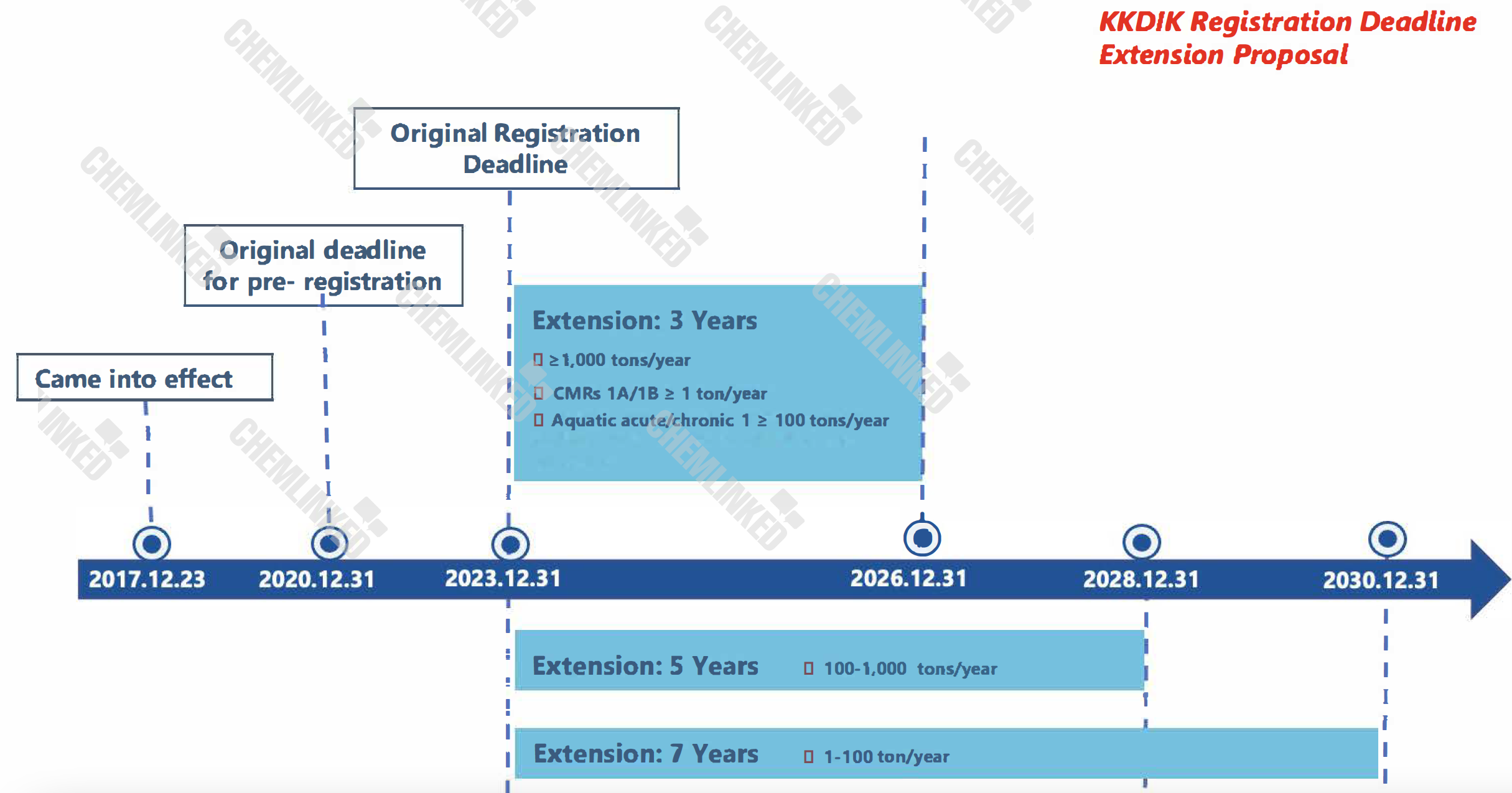
Another area of concern is the registration deadline for KKDIK in Turkey. As the deadline approaches, the registration rate remains unsatisfactory, making an extension of the deadline inevitable. According to Ms. Zhang, on November 14, substantial progress was made in the extension planning as the Turkish authority sent a draft extension proposal to local industry associations, seeking prompt industry feedback. Based on the draft, the authority intends to provide companies with a buffer period of 3-7 years, setting different deadlines based on tonnage and hazards (as shown in the diagram). However, it is worth noting that the extension proposal has not been formally released. More details, including the pre-registration deadline, are yet to be determined. The Turkish government is expected to announce the final extension bill in early December.
K-REACH has been regarded as a relatively successful implementation of a REACH-like regulatory framework, which has accomplished its first registration deadline for substances above 1,000 t/y and designated CMRs above 1t/y. However, it still faces significant pressures for lower tonnage band registrations, and the Korean authority are taking actions to reduce industry burdens, such as simplifying data requirements and expanding registration exemptions (CL news).
Regarding Swiss ChemO, although it only requires registration for new substances, its determination for existing substances is linked to EU REACH. Companies need to pay attention to their substances' registration status (if active), registration type (if full), and total tonnage band (whether it falls within the tonnage range) under EU REACH.
As for Brazil REACH bill(PL 6120/2019), the draft has cleared the Chamber of Deputies and is now send to the Senate for approval (CL news), and it resembles a simplified version of EU REACH. General substances need to be notified, while priority substances (PBT, CMR, ED, etc.) may require registration.
Ms. Zhang highlighted that cost reduction and efficiency improvement are common goals of REACH-like regulations. However, EU REACH itself is continuously evolving, particularly with the introduction of the EU Chemicals Strategy for Sustainability. This will bring about many changes in REACH management requirements, posing another significant challenge for REACH-like regulations. In today's globalized landscape, it is recommended that companies not only meet immediate market access requirements but also pay greater attention to market sustainability.