Request a Demo
The harmful effects of chemicals can be broadly categorized as acute or chronic. This broad distinction also serves as a regulatory divide for management of chemicals from a work safety and environmental perspective. In China hazardous chemicals are primarily governed by two authorities, the State Administration of Work Safety (SAWS) and the Ministry of Environmental Protection (MEP). The former is in charge of preventing chemical accidents in the work place, which generally involving the “acute risks”, while the MEP focuses on health, emission, and other environmental concerns.
As one of the most costly market-entry barriers, the “Measures for the Environmental Management of New chemical Substances (MEP Order7)” has became effective on 15 Oct 2010. Since then, a large number of hazardous chemicals are indulgently applied and released by the profit-driven companies. On 10 Oct 2012, MEP has promulgated the Order No 22, “Measures for the Environmental Management of Hazardous chemical Registration (Trial)”. The Measures required the HC companies to obtain registration certification of environmental management on hazardous chemicals. This is considered as an important supplement of environmental risks management. However, management on the new chemicals and HCs will differently impact the industry and economy as the two measures differs in aims, scopes, means and formations. Table 1 listes an explicit comparison between the two Measures.
Table 1. MEP Order 7 vs. Order 22
Category | Order 7 | Order 22 |
aim | To identify the risks of New Chemicals by collecting information from the notifying companies | To collect information from the HC producers and users on the volumes, hazardous profile, emissions of the HCs |
Major Responsible authorities | Chemical Registration Centre of the China Ministry of Environmental Protection (CRC-MEP) | Local environmental protection organization |
Information of the risks on new chemicals are collected at the national level as risks of a new chemical are unknown, while information of the HCs are collected from local environmental protection organizations in a bottom-up manner for risks of the hazardous chemicals are already recognized. | ||
Scope | New chemicals outside the Inventory of Existing Chemical Substances in China (IECSC) | chemicals included in the “Catalogue of Hazardous Chemicals", also known as the Chinese "C&L Inventory" |
The number of the new chemicals to be notified and the affected companies are more difficult to predict than the companies registering the HCs as the new chemicals are continously developed. | ||
Affected companies | R&D, manufacturing, importation, processing/using activities of the producers and importers of the new chemicals. | Manufacturing and using companies of the hazardous chemicals. |
The new chemical notifying companies are usually research and technology oriented companies while the HC manufacturing/using companies are characterized by poor technology and a lot of environmental concerns. | ||
Chemical classification | According to the test data from the submitted dossier, new chemicals are classified into general chemicals, hazardous chemical, chemical substance of priority environmental concern, i.e.,, the chemicals are classified during/after the notifying. | Chemicals included in the “C&L” inventory have already classified into three categories, the general HCs, “hazardous Chemicals Severely Restricted for Import and Export in China”(known as the “Toxic Chemicals Severely Restricted for Import and Export in China”), ”Hazardous Chemicals of Priority Environmental Concern”(HCPEC). |
Information submitted | Test data and risk assessment report on the new chemicals. | Categories, volumes, classifications, SDSs, usages of the HCs, Approval document of the Environmental Impact Assessment Report (EIA), Monitoring data of the HCs, and/or environmental risk assessment (ERA) report on the hazardous chemicals of priority environmental concern chemicals (HCPECs). |
Time and costs for the new chemicals notification are relatively higher as more animal test are involved while the HC registration requires more skills and knowledge for monitoring and estimation on the release and transfer of the HCs. | ||
certificate | “One substance, one certification” One companies can hold more than one certification for several chemicals | “One company, one certification” One company will be issued with one certification, and all the relevant HCs will be listed on the certification |
Post-registration | Registrant shall receive supervision from local environmental protection bureaus. Registrants of hazardous chemicals or hazardous chemicals of priority environmental concern shall report to the CRC-MEP the actual activity of the HC and/or the forecast of the chemicals in the following year. | HC companies shall annually report the category, hazardous properties, pollutant emissions, pollutant discharges, incidents, pollutant control measures of their HC relevant operations. The HCPEC companies shall submit environmental release and transfer registration report, and environmental risk management plan. |
Work Load ratio | 70% on notification and 30% on the post-notification supervision | presumably 40% on registration and 60% on post-registration supervision |
ERA and R&T Reporting Obligations upon the HCPEC Companies
According to the Order 22, the environmental risk assessment and release & transfer report are required for the hazardous chemicals of priority environmental concern. A third party could be appointed to compose the environmental risk assessment report for the companies. This report system will acquaint both the authorities and the company‘s better awareness of their environmental risk management capability. The HCPEC list has not been released yet. During a tripartite environmental ministerial meeting among China, Korea and Japan, a Chinese official revealed that the first batch of the HCPEC list would be formulated before 1 Mar 2013.
Another big progress in the release of the Order 22 is the public’s right to know. Although the release & transfer report system has its root in the EU’s Pollutant Release and Transfer Register (PRTR) and the Toxic Release Inventory (TRI) from United States, differences were found between them. The differences are listed in Table 2. .
Table 2. Differences between the Order 22 and PRTR or TRI in terms of the relase and transfer system
| Order No22 | PRTR or TRI |
publisher | Registered HC companies | Top-level national authorities |
Way of report | The release & transfer data was first submitted to the county environmental protection agencies and delivered to the national ministry in a level by level way, which might acquainted the organization at different level a better awareness of the environmental impact of the HCs in their jurisdictions. | Under the TRI, the gathered data was electronically submitted to the EPA headquarter, and the state-level agency will extract the information from the EPA headquarter. |
content | In addition to the data collection for the past year, the companies shall submit the management plan of the HCPECs. The authorities will check whether the company has fulfilled its plan by the end of the year. | Collections of the release & transfer data for the past year. |
The scope and classification of the HCs under Order 22 is presented in Figure 1. As shown in Figure 1, HCs could be classified as general hazardous chemicals, hazardous chemicals severely restricted for import and export and hazardous chemicals of priority environmental concern. Overlap will exist between the latter two categories of HCs.
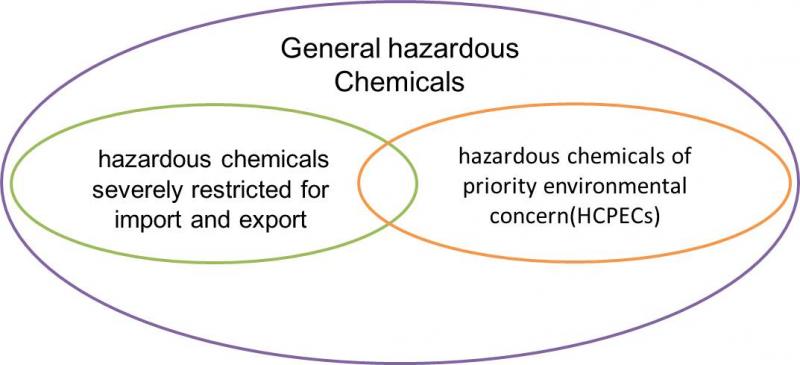
Figure 1. Classification of HCs under Order 22
If you want to track whether the substance of your concern is covered by the List of Toxic Chemicals Severely Restricted for Import and Export in China (2012), please enter Chemlinked Inventory Toolbox