Request a Demo
The Outline of the 14th Five-Year Plan (2021-2025) for National Economic and Social Development and Vision 2035 of the People's Republic of China put forward the goal of reducing total VOCs emission by more than 10%. VOCs governance will remain an important area of concern in the next five years.
At present, one of the prominent problems in VOCs governance is that most VOCs contained in raw materials and auxiliary materials used by enterprises are of high levels. The best way of reducing VOCs emission is to strengthen the source control, that is, using products and materials with low-VOCs, such as powder coatings, water-based coatings, solventless coatings and radiation-curable coatings, to replace solvent-based products.
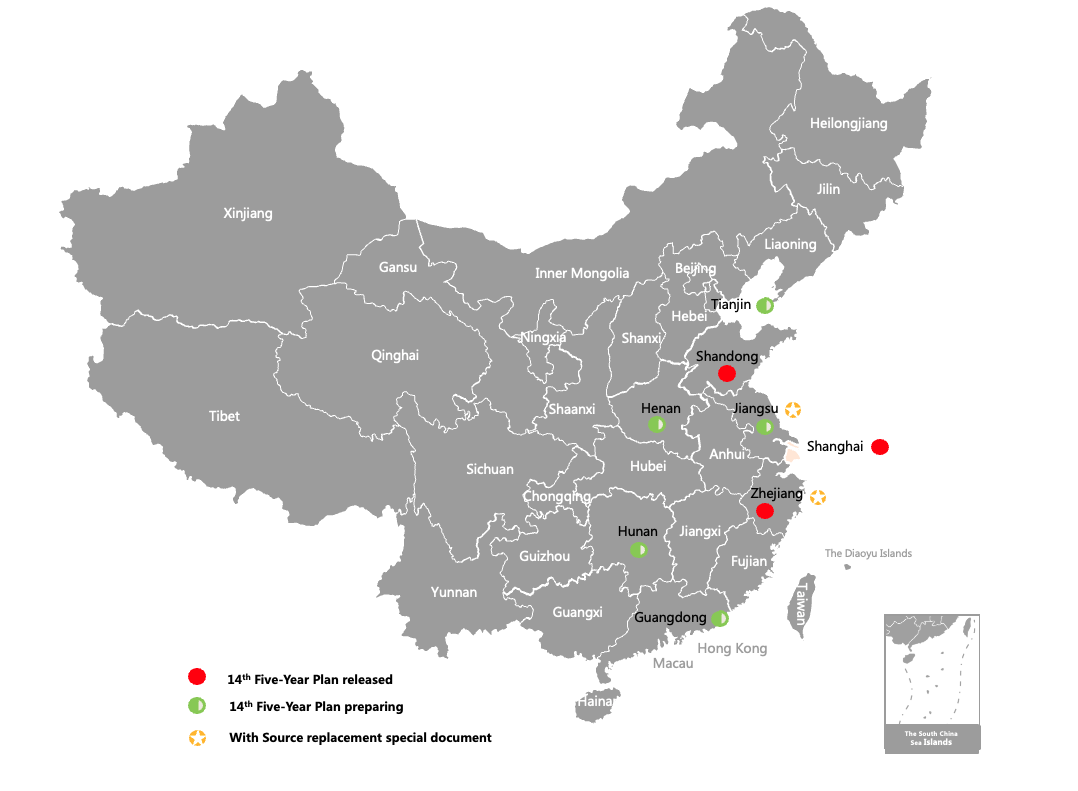
Many provinces and cities in China are implementing or preparing local regulations to reduce VOCs emission, helping enter a new stage of green manufacturing. Zhejiang province, Shandong province and Shanghai city have already released local 14th Five-Year Plans on environmental management. For other provinces and cities like Tianjin province, Hunan province, Guangdong city, etc., similar measures may be taken soon or later. What’s more, Zhejiang province and Jiangsu province released special documents on VOCs source substitution.
Take Zhejiang province for example, the Department of Ecology and Environment of Zhejiang Province released a guideline for VOCs management of source substitution (hereafter referred to as the Guideline), aiming to guide enterprises to produce and use low-VOCs products (coatings, printing inks, adhesives, etc.) and materials. The Guideline will take effect on October 8, 2021.
Zhejiang’s Guideline covers 4 aspects, the main points are listed below:
Expand the Scope of Positive List
Exempt VOCs terminal governance and fugitive emission control under certain circumstances
Exempt Grade I and Grade II enterprises from the requirement of prohibiting or restricting VOCs emissions in case of high-level ozone pollution
Exempt Environmental Impact Assessment (EIA) report approval under certain circumstances
Exempt management of solid wastes of water-based coatings as hazardous waste under certain circumstances
VOCs Emission Trading
Pilot VOCs emission trading scheme
Green Incentives
Provide credit funds for enterprises which use low VOCs
Take production of low-VOCs products and use of raw materials and auxiliary materials of low VOC content as a direction for government support in transformation to green manufacturing
Give priority to green and low-VOCs products in government procurement
Fiscal Measures
Prioritize subsidies for the projects with good VOCs emission reduction performance and high maturity
Appropriate rewards for enterprises that have completed the substitution of VOCs source
* Enterprises will be punished if they provide false information to obtain funds fraudulently or use VOCs that do not meet requirements after enjoying the preferential treatment.
** REACH24H Consulting Group is experienced in VOC compliance. If you have got any questions regarding China VOCs management, please feel free to contact ChemLinked/REACH24H Consulting Group.