Request a Demo
Speaking at the 15th Chemical Regulatory Annual Conference (CRAC) on November 16, 2023, Ms. Yu Tingting from the Department of Solid Waste and Chemicals at the Ministry of Ecology and Environment (MEE) and Ms. Ma Yan from the Solid Waste and Chemicals Management Center of the Ministry of Ecology and Environment (SCC-MEE) shared China's strategy for environmental management of chemicals, with a focus on addressing new pollutants and implementing comprehensive environmental risk management throughout the lifecycle of existing and new chemicals.
Environmental management of existing chemicals
China has made significant efforts to improve the technical system of environmental risk assessment for chemical substances. Several guidelines and standards have been established to regulate and guide the assessment process. These include:
Technical Guidelines for Environmental and Health Hazard Assessment of Chemical Substances (Trial)
Technical Guidelines for Environmental and Health Exposure Assessment of Chemical Substances (Trial)
Guidelines for Screening of Priority Assessment Chemical Substances (HJ 1229-2021)
China has long been practicing existing chemical environmental management based on chemical lists, such as the first and second batches of Priority Control Chemicals List, List of New Pollutants for Priority Management, and the Inventory Strictly Restricted Toxic Chemicals. Additionally, China strictly adheres to the requirements of the Stockholm Convention and has phased out the use of 23 controlled chemicals listed under the Convention through issuing five announcements since 2009.
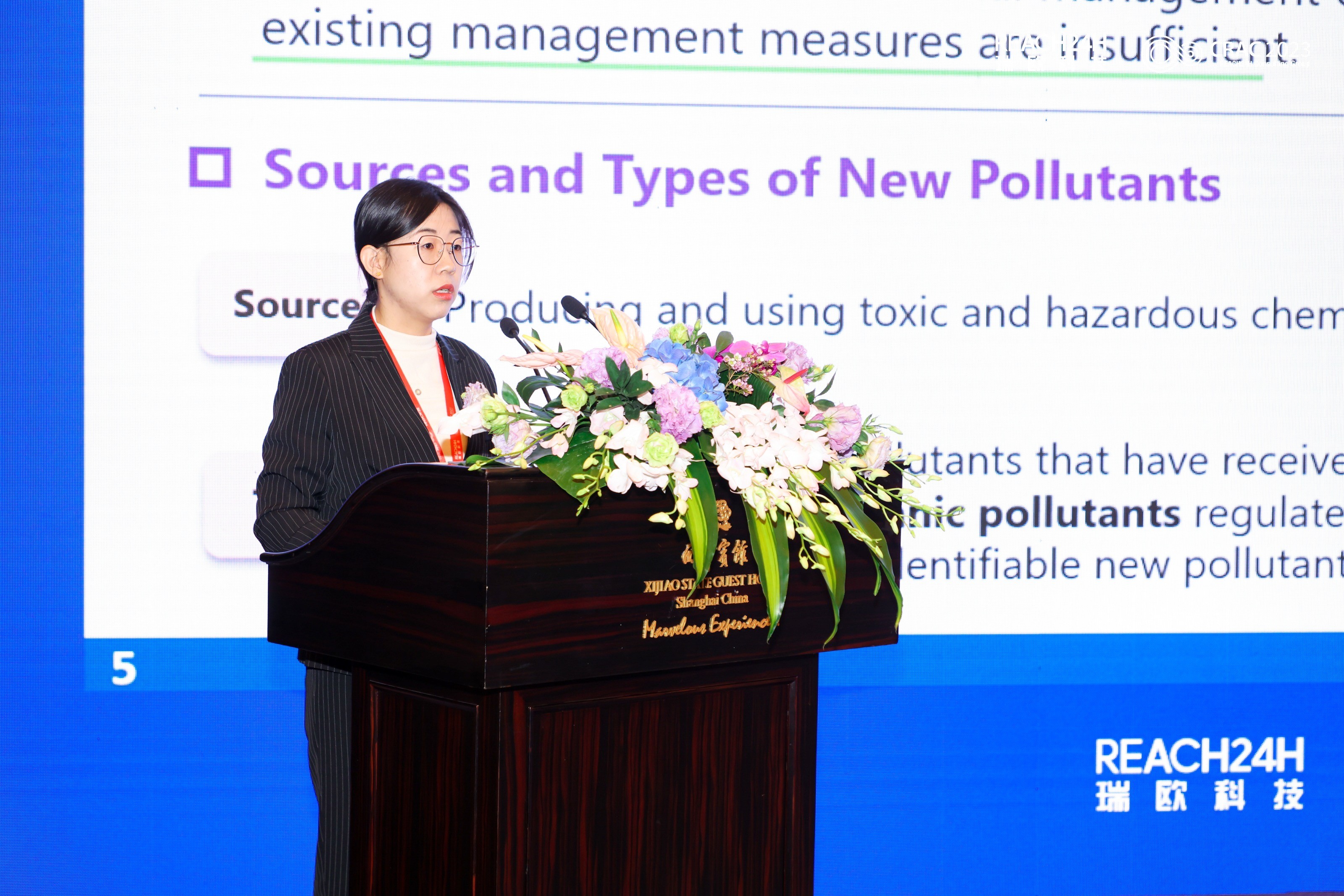
Ms. Yu highlighted that the Action Plan for New Pollutants Treatment (hereafter referred to as the Action Plan) released by the State Council General Office in 2022, is a milestone document that emphasizes comprehensive environmental risk management throughout the life cycle of chemical substances. The production and use of toxic and hazardous chemicals are major sources of new pollutants. Currently, the internationally recognized new pollutants of concern include persistent organic pollutants, endocrine disruptors, and antibiotics, etc. and the number of identifiable new pollutants is expected to increase in the future. China will in the following years strengthen new pollutants control as per the Action Plan.
Environmental management of new chemicals
The environmental management registration system for new chemical substances is an important source control measures outlined in the Action Plan. Since 2003, China has implemented a registration system for new chemical substances. Currently in effect is the Measures for Environmental Management Registration New Chemical Substances (MEE Order No. 12), which took effect on January 1, 2021.
Following Ms. Yu's presentation, Ms. Ma Yan from SCC-MEE reviewed the implementation of the MEE Order 12. She addressed misconceptions regarding new chemical substances, clarifying that they are not limited to newly developed materials but rather refer to substances that are not listed in the Inventory of Existing Chemical Substances in China (IECSC). The IECSC has undergone seven supplements since its last release in 2013 and currently contains approximately 47,000 substances. Among them, over 130 substances are subject to environmental management as new chemical substances if they are used for industrial applications other than the permitted uses in IECSC.
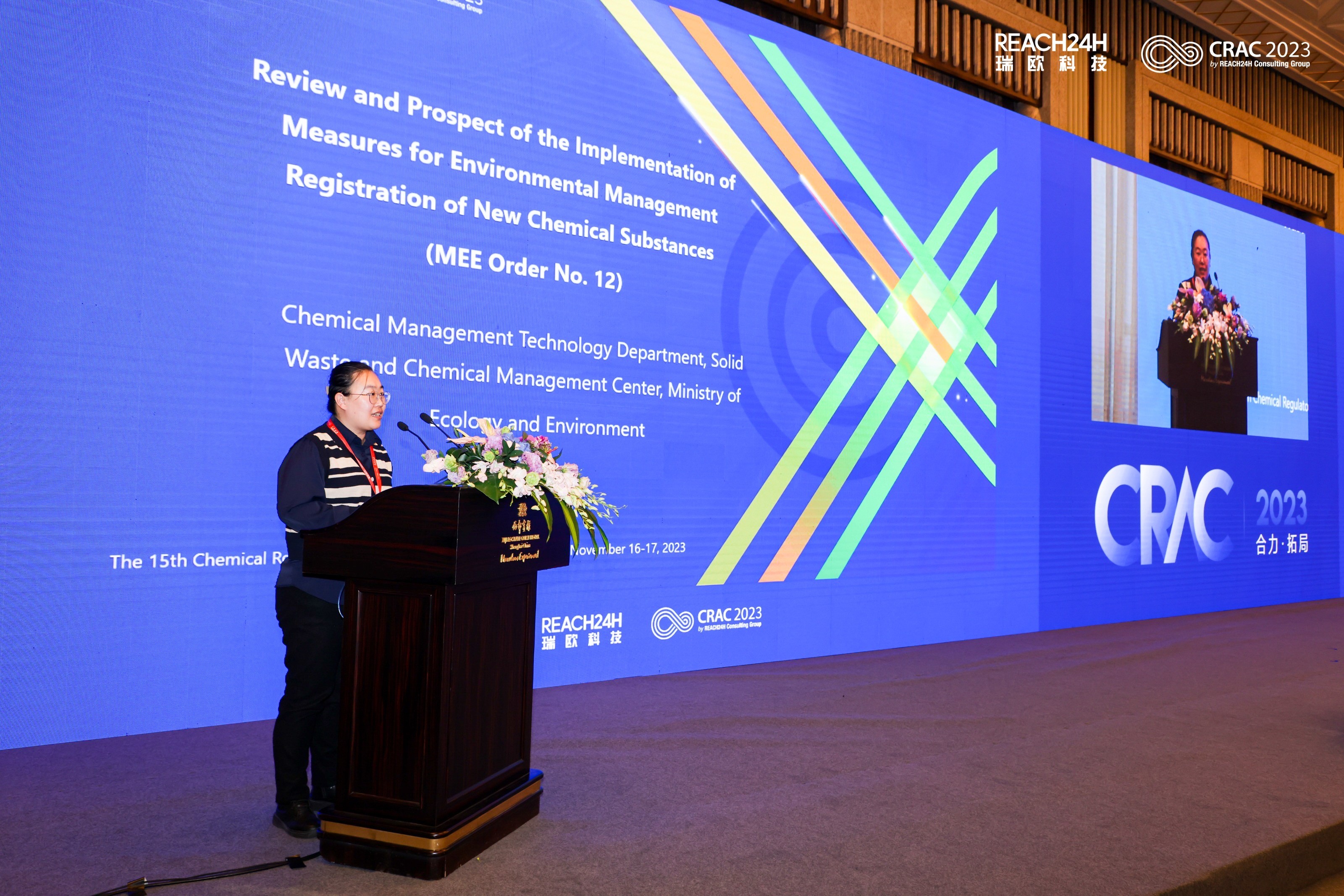 Ms. Ma also provided data on the registration of new chemical substances. Around 70% of the applications are from domestic enterprises, primarily located in regions such as Shanghai, Jiangsu, Guangdong and Zhejiang. More than 90% of the applications are for new chemical substances with an annual quantity of less than 1 ton, while applications for new substances exceeding 10 tons per year account for less than 5%. Although most of the registered new chemical substances under MEE Order 12 are for import activities, there has been a significant increase in production activities compared to that under the previous MEP Order 7. In 2022, approximately 50% of the registered substances were found to have no identified hazards, while the remaining substances were categorized as having persistent hazards, toxic hazards, or both.
Ms. Ma call upon enterprises to confirm whether their substances are identified as new chemical substance subject to registration requirements. She also emphasized the need for improved quality of testing data, environmental risk assessment reports, and dossier preparation.
Next Steps in China's Chemical Management Efforts
Ms. Yu summarized the next steps in China's chemical management efforts, which include promoting legislation for the environmental risk management of toxic and hazardous chemicals, implementing the Action Plan New Pollutants Treatment, fully implementing the registration system for new chemical substances, strengthening technological support for chemical environmental risk assessment and control, and promoting the development of green and sustainable chemistry by eliminating and substituting high-risk toxic and hazardous chemicals, etc.