Request a Demo
The chemical regulatory framework in China has become increasingly influenced by global chemical regulations, in particular the European and US models. Since China became a member of the WTO in 2001, the government has been committed to revising China’s chemical regulations. The previous legislation concerning the management of new chemical substances in China was amended on October 15th 2010, through the enactment of the "Measures for the Environmental Management of New Chemical Substances" (the "Measures") by China’s Ministry of Environmental Protection (MEP). This regulation is similar to EU REACH and adopts several of the same principles and concepts of the European regulation, and thus has been dubbed "China REACH". However, China REACH is a general term for legislation covering hazardous, toxic and new chemical substances (Figure 1), while the Measures specifically regulate new chemical substances.
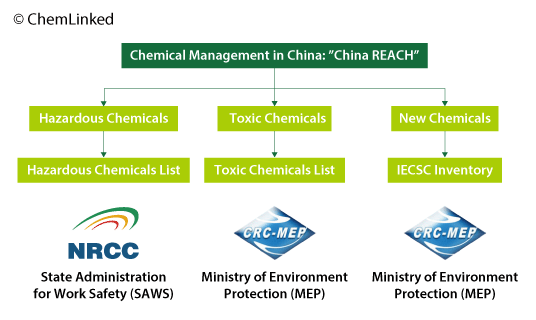
Figure 1: Overview of Chemical Management in China
The Measures is an amendment of the regulation promulgated on October 15th 2003 and presents new obligations and challenges for non-Chinese companies exporting and producing new chemical substances in China. Since the implementation of the 2003 regulation, there have been some significant changes in the global management of chemicals, most notably with the implementation of the REACH regulation in the European Community in 2007. Viewed in the context of the implementation of EU REACH and the ongoing implementation of the Global Harmonized System of Classification and Labeling of Chemicals (GHS) in China, the amended Measures incorporates several concepts also contained in EU REACH. These include GHS-based criteria hazard communication, notification tonnage bands, post-notification tracking and acceptance of notifications only by legal-entities within the jurisdiction of the regulation.
Ultimately, the Measures aims to control the risks posed by new chemicals to protect public health and the environment. Despite several differences existing between EU REACH and the Measures, most notably in the registration scope and testing requirements, the comparison can be used as a frame of reference for non-Chinese companies formulating a compliance strategy.
Contents
New Chemical Substances Notification in China
Since new chemical substance notification (NCSN) was implemented in China in 2003, over 350 registration certificates and 14,500 exemptions from notification have been granted by the Chinese authorities. In preparation for the implementation of the Measures, an inventory was assembled as the basis for determining whether a substance is considered a 'new' substance or an "existing" one in China. The result was the Inventory of Existing Chemical Substances in China (IECSC) which was compiled in several stages. The 45, 602 substances currently listed on the inventory represent substances which were produced or traded in China prior to 2003.
Comparison between the Measures and the EU REACH Regulation
There are several similar concepts that the Measures share with EU REACH, such as appointment of an ‘Only Representative’-like agent for foreign notifiers, submission of a risk assessment report and data requirements according to tonnage band. In practice, the Measures can be broadly compared to the inquiry and subsequent registration process of a non-phase in or ‘new’ substance under EU REACH. A potential registrant of a non-phase in or ‘new’ substance is required to submit an inquiry to the European authorities prior to registration to inquire whether a registration has already been submitted. If one has been submitted previously, the sharing of data between previous registrants or sources is facilitated. If not, the potential registrant has to carry out the testing to satisfy his registration requirements, either alone or with other possible registrants. Under the Measures, the IECSC is searched to verify that the substance is ‘new’ under the Measures and NCSNs should be made to the Chinese Chemical Registration Centre (CRC-MEP) in Beijing. However, data sharing is not mandatory. New substances, irrespective of the tonnage quantity, cannot be produced, imported or processed without being notified first.
The requirement for registration/notification of polymers demonstrates a different approach under EU REACH and China NCSN. EU REACH exempts the registration of the polymer itself, but requires the registration of its monomers. China NCSN requires the notification of polymer itself, if it is considered a new chemical in China. Moreover, China NCSN has not stated a threshold tonnage band for exemption, which in practice means that if a very small quantity of a new chemical is imported or manufactured, it will require notification (either simplified notification or scientific record notification (SRN)). Table 1 summarizes the similarities and differences in EU REACH and China NCSN.
Table 1. Similarities and differences between EU REACH and China NCSN
| EU REACH | China NCSN |
Similarities | Only Representative/OR-like agent, risk assessment report, process-and product-orientated research and development (PPORD) | |
Accumulative data requirements according to tonnage band | ||
Inquiry for new substances | ||
Definition of polymer | ||
Differences | Covers: existing and new chemicals | Covers: only new chemicals |
Compliance types: Registration, Restriction, Authorization | Compliance types: Notification, IECSC supplementation | |
Polymer: register monomers | Polymer: notify itself | |
CSR: only required if >10 ton/year | Risk assessment report: required in all regular notifications (> 1 ton/year), and exempted in notifications for polymers | |
OR: legal entity or natural person in the EU | OR: legal entity with a registered capital over 3 million RMB in China | |
Data: Mandatory sharing of data of vertebrate animals; Tests are not required to be performed in EU | Data: Voluntary sharing of all data; 3 types of tests should be performed in authorized Chinese labs using Chinese species | |
Significant Changes in the Measures
The introduction of low tonnage band notification types and tonnage bands will reduce the burden of testing for low volume quantities, especially for scientific and technological research activities. Some of the significant changes which are likely to affect non-Chinese notifiers are:
Notification by Chinese entity only: Foreign notifiers cannot directly notify under the Measures and require the assistance of a Chinese legal-entity (i.e. OR-like entity) to fulfill its notification and post-notification obligations.
Ways to notify: Exemptions from notification are no longer available. Scientific record notification was introduced to simplify the notification process for low volume substances for process-and product-orientated research and development (PPORD) as well as scientific research. A SRN also applies for the import of test samples of new substances into China.
Four tonnage bands have been established for regular notification, which dictate the testing requirements to be fulfilled.
Management categories: New substances are classified into management categories by the evaluation committee of the Chemical Registration Center (CRC): ‘general’ or ‘hazardous’ new substances. If a hazardous substance presents persistent, bio-accumulative or other hazardous properties, it can be further classified as a hazardous substance with priority environmental concern. The classification may also affect the level of involvement of the non-Chinese supplier in the post-notification management of the substance.
Requirements for inclusion in IECSC inventory: Only ‘general’ new substances notified under regular notification shall be included in the IECSC. This inclusion is five years from the date indicated on the first activity report. Hazardous substances are added subject to review of the activity report submitted by the certificate holder six months before the five year deadline. Substances notified under simplified notification or SRN would still be considered as new substances unless otherwise included in the inventory.
The scope of new chemical substance notification has been broadened as follows:
Amending the measures from 29 to 52 articles has resulted in a broadening of the scope of notification with the inclusion of:
Articles and preparations: The inclusion of articles with intended release means that more imported products will be affected if they release new chemicals as part of their functionality, in mixtures or as pure substances. Many imported products including aerosols, paint cans, perfumes etc. could be affected. Notification would be required for substance(s) released based on the tonnage band the annual released tonnage quantity falls into. No minimum allowed release limit has been specified.
Raw materials and intermediates for finished products: Although cosmetic, agricultural, pesticides and other finished products are not affected by the Amended Measures, their raw materials and transported isolated intermediates are, however, now subject to notification if not included in the IECSC. The finished products would then be subject to other licensing procedures of other relevant laws and regulations.
China’s Free Trade and Export Processing Zones (EPZ): These zones are included within the scope of the Measures from October 15 2011, following a one year transition period. Manufacturing and import activities involving new substances require notification apart from in the case of import for re-packaging or manufacture f1.or export only.
Compilation of the Inventory and Supplementation of the IECSC by Industry
One of the first major steps in the development of new chemical substance notification was the compilation of the IECSC inventory, to aid with the differentiation between existing and new chemical substances.
In order to avoid unnecessary economic burden to industry, supplementary applications were made available since 2003. However, supplementation may not be applicable to many non-Chinese companies due to the comparatively low presence of foreign companies in China during this period. In addition, the difficulty in preparation of documentation and time required for the application may be disadvantageous to a non-Chinese company preparing such an application. And some local environmental protection authorities in China are inconsistent with the CRC-MEP on the issue of supplementation which makes it more unlikely to conduct supplementary action.
Notifying New Chemical Substances under the Measures
How to Identify a Substance Which Requires Notification
1) Exemption Range
a) Finished products covered by other laws and regulations
For example: pharmaceuticals, pesticides, veterinary medicines, cosmetics, foodstuffs, food additives, feed and feed additives, radioactive materials, military products, explosives, tobacco etc.
b) Naturally occurring substances
Unprocessed substances or substances processed only by manual, mechanical or gravitational methods, or by water dissolution, water displacement or thermal dehydration etc.;
Substances extracted from air by all methods;
Naturally occurring polymers that have not been chemically modified;
Living matter, such as DNA, RNA, proteins etc. and other biological macromolecules.
c) Categories of non-commercial or non-intentional production
Impurities;
Chemical substances produced by unintentional or incidental chemical reaction, such as by-products, waste products, reaction products due to environmental factors.
d) Other Special Categories
Materials: Glass materials, glass frit, ceramic materials and wares, steel and its products, high alumina cement, Portland cement etc.
Alloys: excludes intermetallic compounds;
Non-isolated intermediates;
Articles: excludes the new substance intentionally released from the articles.
2) Inquiry Procedure
Similar to the EU REACH inquiry procedure, confirmation of the status of the substance should be received from the authorities before preparing a notification. This is a simple procedure and does not require the submission of extensive substance identification information, unlike EU REACH. The IECSC inventory can be partly searched online; however, a formal application for a comprehensive search should be submitted to the CRC to search for confidential substances and other substances without CAS number. The authorities will provide the result of the comprehensive search within 2-3 weeks. If the substance is not included in the inventory but has been previously notified, the CRC can provide the potential notifier with the contact details of previous registrant(s). This would enable the previous registrant to share notification test data with potential notifier(s). This is subject to the previous notifier having given consent to releasing their contact details to future notifiers, because unlike EU REACH, it is not a mandatory requirement for registrants to share animal data under China NCSN.
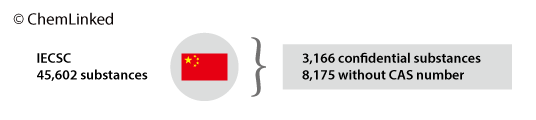
The inquiry procedure includes two parts: the on-line submission and off-line submission. The inquiry software for on-line submission is available on the website of CRC-MEP. An applicant should fill out the blanks in the inquiry software, print the application form out, then submit online and sent the paper application form to CRC-MEP, usually it will take 2~3 weeks till the official results came back from the authority by registered post. The CRC-MEP only charges 200 RMB for inquiry to cover their cost, and free for all kinds notifications.
Types of Notification
All types of notification under China NCSN follow a similar procedure to the inquiry process mentioned above: on-line submission and off-line submission. Typical notification materials include the application form, business license, Power of Attorney (if an OR-like agent is appointed), signature authorization letter (optional), situation statement (only for simplified notification-special case), testing reports from Chinese accreted labs and expert justification by experienced experts, risk assessment report (only for non-polymers >100 ton/year). The electronic version of the required notification materials can be sent by e-mail or CD/DVD, while the signed and stamped paper materials (application form, POA, signature authorized letter) should also be posted to the CRC-MEP.
Notification applications are accepted by the CRC-MEP, who reviews the dossier for completeness and to ensure that the minimum data requirements have been fulfilled. The application is reviewed by the evaluation committee who then submit a recommendation to the MEP. If the application is approved, registration certificates are then issued by the MEP. The procedure can take up to 90 and 60 days for regular and simplified notification respectively. Activities concerning substances notified by SRN may begin once the notification has been filed with the CRC.
The software for simplified notification is under development by CRC-MEP, and just released on its website. By the end of 2011, applicant could submit online with email or this software, and only through software from the beginning of 2012.
Notifications can be made under regular, simplified and scientific record notification subject to the conditions shown in Table 2 and Figure 2:
Table 2. Notification Types and conditions under the Measures
Notification Type | Conditions |
Regular (>1 ton/year) | Special Types: Serial, Joint, Joint-Serial, Repeat Notification, Re-Notification (increased tonnage band or use change) Four Tonnage Bands: Band I: 1-10; Band II: 10-100; Band III: 100-1000; Band IV: > 1000 (tons/year) |
Simplified (<1 ton/year) | Special Case: Intermediates < 1 t/a, Manufacture for export only < 1 t/a, Polymer of low concern or with low new substance monomer conc. (<2%), R&D: 0.1 t/a – 1 t/a, R&D <10 t/a: certificate valid for no more than 2 years General Case: < 1 ton/year |
Scientific Record Notification (SRN) | Import of test samples (for compulsory eco-toxicological testing in Chinese laboratories) R&D < 0.1 ton/year |
Regular notification certificates are valid from the date of issue until the substance is considered an existing substance, after it has been included in the IECSC inventory (after 5 years). The simplified notification certificate is valid until the certificate holder applies for cancellation of the certificate, otherwise the certificate holder would be required to continue to fulfill the post-notification obligations. No registration certificate is issued for SRN; however regular announcements on SRN notifications, as well as simplified notifications will be published on the MEP website.
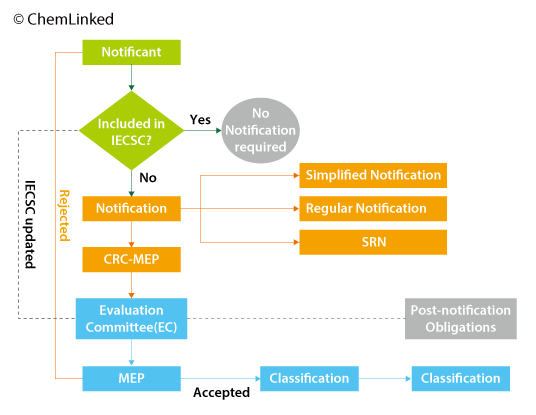
Figure 2. Roadmap of China REACH Compliance
Testing Requirements and Dossier Requirements
The testing required depends primarily on the quantity of the substance to be notified and the notification type. The minimum testing requirements are indicated below in Table 3 and waiving requirements have been specified in the MEP new chemical substance guidance document. Test data may be obtained from domestic Chinese laboratories or suitably accredited or GLP (Good Laboratory Practice) laboratories outside China. Data generated using Quantitative Structure- Activity Relationships (QSAR) or read-across are now acceptable under the Measures. However, endpoints generated this way can only be used as a reference. A compulsory minimum amount of eco-toxicological testing from MEP-approved Chinese laboratories is required for both simplified notification-general case and regular notification.
The minimum requirements for regular notification include physicochemical, toxicological and eco-toxicological test reports and a risk assessment report. Recommended classification and labeling and a safety data sheet (SDS) are required according to the relevant GHS-based Chinese national standards. For simplified notification, information on the substance and its exposure and use is required. Basic eco-toxicological data is required for a general case of simplified notification (Figure 3) but is not required for simplified notification - special case. Companies making a notification may also need to prepare a SRN for the import of test samples of the new substance(s) into China for the compulsory eco-toxicology testing. This may specifically be the case for non-Chinese companies notifying new substances which require import, because of the difficulty of sourcing them in China.
When the SRN has been filed with the CRC, the samples can be imported in order for the testing to be performed. The SRN requires only minimal information to be submitted such as information regarding its scientific use and disposal. Unlike the other notification types, no registration certificate needs to be obtained prior to import, which can begin once the SRN is filed. Although this notification is a relatively simple process, it is however an additional step to be completed in the general simplified and regular notification processes.
Table 3. Minimum Data Requirements for Regular Notification
Physico-chemical properties | ||||||
Gas | Oxidizing properties, self-ignition temperature, explosive limit and critical point | |||||
Liquid | Boiling point, density, vapor pressure, partition coefficient n-octanol/water, water solubility, surface tension, pH value, flash-point, oxidizing properties, self-ignition temperature, flammability and explosive properties. | |||||
Solid | Melting point, density, partition coefficient n-octanol/water, water solubility, granulometry, oxidizing properties, self-ignition temperature, Flammability and explosive properties. | |||||
Toxicology data | 1-10 t/a | 10-100 t/a | 100-1000 t/a | 1000+ t/a | ||
Acute Toxicity (6 tests) | √ | √ | √ | √ | ||
28 day repeated dose toxicity (1 of 3 routes) | √ | √ | √ | √ | ||
Mutagenicity | √ | √ | √ | √ | ||
90 day repeated dose toxicity |
| √ | √ | √ | ||
Reproductive/Developmental Toxicity |
| √ | √ | √ | ||
Toxicokinetics |
| √ | √ | √ | ||
Chronic Toxicity |
|
|
| √ | ||
Carcinogenicity |
|
|
| √ | ||
Eco-toxicology data | Tests Required to be performed in China | 1-10 t/a | 10-100 t/a | 100-1000 t/a | 1000+ t/a | |
Algae growth inhibition test | √ Select one test from three, preferably fish acute toxicity test. | √ | √ | √ | √ | |
Daphnia magna Acute toxicity | √ | √ | √ | √ | ||
Fish acute toxicity | √ | √ | √ | √ | ||
Activated sludge respiration inhibition |
| √ | √ | √ | √ | |
Adsorption/desorption |
| √ | √ | √ | √ | |
Degradation | √ Preferably Ready biodegradation | √ | √ | √ | √ | |
Earth worm acute toxicity |
| √ | √ | √ | √ | |
Fish 14 days prolonged toxicity | √ Select one test from three(10-100 t/a) or from two (>100 t/a) |
| √ |
|
| |
Daphnia magna Reproduction |
| √ | √ | √ | ||
Bioaccumulation |
| √ | √ | √ | ||
Fish chronic toxicity testing (early life-stage toxicity on fish, or short-term toxicity on embryo and sac-fry stages on fish, or juvenile growth test on fish) | √ |
|
| √ | √ | |
Seed Germination & Root Elongation Toxicity |
|
|
| √ | √ | |
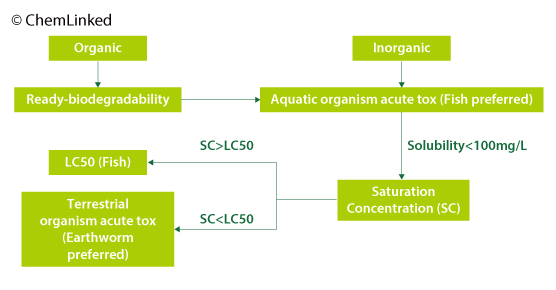
Figure 3. The Data Requirement for Simplified Notificaiton-General Case
Risk Assessment Report
For a new chemical substance that falls into the first tonnage band (1-10 ton/year), the GHS-based Chinese national standards for classification, precautionary labeling and precautionary statements (26 national GHS standards) should be used as the basis on which to classify the new chemical substance and prepare a qualitative risk assessment. For a new chemical substance that falls into the second or higher tonnage bands (>10 ton/year), the GHS-based Chinese national standards should be the basis on which to prepare a semi-quantitative risk assessment. For a new chemical substance that has not been classified, a risk assessment report should include the classification results and classification basis according to the national safety standards, in addition to a brief description of exposure. On September 27 2011, China MEP published the ‘Guidelines of Risk Assessment for Chemicals’ & ‘Guidelines for Hazard identifications of New Chemicals’ and consults for public comments. Therefore applicants could refer to the two guidelines for new chemical substances.
Attempts to protect confidential company information can be viewed as a positive development in the Measures. Confidential claims are available for the substance name, molecular formula, molecular structure and uses, providing that sufficient justification is provided. The substance name can be masked by providing a generic name generated by replacing structural groups or descriptive parts of the substance name according to Guidelines for the generic name of new chemicals (HJ/T 420-2008). Sensitive information may also be protected by appointing a third-party representative to act as a trustee. The third-party representative can submit the data directly to the CRC with a matching submission reference to that of the Chinese legal-entity appointed for submission of the notification application. In spite of these safeguards for confidentiality, the public publication of notification information by the MEP has raised concerns regarding the disclosure of confidential business information.
The CRC evaluation committee will review the classification of the notifier and further classify the substance into a general or hazardous risk management category. The risk management categorization will affect the post-notifications obligations (Table 4) and the inclusion of the substance in the IECSC inventory.
Table 4: Post-Notification Obligations Introduced Under the Amended Measures
Risk Management Category | Number of Requirements | Post-Notification Obligations |
General | 6 | 1. Communication of MSDS to downstream users; 2. Implementation risk management measures; 3. Submission of first-activity report; 4. Storage of documents for 10 years; 5. Obligation to not sell chemicals to downstream users who are not capable of implementing their risk management measures; 6. Submission of updates if new hazard arises; |
Hazardous |
9
| 7. Submission of annual report (for previous year); 8. Compliance with Measures for The Administration of Registration of Hazardous Chemicals 9. Submission of substance flow chart |
Hazardous new chemicals of priority environmental concern | 11 | 10. Submission of report on disposal information; 11. Submission of annual plan (for coming year) |
Business Impacts for non-Chinese Companies
Due to the requirement of a Chinese legal-entity to act as a notifier, a non-Chinese company needs the assistance of a Chinese entity to submit its notification. Approved notifiers include Chinese manufacturers, importers, representative agents and downstream users (in the case of re-notifications). The notifier will be the certificate holder and will be responsible for fulfilling the application submission requirements, downstream hazard communication, report submissions and other post-notification obligations. A non-Chinese company could rely on a representative agency or its importer to act as the notifier on its behalf.
The appointment of representative agent is similar to that of an Only Representative under EU REACH and may be an external representative agent or a Chinese branch of the foreign company. Unless acting as the physical importer, the subsidiary or representative agent would need to fulfill all the registered capital (3 million RMB) and technical requirements specified in the MEP guidance document. The name of the non-Chinese company will appear on the registration certificate, unless its importer is performing the notification on its behalf. Other information to appear on the registration certificate includes the substance name, registered use(s) and management category, although the substance name and use can be masked to a certain extent. Strong contractual agreements are recommended between the Chinese notifying entity and non-Chinese company as the Chinese legal-entity would be largely reliant on the foreign company for notification information.
The successful enforcement of the Measures can be considered as largely dependent on the supervision by regional environmental protection agencies (EPAs) and the compliance of domestic manufacturers. Domestic manufacturers are now more willing to comply with China REACH since the requirement for the registration certificate to be included in the Environmental Impact Assessment, which is required for production or processing approval and may assist with compliance supervision by regional EPAs. The requirement for downstream users to request registration certificates may aid in exposing companies who do not hold registration certificates. Penalties can be enforced by the MEP or regional environmental protection bureaus and include fines (30,000 RMB at most) and public announcement by the MEP. Compared with the final penalty which is not much, the non-Chinese companies may concern more for the reputation damage.