

 Request a Demo
According to the joint notice issued in early February 2024, the Shanghai Emergency Management Bureau (SEMB) and the Shanghai Municipal Transportation Commission (SMTC) announced the use of Hazchem traceability codes. This initiative aims to establish an efficient mechanism for sharing information and ensuring precise lifecycle supervision of hazardous chemicals, advancing the implementation of the "One enterprise, One chemical product, One QR code" policy in Shanghai.
Speaking at the offline conference held in Shanghai on March 27, 2024, Mr. Xu Wei, an officer from the Division of Hazchem Safety Supervision and Management under the SEMB, introduced Shanghai's pilot project of the Hazchem traceability system and detailed corresponding obligations of chemical industrial enterprises.
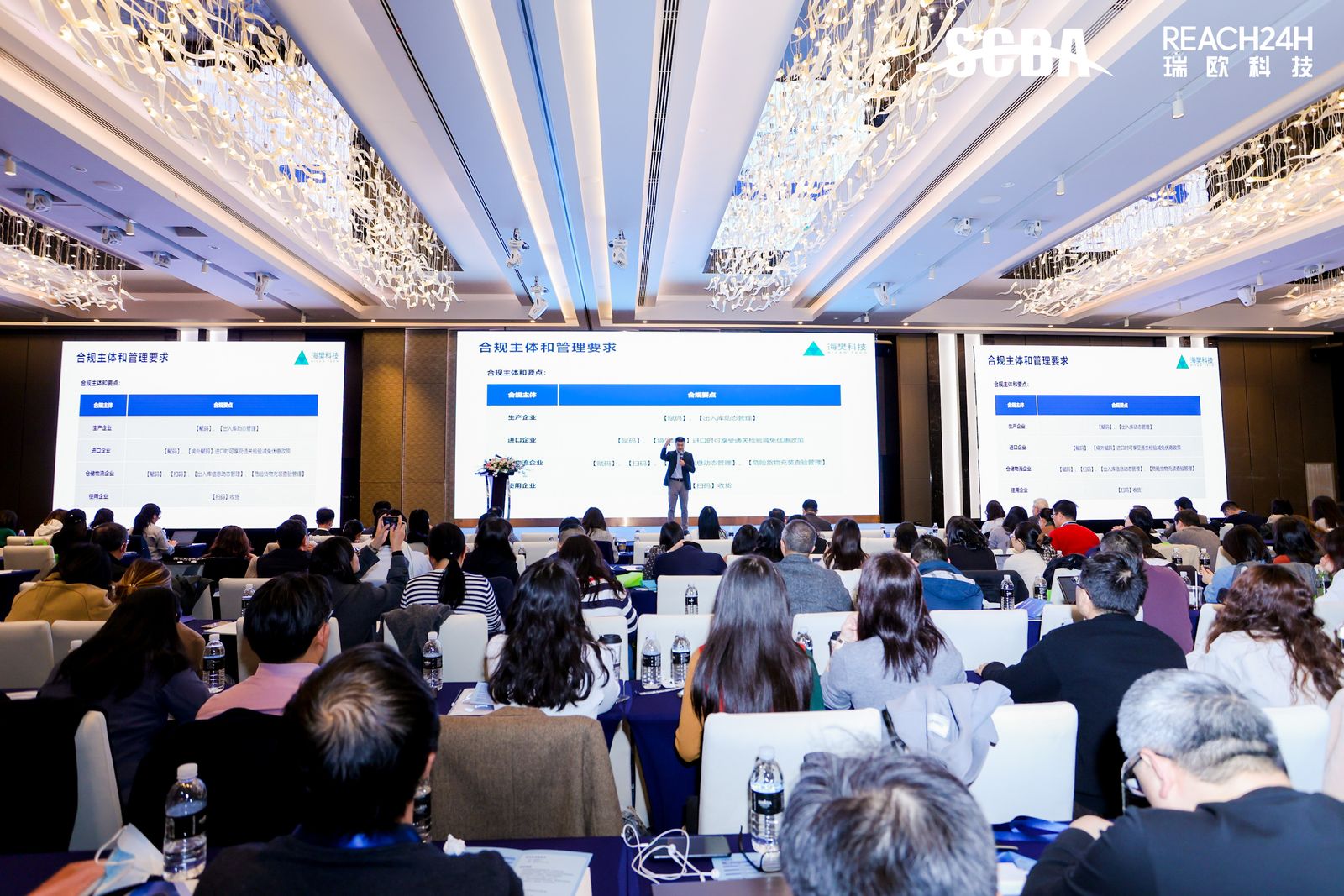
Positive news was shared at the conference by Mr. Xu, i.e., the SEMB is currently negotiating with the National Registration Center for Chemicals (NRCC) of the Ministry of Emergency Management (MEM) to establish connectivity between their respective systems. Once the proposal is adopted and the connection is established, enterprises can directly complete the Hazchem registration and generate the Hazchem traceability codes via Shanghai's Hazchem traceability system (https://yqypym.yjglj.sh.gov.cn:81/cone/dcrs-trace-enterprise/login).
Notably, Mr. Xu also stressed that, the MEM is considering selecting five hazardous chemicals to pilot Hazchem traceability codes nationwide in 2024. However, the specific plan has not been finalized and made public. Mr. Xu called on relevant stakeholders to actively participate in implementing the use of Hazchem traceability codes, and officials from the SEMB are willing to provide technical guidance and assistance.
Regarding Mr. Xu’s interpretation, below are the FAQs based on practical cases.
Yes, one of the preconditions to generate Shanghai’s Hazchem traceability code is to obtain the NRCC code after completing the Hazchem registration via the national registration system: https://whpdj.mem.gov.cn/#/login. Then provide the NRCC code and required additional information via Shanghai’s Hazchem traceability system: https://yqypym.yjglj.sh.gov.cn:81/cone/dcrs-trace-enterprise/login.
Currently, only Shanghai is implementing the use of Hazchem traceability code. Other provinces and cities in China, like Shandong, Zhejiang, Jiangsu, etc., are studying their own pilot projects based on local conditions to push forward the “One enterprise, One chemical product, One QR code” policy. At the national level, although the policy has not yet been fully implemented so far, the MEM is considering selecting five hazardous chemicals to pilot Hazchem traceability codes nationwide this year.
The batch number doesn't necessarily have to correspond to the actual production or shipment batches. Virtual batches created by enterprises to ensure compliance are also accepted, as the focus is on effectively distinguishing each batch for better supervision.
In this case, imported Hazchem does not need to be affixed with Hazchem traceability codes. However, if the imported Hazchem is to be out of the warehouses in Shanghai, the code should be attached and scanned to report the required information (e.g., product batch, warehouse information) to the SEMB.
No.
Yes. According to the joint notice and relevant regulations, Hazchem users are required to scan the Hazchem traceability codes for good receipt. However, only when the suppliers have Hazchem traceability codes attached to their goods, downstream users need to scan the codes. If not, downstream users do not need to do this.
If the hazardous chemicals to be exported are manufactured in Shanghai, they shall be affixed with Hazchem traceability codes.
Although it’s not mandatory in this case, the NRCC codes are suggested to be attached to the products to ensure compliance.
It's better to provide a credible report on hazard identification and classification to ensure the chemical does not meet the determination principles specified in the China Inventory of Hazardous Chemicals (2015). If it meets the specified determination principles, regardless of its quantity, it shall be registered via the national registration system: https://whpdj.mem.gov.cn/#/login.
This depends on whether the box will be opened or not. For example:
A product will go from Enterprise A to Enterprise B, and then from Enterprise B to Enterprise C. It won't be opened before transporting from Enterprise A to Enterprise B, but it will be opened before transporting from Enterprise B to Enterprise C. In this case, from Enterprise A to Enterprise B, the traceability codes can only be affixed to the outer package; however, from Enterprise B to Enterprise C, the traceability codes shall be affixed to both the inner and outer package.
As part of Shanghai's policy, importers who coordinate with overseas suppliers to obtain and affix Hazchem traceability codes before road transport from the ports may be included in the WHITELIST. Being listed in the WHITELIST grants importers exemption from sample inspection and reduces the proportion of unpacking and inspection, facilitating expedited customs clearance.
In this case, the Hazchem traceability codes are not required to be affixed. However, if the products enter the warehouses in Shanghai, relevant information shall be reported to the SEMB via Shanghai’s Hazchem traceability system: https://yqypym.yjglj.sh.gov.cn:81/cone/dcrs-trace-enterprise/login.
See more on ChemLinked:




