Request a Demo
During the COVID-19 pandemic many countries are facing increasingly severe shortage of response supplies. In response to the growing market demand for disinfectant products from across the globe, enterprises in China are ramping up production to bolster their supply capacity.
Production issues aside, many enterprises have concerns about the transport and export of disinfectant products. For example, are 84 disinfectants and alcohol-based disinfectants, two typical products of this category, classified as dangerous goods? And if so, how to transport and export them in a compliant manner? ChemLinked will navigate you through compliance requirements in this regard.
I. Road Transport of 84 Disinfectants
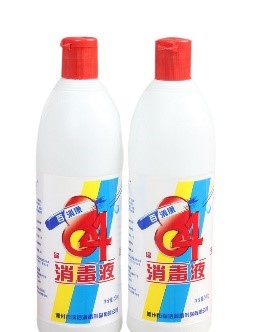
84 disinfectants are chlorine-containing disinfectants, in which sodium hypochlorite is the main component, and primarily used to disinfect surfaces as well as the surrounding environment. In accordance with the Regulations concerning Road Transportation of Dangerous Goods (JT/T 617-2018) (see ChemLinked Translationa [1]), 84 disinfectants are classified as dangerous goods and assigned to Class 8 (corrosive liquids), Packing Group III under UN No. 1791. Meanwhile, they should be transported under the proper shipping name of “hypochlorite solution”.
According to the Measures for Safety Administration of Road Transport of Dangerous Goods [2], in the road transport of 84 disinfectants in China, they should be packed in line with relevant rules, with the packages bearing the label below:
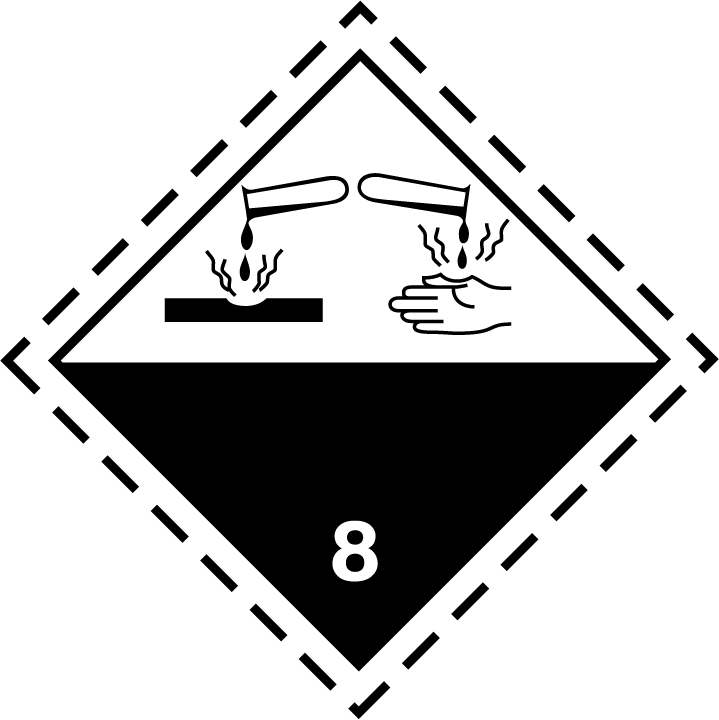
The good news is that the Measures has introduced exemption on goods packed in limited quantities (LQ). In this way, 84 disinfectants can be transported as general goods, as long as they meet the following conditions:
Ø The quantity per inner packaging for carrying 84 disinfectants shall be no more than 5L;
Ø The gross mass (packaging included) of a complete package shall not exceed 30kg;
Ø The gross mass (packaging included) of 84 disinfectants packed in LQ carried does not exceed 8 tons per transport unit;
Ø Relevant packaging, labeling and testing requirements are satisfied.
II. Road Transport of Alcohol-based Disinfectants
Hand sanitizers are flying off the shelves almost everywhere during the outbreak. Most of them have a high alcohol content, and are thus categorized as alcohol-based disinfectants which are volatile and flammable.
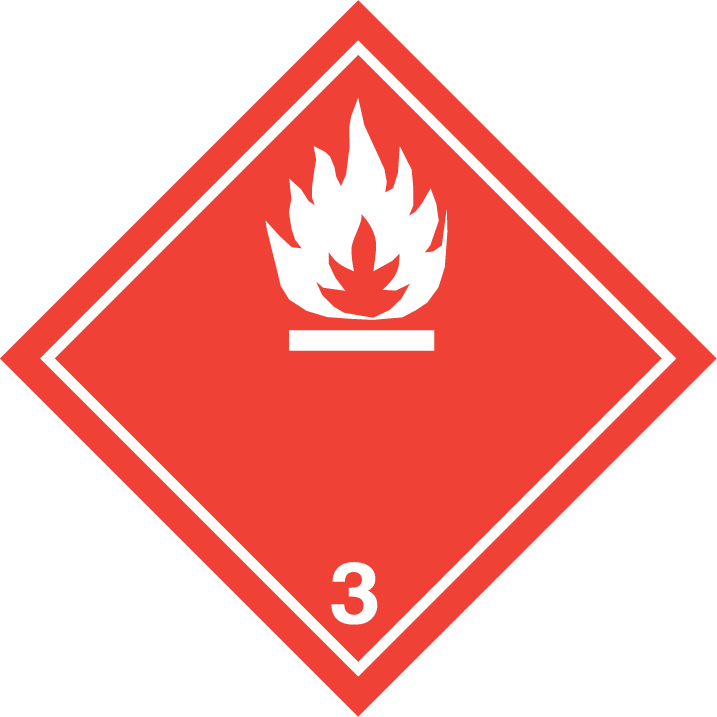
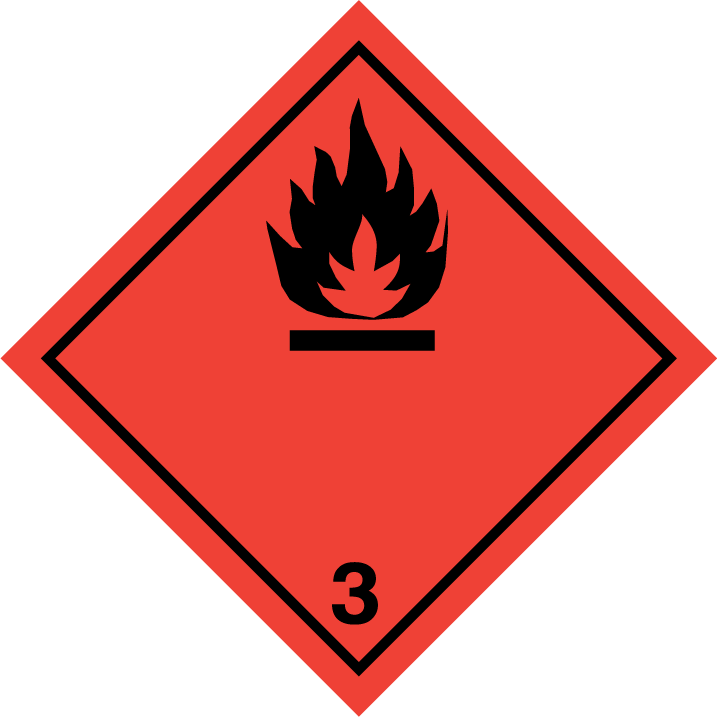
According to JT/T 617-2018, alcohol-based disinfectants are a type of dangerous goods and assigned to Class 3 (flammable liquids), Packing Group II under UN No. 1170. Businesses are required to transport them under the proper shipping name of “ethanol solution”. In their road transport in China, alcohol-based disinfectants should be packed in line with relevant rules, with the packages bearing the label below:
Like 84 disinfectants, the LQ exemption applies to alcohol-based disinfectants provided that they meet the requirements listed in Part I. Moreover, the JT/T617 regulations provides another two conditions in which ethanol solution can be transported as general goods:
Ø Solutions containing no more than 24% alcohol by volume (Special Provision 144, Annex B, JT/T 617.3-2018: Index of Dangerous Goods Name and Transportation Requirement [3]);
Ø Pharmaceutical products which are processed or packaged for retail or wholesale to individuals or households (Special Provision 601, Annex B, JT/T 617.3-2018: Index of Dangerous Goods Name and Transportation Requirement).
III. Export of Disinfectant Products
Many Chinese enterprises are seeking to export their disinfect products to help other parts of the world. But before getting their products shipped abroad, enterprises should figure out whether they are subject to hazardous chemical management regulations.
According to the China Inventory of Hazardous Chemicals (2015) [4], 75% ethanol and sodium hypochlorite solution (with active chlorine>5%) are hazardous chemicals. Notably, since 84 disinfectants usually contain 5.5%-6.5% active chlorine, they are regulated as hazardous chemicals as well.
As stipulated in the Announcement on Questions Regarding the Inspection on Imported and Exported Hazardous Chemicals and Their Packaging [5], the consigner of exported hazardous chemicals or his representative should report to the local inspection and quarantine authority of the jurisdiction where the products are manufactured according to the Provisions on Declaration of Entry-exit Inspection and Quarantine [6] . Apart from documents required by relevant regulations, the materials submitted should include:
✔ Compliance statement of enterprises that produce the exported hazardous chemicals
✔ SDS and hazard labels (Chinese translations are required if SDS and hazard labels are provided in any foreign language)
✔ Hazard classification reports
✔ Inspection result sheet for transportation package performance of exit dangerous goods (excluding bulk products (not required for goods in bulk)
✔ Name, amount and other information of inhibitors and stabilizers for products containing such substances
In addition, where the disinfectant products are subject to hazardous chemical regulations in the importing countries, relevant documents are required to clarify their hazard properties. For instance, if businesses wish to export disinfectant products to the EU, they will need to prepare CLP-compliant labels and SDSs in line with EU standards. As hazardous chemical regulations vary from country to country, it is a must for enterprises to understand specific requirements in destination countries before exporting their products.