Request a Demo
On March 5, 2025, the Government of Canada released the State of Per- and Polyfluoroalkyl Substances (PFAS) Report and the proposed Risk Management Approach for PFAS, excluding fluoropolymers.
The State of PFAS Report is a wide-ranging government analysis of large-scale science and evidence investigating the impacts of PFAS, following public consultations for the Draft State of PFAS Report in May 2023, and the Updated Draft State of PFAS Report in July 2024, during which over 400 stakeholders provided input.
The class of PFAS is comprised of substances meeting the broad chemical definition by the Organisation for Economic Co-operation and Development(OECD): “fluorinated substances that contain at least one fully fluorinated methyl or methylene carbon atom (without any H/Cl/Br/I atom attached to it), that is, with a few noted exceptions, any chemical with at least a perfluorinated methyl group (–CF3) or a perfluorinated methylene group (–CF2–) is a PFAS”.
Given the conclusion of the State of PFAS Report, the Government of Canada is proposing to add the class of PFAS, excluding fluoropolymers, to Part 2 of Schedule 1 to Canadian Environmental Protection Act, 1999 (CEPA) as toxic substances. This will enable targeted and phased approaches to risk management, as proposed in the table below.
Steps | Estimated dates for risk management actions | Scope | Example of uses / products |
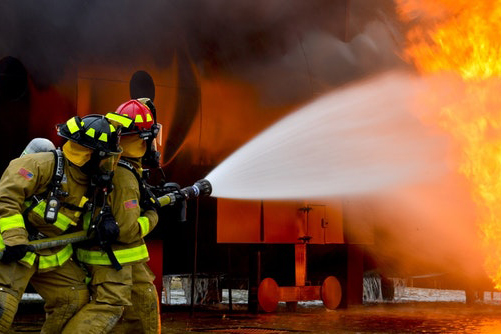
Phase 1 | Consultation: Summer/Fall 2025 Proposed Regulation: Spring 2027 | Use of PFAS (excluding fluoropolymers), not currently regulated, in firefighting foams | PFAS-containing firefighting foams and PFAS fire-suppressing agents |
Phase 2 | Consultation to follow the publication of proposed Phase 1 Regulations: 2027 | Uses of PFAS (excluding fluoropolymers) not needed for the protection of health, safety or the environment, with a particular focus on consumer applications where alternatives are known to exist |
|
Phase 3 | Consultation to follow Phase 2 risk management: To be determined | Uses of PFAS (excluding fluoropolymers) for which currently there may not be feasible alternatives and requiring further evaluation of the role of PFAS |
|
The proposed Risk Management Approach is open for consultation to all interested parties until May 7, 2025.
It should be noted that all steps of the phase-out would include consultation with industry and would come with cost-benefit analyses.
In addition, voluntary risk management actions are also being considered to achieve early results to reduce releases of PFAS, as a complement to the proposed regulatory instruments.
Current Actions on PFAS
The proposed phase-out does not make any immediate changes to the regulation of PFAS in Canada. Some risk management controls are ready in place, such as:
Following scientific assessments in 2006 and 2012, PFOS, PFOA and LC-PFCAs, their salts, and their precursors have been governed by the Prohibition of Certain Toxic Substances Regulations, 2012;
Recently, 163 PFAS were added to the National Pollutant Release Inventory, which requires facilities to report annually their releases and disposals of these substances.
Under CEPA’s New Substances Notification Regulations (Chemicals and Polymers), new PFAS must be notified and assessed for potential risks.
A mandatory notice with respect to 312 types of PFAS was published under section 71 of CEPA on July 27, 2024, with a reporting deadline of January 29, 2025.