Request a Demo
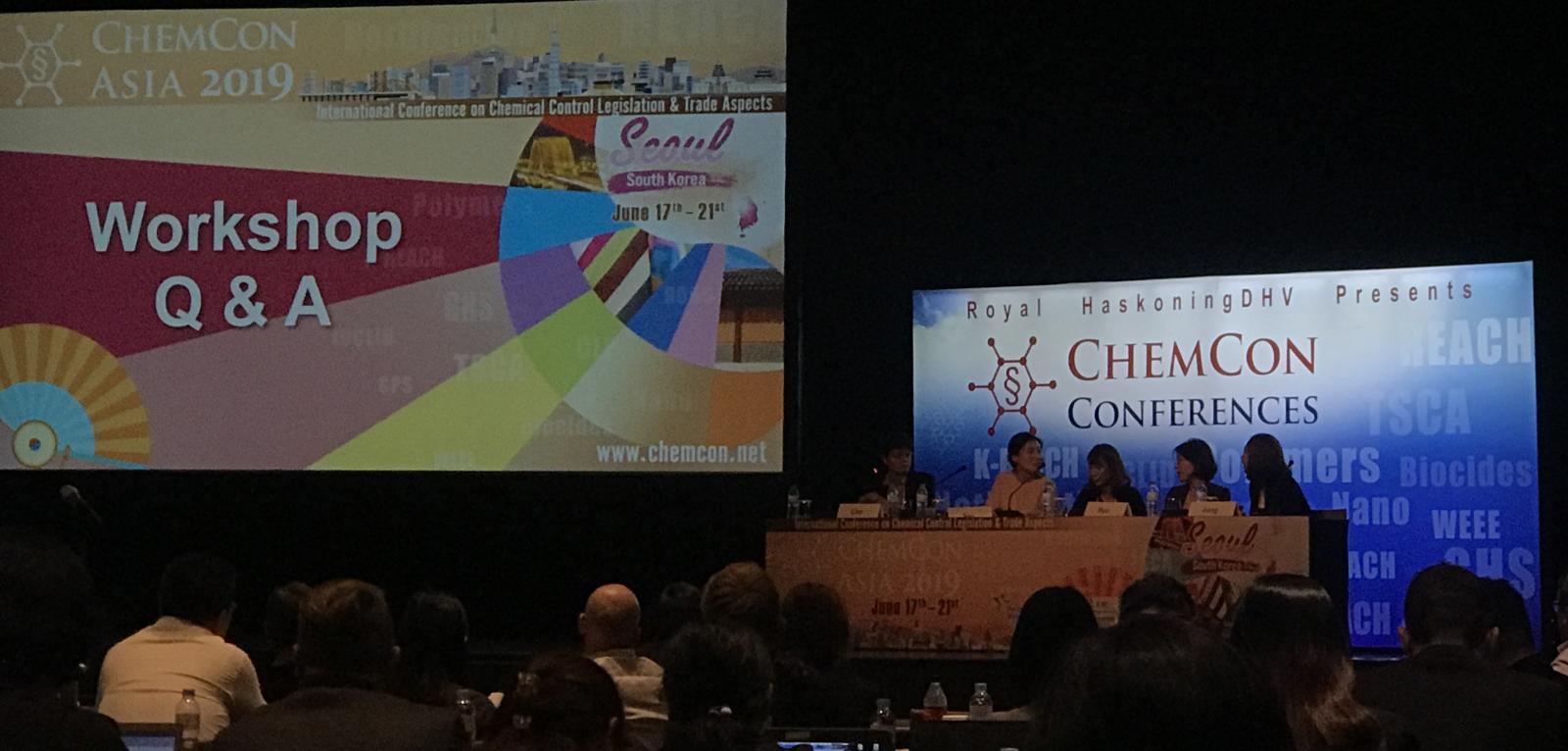
Interest in South Korea’s REACH-like regulation (K-REACH) amongst stakeholders is at an all-time high as the June 30th, 2019 pre-registration deadline fast approaches. Some officials from the Ministry of Environment (MoE) and industry representatives offered insightful presentation on pre-registration during ChemCon Seoul on Jun 17 and 18, 2019.
K-REACH pre-registration of existing chemical substances (44,476 substances) will end this month. During Chemcon, Ms. Min-A Seo from MoE offered details and data on pre-registration stating that a total of 27,104 applications were submitted by 2,229 companies for 7,585 chemical substances by May 23rd, 2019. On average, one company applied for 3 to 4 substances.
It should be noted that there are 61 toxic chemical substances that are regarded as "existing chemical" despite the fact that they have no KE number (Korean existing chemical number). The toxic substances and their salts should complete the pre-registration as well.
Late pre-registration is applicable to chemicals manufactured or imported over 1 tone/year for the first time after the deadline and before the corresponding phase-in registration deadline. Enterprise that miss the pre-registration deadline and still want to continue manufacturing or importing are ineligible for late pre-registration and a suspension of manufacture or import will be imposed. However, the 510 PECs are not eligible for pre-registration/late pre-registration and are not subject to the phase-in registration grace period. PECs (≥ 1 t/a) should be registered immediately before manufacture/import.
After pre-registration, the phase-in registration grace period will be given, which will be individualized based on manufacture or import volume and hazard class. However, the CMR substances above 1 t/y should be registered by Dec 31st, 2021 regardless of tonnage band.
K-REACH requires more information than EU REACH for pre-registration, like importer information, hazard classification and uses. Industry has voiced concerns over uncertainties on compliance procedures in circumstances where there is conflicting hazard classification as specified by other legislation/regulation e.g K-OHSA, NCIS (public by NIER), self-classification differs or the hazard class differs as specified in the regulatory frameworks of other countries/regions like EU CLP, etc. Ms. Min-A Seo said that the classification submitted at this stage is up to companies themselves and the classification can be updated later. The most important thing at present is speeding up pre-registration before the deadline since the deadline is fixed and no extension will be offered. Another concern relates to the change of OR. According to Ms. Min-A Seo, changing OR is acceptable.
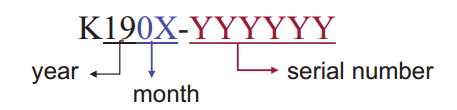
For downstream user communication, the registration receipt number should be shared. The receipt number could be assigned as below.
Ms. Min-A Seo also introduced the authority’s future plans to support smooth formation and operation of consortium during joint registration. If no Lead Registrant (LR) is elected one year before corresponding registration deadline, the MoE can recommend the member with highest tonnage become the LR. In addition, the MoE is cooperating with the Customs to see if it is practical for customs to tighten post-registration management of chemicals in South Korea.
Suhun Jung from LANXESS shared her industry experience on pre-registration and she emphasized that pre-registration is very important since only pre-registered existing substances can benefit from a registration grace period. She also stressed that for industry faced with new regulatory compliance obligations continuity of business is the first priority, so cover substances relevant to your business as much as possible in the pre-registration stage.
Jeff Li from P&G presented on how to organize yourself for K-REACH and he said that 6 months seems long for pre-registration, but in practice the deadline is really tight. Pre-registration is also only the beginning of a longer road to compliance with chemical regulations in Korea, compliance issues encountered during pre-registration can have a lasting impact. Government and industry cooperation is critical and both sides should work together on smooth implementation of K-REACH.