Request a Demo
During the 16th Chemical Regulations Annual Conference (CRAC) held on September 5, 2024, Mr. Doo Yong-kyoon, Deputy Director of the National Institute of Chemical Safety (NICS), provided an in-depth discussion on the new trends in Korean chemical assessment and management.
Chemical Notification and Registration Status
Mr. Doo shared the relevant statistics on chemical registrations under K-REACH from 2015 to June 2024. “As of June 2024, approvals for 10,843 new chemical substances and 10,438 existing chemical substances have been processed under K-REACH.” he stated. Table below shows the detailed statistics.
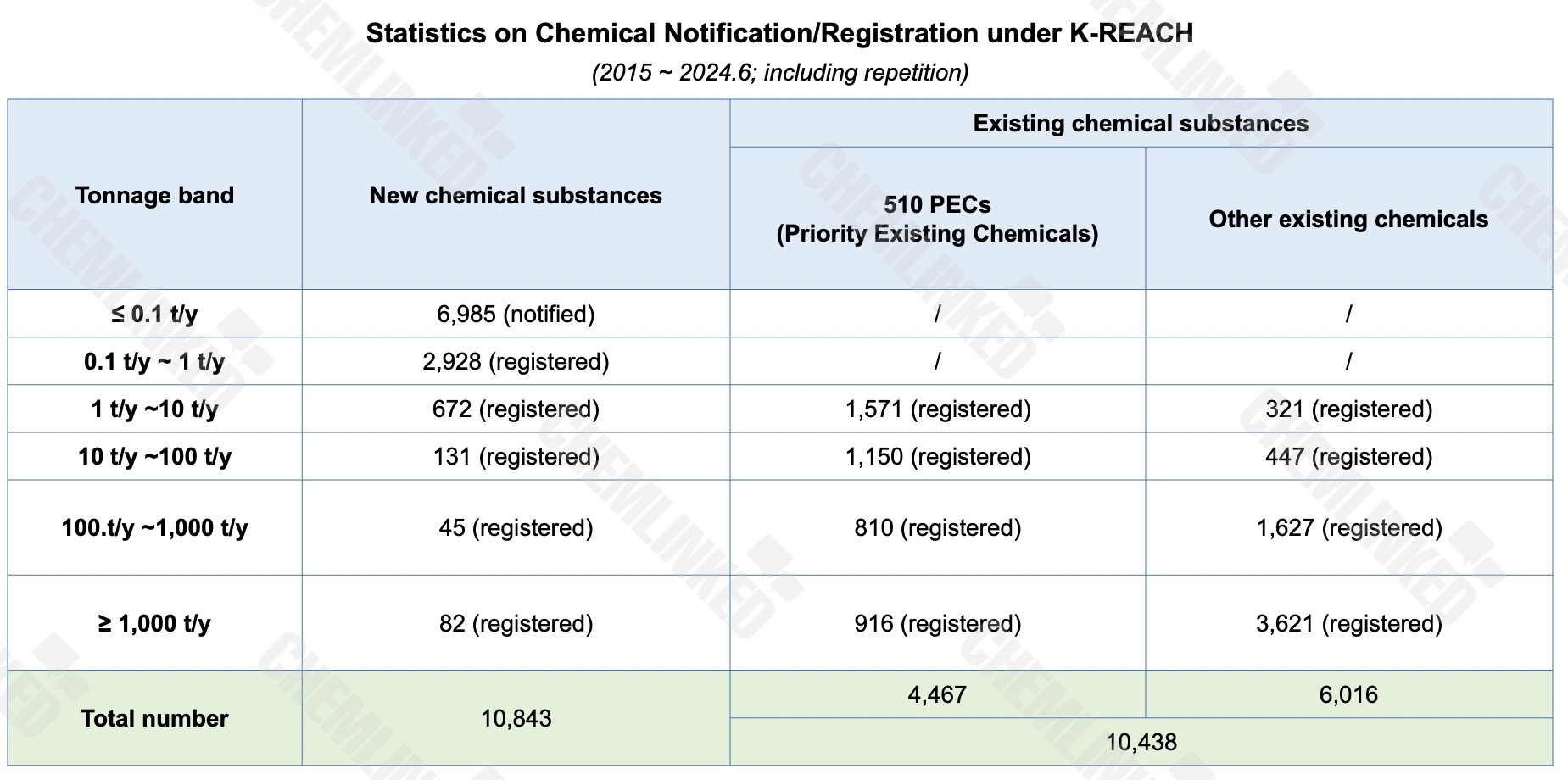
Under K-REACH, pre-registered substances are granted a grace period to manufacture or import existing chemicals before the corresponding phase-in registration deadline. The registration deadline for 100 t/y ~1000 t/y is due by December 31, 2024. Mr. Doo reminded the stakeholders to speed up the registration work.
Regulatory Updates and Trends
New Chemical Registration
The proposed update on the critical tonnage band (from 0.1 t/y to 1 t/y) for new chemical registration under K-REACH was adopted early this year, and it will take effect on January 1, 2025 (read more). Mr. Doo pointed out, “this initiative aims to enhance the efficiency of new chemical registrations under K-REACH, reduce compliance burdens, and optimize the preparation and transmission of hazard information to align with EU standards”.
Data Submission Requirements
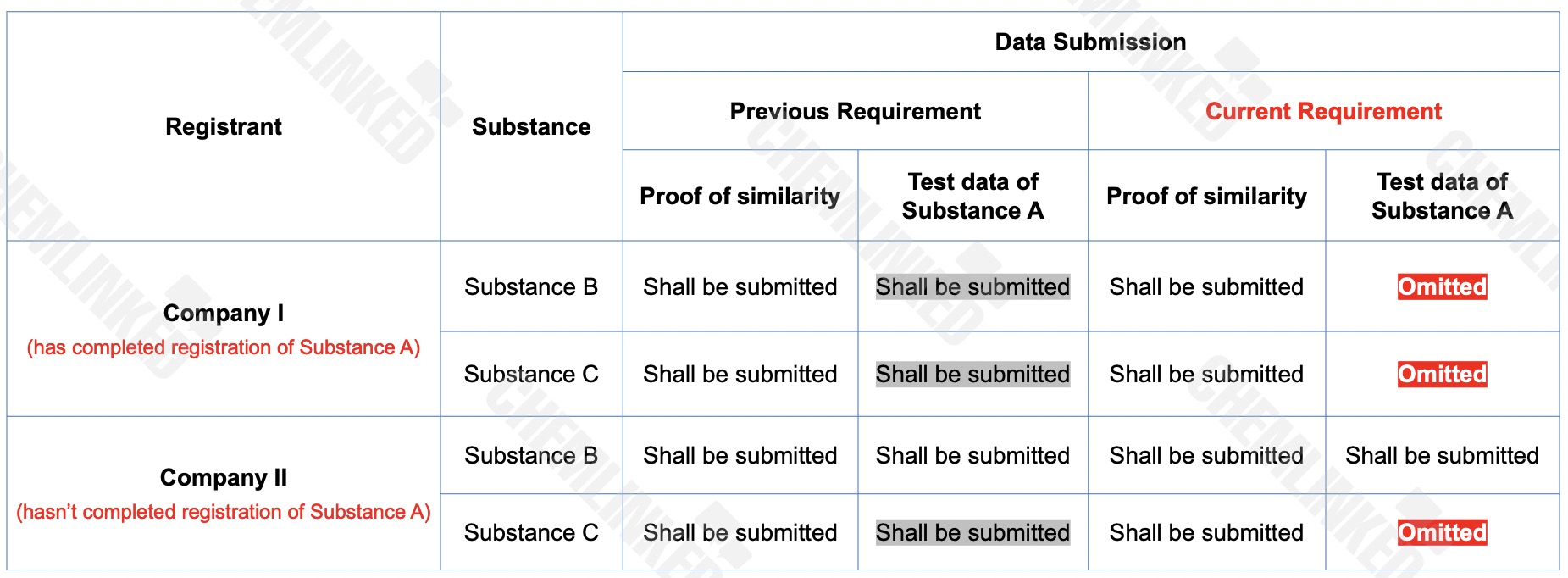
Mr. Doo also illustrated the simplified data submission requirements, especially for similar chemical substances (e.g., various lubricants). According to the revised K-REACH Enforcement Rules, when applying for registration of chemical substances similar to a registered chemical, the submission of relevant test data can be omitted if the registrant can prove they have similarity. Here provides an illustration to help you understand the simplified requirements.
Toxic Chemicals Classification and Management
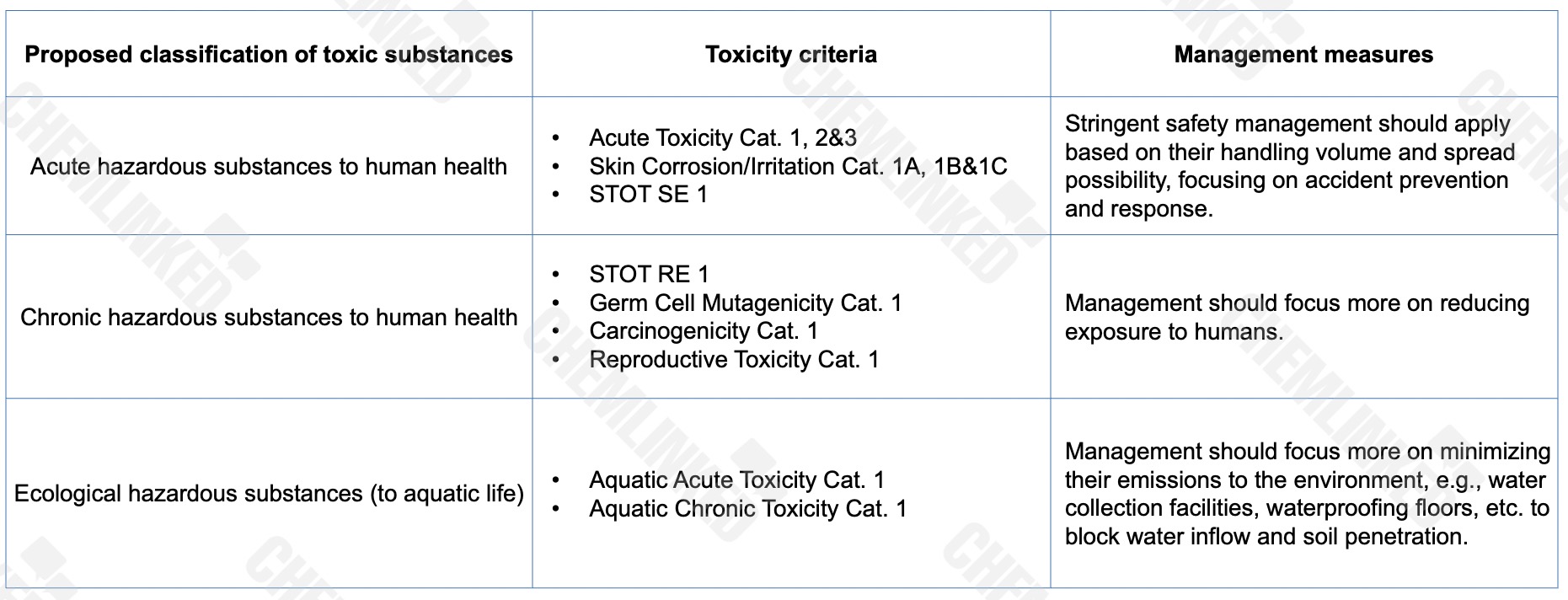
As Mr. Doo introduced, for chemicals registered under K-REACH, hazard assessment will be carried out by NICS and the results and updates will be published on the NICS website (https://nics.me.go.kr/main.do). If any chemicals are found toxic after hazard assessment, they will likely to be designated as toxic chemicals and compliance requirements under K-CCA will apply. According to the amendments to K-REACH and K-CCA, toxic substances will be classified into three types based on their hazards, and more appropriate management measures under K-CCA will apply.
During the Q&A session, Mr. Doo addressed the licensing requirements for toxic substances, confirming that they remain aligned with current regulations. However, there could be changes in the materials submission in the future.