Request a Demo
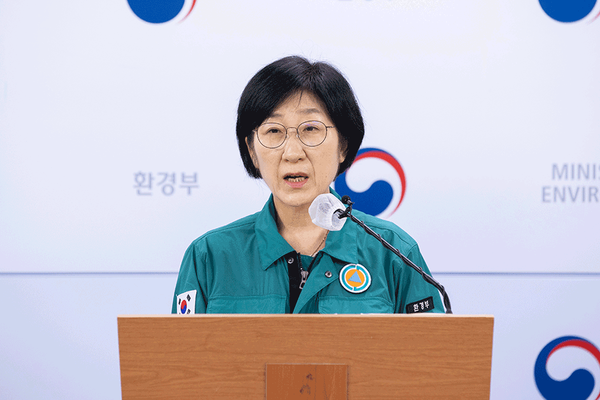
At a press conference held on 24 August 2023, Ms. Han Hwa-jin, the Minister of South Korea’s Ministry of Environment (MoE) announced MoE’s efforts to streamline chemical management regulations in order to reduce compliance burdens on industries while ensuring environmental protection. The authority recognizes that strict regulations can sometimes create market distortions, monopolies and hinder fair competition even if they were introduced with good intentions. To address these issues, the MoE has proposed amendments to key regulations over the past few months, some of which are already in effect.
Regarding chemical registration
According to Ms. Han, Korea is calling for a chemical management system that meets global standards for international cooperation. One notable change is the adoption of the MoE proposed to adopt a critical tonnage band of 1 t/y for new chemical registration, aligning with EU standards. Currently, under K-REACH, the tonnage band is 0.1 t/y. The new tonnage band is expected to be in force from 2025, and new chemicals at or below 1 t/y will only require notification instead of registration. Ms. Han pointed out that, this change is expected to benefit over 700 companies, particularly those in high-tech industries like semiconductors and electronics. By reducing registration costs and enabling early product launches, these companies are projected to achieve a total economic effect of 200 billion won by 2030.
Besides, the MoE initiated some supporting programs and financial supports to help the industry complete existing chemical registration in a timely manner. Ms. Han stressed that approximately 16,000 companies should complete the registration of existing chemicals by 2030. Simplified requirements for test data submission, including the acceptance of overseas data and reduced registration costs, are expected to save an estimated 100 billion won for them.
 Source: Korean Ministry of Environment
Regarding toxic substance control
In many seminars themed on chemical safety management in Korea, concerns have been raised by the public regarding the current unreasonable management requirements for certain toxic substances. According to the current rules, if a chemical substance used by the public in daily life is designated as a toxic substance, it may be subject to the same management requirements as those in the workplaces (e.g., wearing personal protective equipment) irrespective of its hazard properties, which has caused inconvenience and imposed compliance burdens.
Taking this into consideration, in early 2023, the MoE aims to transfer from uniform management to risk-proportional management. This means that the management requirements under K-CCA will be based on toxicity categories, hazard properties and the volume of toxic chemicals handled at workplaces, e.g., business licensing and toxic substances handling facilities management requirements. The proposal document for this change has been submitted to the Congress and internal discussions are ongoing. The new rules are probably to be implemented within 2023.
Overall, the MoE seeks to revolutionize regulations related to chemical safety management. By implementing structural reforms, streamlining processes, and introducing new rules, the MoE aims to achieve economic benefits, enhance public safety, and encourage investment in various industries.
Previous ChemLinked articles that you may be interested in:
New Substances below 1 t/y Only Require Notification under K-REACH, Starting from 2025
Korea to Update Requirements for Low-volume New Chemical Registration
Korea Allows Non-disclosure of K-REACH Registration Number on MSDS Transferred to Downstream Users
Korea to Incorporate New Rules for Toxic Substances Control under K-CCA