Request a Demo
1. Background
Recently, REACH24H China NCSN group received a technical comment from the Expert Committee about one Simplified Notification project (general case), of which REACH24H helped to submit the dossier. The comment goes that "According to the existing data, the new chemical will be identified as Hazardous of Priority Environmental Concern; therefore the Risk Management Measures should be supplemented in the dossier, as well as the estimated concentrations of the notified chemical in the environment". However, the term "Hazardous of Priority Environmental Concern" is most frequently related to the regular notification announcement or the official publication on the registration status of regular notification case, nevertheless this time it was included in the expert comment of this simplified notification case. The natural question pops out: "Will chemicals notified through simplified notification also be identified as Hazardous of Priority Environmental Concern?" Some detailed interpretation might be necessary to clarify the confusion.
2. Introduction of the Categorized Management Model Adopted by China NCSN
According to the "Measures on the Environmental Management of New Chemical Substances (MEP Order 7)", new chemicals will be identified as General Category and Hazardous Category, taking into account the hazard property of chemicals. Chemicals of Hazardous Category which are found PBT, vPvB, or extremely toxic to human beings or environment, will be further identified as Hazardous of Priority Environmental Concern. Till Nov 18th 2013, MEP has published 115 registration certificates of regular notification case (be approved or to be approved), involving 120 new chemical substances, of which 26 are general chemicals, 49 are hazardous, and 45 are hazardous of priority environmental concern.
From the perspective of administrative management, these three categories are established by MEP to facilitate the management of new chemicals. This "hazard-based categorized management” model is newly introduced to the revised "Measures" (MEP Order 7), which is absent in the previous version (SEPA Order 17), which makes the follow-up track and inspection of the registered new chemicals much easier for local environmental protection departments. However, it should be noted that only regular notification fall under this hazard-based categorized management system.
Although the chemicals notified through simplified notification (general case) would be classified accordingly, no post-notification management would be implemented on them. Furthermore, the classification result will not be displayed on the notification certificate. In other words, chemicals will not be subject to follow-up post-notification obligation even though they are classified as hazardous or hazardous of priority concern. This contradictory scenario reflects the authority relaxed attitude towards chemicals of simplified notification, which presents little hazard to the environment due to small tonnage band. Figure 1 shows the typical authority supervision flow.
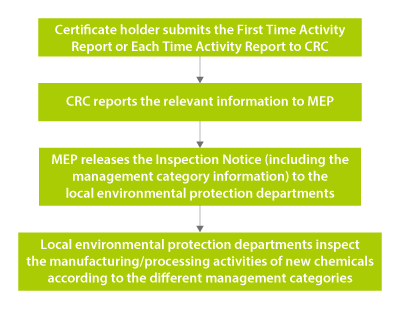
Figure 1. Flowchart of management by the relevant authorities
3. Procedures for Classification of Management Category
Generally, for a regular notification case, chemicals are categorized based on the results of hazard assessment process, which is part of the Risk Assessment Report. Below is the categorization procedure for both simplified (generalcase) and regular notification.
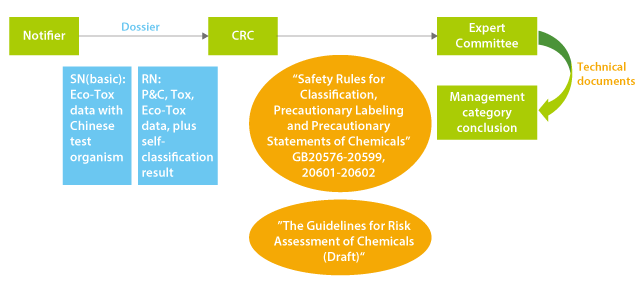
Figure 2. Procedure for classification of management categories for both simplified (general case) and regular notification.
3.1 Dossier Requirement
The Expert Committee of MEP will draw conclusion on the administrative management category of chemicals. For a regular notification case, the notifier should provide data satisfying the minimum data requirements (including Physical & chemical, toxicological, eco-toxicological), and also the self-classification result obtained according to "Safety Rules for Classification, Precautionary Labeling and Precautionary Statements of Chemicals (GB 20576 - 20599, 20601 - 20602)"; as for a simplified notification (general case), the dossier should include the eco-toxicological test result performed on Chinese test organism within the Customs territory of the PRC. All materials would be referred by the Expert Committee to perform the categorization. Extra data will be required if the Expert Committee believe the existing material is not sufficient to draw the conclusion.
3.2 Hazard Classification of Chemicals
The series of 26 standards "Safety Rules for Classification, Precautionary Labeling and Precautionary Statements of Chemicals (GB 20576-20599, 20601-20602)" is the current basis for classification of chemicals in China(the updated version of "Rules" which was referred to the UN GHS 4th version includes 28 classifications, which is not published yet). Among the 26 classification standards, of which there is 16 P&C classification rules, 9 health hazards classification rules and 1 environmental hazards classification rules. Besides, "Guidelines for Hazard Identification of New Chemical Substances (Draft)", which was amended on the basis of "Guidelines for Hazard Assessment of New Chemical Substances (HJ/T 154-2004)", and released by MEP in Sep, 2011, serves as the main guidance document for identifying management categories of chemicals. The classification criteria of General Category, Hazardous Category and Hazardous of Priority Environmental Concern Category are introduced in details in the "Guidelines (Draft)".
3.3 Classification of Administrative Management Categories
According to the "Guidelines (Draft)", the hazards identification can be divided into three scopes, identification of P&C hazards, human health hazards and environmental hazards, respectively. Firstly the new chemicals are classified according to the "Rules", and after the hazard classifications, they will be further divided into the corresponding management categories based on their hazard class. Table 1 briefly summarizes the criteria for identifying chemicals’ corresponding management category based on their hazard class (Please note that this table is prepared according to the draft Guidelines, which is subject to change). For the P&C hazards identification and human health hazards identification, the standards for all of the inclusive classifications can be found in the "Rules", e.g. explosives, oxidizing gases/liquids/solids, acute toxicity and carcinogenicity. However, for the environmental hazard identification, there is only one standard named "Safety Rules for Classification, Precautionary Labeling and Precautionary Statements of Chemicals – Hazardous to the aquatic environment (GB20602-2006)", covering the acute aquatic hazard classification and chronic aquatic hazard classification. The activated sludge respiration inhibition hazard classification, acute toxicity to Earthworm classification and seed germination/root elongation toxicity classification can only be concluded according to the additional rules in the "Guidelines (Draft)".
Table 1 Classification criteria of Chemicals’ Administrative Management Category
Category | Hazard Classifications | Hazard Classification Reference | |
Hazardous | Physical & Chemical | Identified as any of the following: Flammable gases(1-2), Oxidizing gases(1), Flammable liquids(1-3), Flammable solids(1-2), Pyrophoric liquids(1), Pyrophoric solids(1), Substance which, when in contact with water, emit flammable gases(1-3), Oxidizing liquids(1-3), Oxidizing solids(1-3), Organic peroxides(1-4) | "Safety Rules for Classification, Precautionary Labeling and Precautionary Statements of Chemicals"(GB 20576 - 2006 ~ GB 20591 - 2006) |
| Health | Identified as any of the following: Acute toxicity(1-3), Skin corrosion/irritation(1-2), Serious eye damage/eye irritation(1-2), Respiratory or skin sensitization(1-2), Germ cell mutagenicity(1-2), Carcinogenicity(1-2), Reproductive toxicity(1-2), Specific target organ system toxicity(Singleexposure1-2, Repeated exposure1-2) | "Rules"(GB 20592 - 2006 ~ GB 20599 - 2006, GB 20601 - 2006) | |
| Environment | Identified as any of the following: Hazardous to the aquatic environment (Acute aquatic hazard 1-3, Chronic aquatic hazard 1-4), Activated Sludge Respiration Inhibition(1-3), Acute Toxicity to Earthworm(1-3), Seed Germination/Root Elongation Toxicity (1-3) | "Rules"(GB20602-2006), "Guidelines for Hazard Identification of New Chemical Substances (Draft)" | |
Hazardous of Priority Environmental Concern | Physical & Chemical | Substances with only Physical & Chemical hazard will not be classified into this category | |
| Health |
Identified as any of the following: Germ cell mutagenicity(1-2), Carcinogenicity(1-2), Reproductive toxicity(1-2), Specific target organ system(Repeated exposure1-2) | "Rules"(GB 20592-2006 ~ GB 20599-2006、GB 20601-2006) | |
| Environment | Identified as any of the following: Hazardous to the aquatic environment (Acute aquatic hazard 1, Chronic aquatic hazard 1-2), Activated Sludge Respiration Inhibition(1), Acute Toxicity to Earthworm(1), Seed Germination/Root Elongation Toxicity (1) PBT, vPvB | "Rules"(GB20602-2006); "Guidelines(Draft)"; PBT, vPvB Identification standards in China(GB/T24782-2009) | |
General | The chemicals which is not identified as any of the hazardous categories(none of the P&C, Health, Environment) will be regarded as General category | ||
*Please note that this table is prepared according to the "Guidelines (Draft)", which is subject to change.
Case 1: If a chemical is only classified as skin irritation 2 and skin sensitization 2, it will be identified as Hazardous Category; and for a carcinogenic chemical, it will be the Hazardous of Priority Environmental Concern Category.
Case 2: As for simplified notification (general case), in some cases the fish acute toxicity and earthworm acute toxicity testing data are required (data waving). Referring to Table 1, if the testing results indicate the chemical is classified as acute aquatic hazard (classification 2-3), or acute toxicity to earthworm (classification 2-3), the chemical will be identified as Hazardous Category; if the testing results indicate the chemical is classified as acute aquatic hazard (classification 1), or acute toxicity to earthworm (classification 1), the chemical will be identified as Hazardous of Priority Environmental Concern Category.
Back to the case mentioned in the beginning of this article, the fish acute toxicity testing result of the substance is 96h-LC500.630 mg/L. According to the standard "Safety Rules for Classification, Precautionary Labeling and Precautionary Statements of Chemicals –Hazardous to the aquatic environment (GB 20602-2006)", the chemical is classified as acute aquatic hazard (classification 1). Hence, the chemical will be identified as Hazardous of Priority Environmental Concern Category according to the "Guidelines (Draft)". Considering that the hazards of this kind of chemical will lead to increased risk to the human health and environment, the Expert Committee made the requirement for the notifier to supplement the RMMs and concentration estimates in the environment.
4. Advice Summary
Herein, REACH24H China NCSN group made the following suggestions for the corporations who need to comply with the China new chemical substance notification:
For a regular notification case, the hazards classification would be a very important concern of the Expert Committee, so do get the data well-prepared and perform the self-classification according to the GB standards "Safety Rules for Classification, Precautionary Labeling and Precautionary Statements of Chemicals";
For a simplified notification (general case), although the self-classification is not required as regular notification case, prediction of hazard classification is recommended once the eco-tox testing results are obtained. The "Guidelines for Hazard Identification of New Chemical Substances (Draft)" can be used as reference. If it is estimated the chemical will be identified as Hazardous Category or Hazardous of Priority Environmental Concern Category, it’s better to include the detailed usage and exposure information in the dossier. Otherwise, the notification period will be prolonged since it is very likely that the Expert Committee will ask for supplemental material to be submitted in the reviewing process.