

 Request a Demo
Updates:
On March 21, 2024, China MEE issued a notice to make public the Technical specification for nomenclature of chemical substances for environmental management (HJ 1357-2024). It will come into force on July 1, 2024.
Compared with its draft version issued in May 2023, there are some minor changes in the official version. Notably, the flowchart regarding the specific chemical nomenclature rules applied to each type of chemical substances is updated (see figure below).
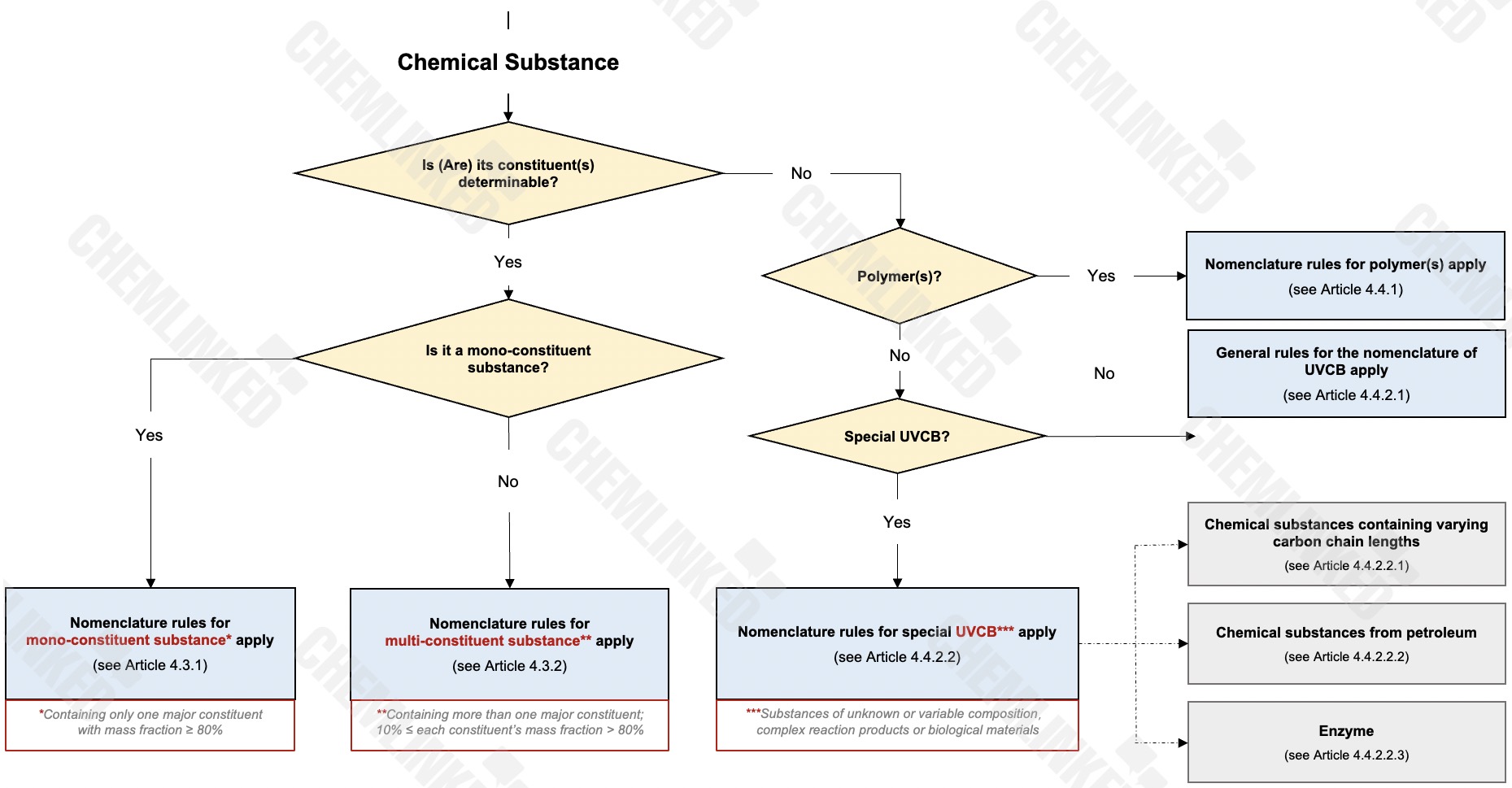
The official notice and the whole file can be accessed here. Its English Translation can be downloaded here.
---------------------------------------------------------------------------------------------------------------
On May 5, 2023, the Chinese Ministry of Ecology and Environment (MEE) opened a public consultation on the Technical Specification of Nomenclature of Chemicals for Environmental Management (Draft). The purpose of this document is to standardize the nomenclature of chemicals, which will better support new chemical registrations, the management of existing chemicals, environmental risk assessment and the control of chemicals. Comments are welcome before June 25, 2023.
Main points of the Draft
The Draft consists of four chapters, including application scope, normative references, terms and definitions, and nomenclature rules. According to the Draft, chemical substances are classified into different types based on their constituent(s), i.e., mono-constituent substance, multi-constituent substance, polymers and UVCBs. Specific chemical nomenclature rules apply to each type of chemical substances (see the flowchart below).
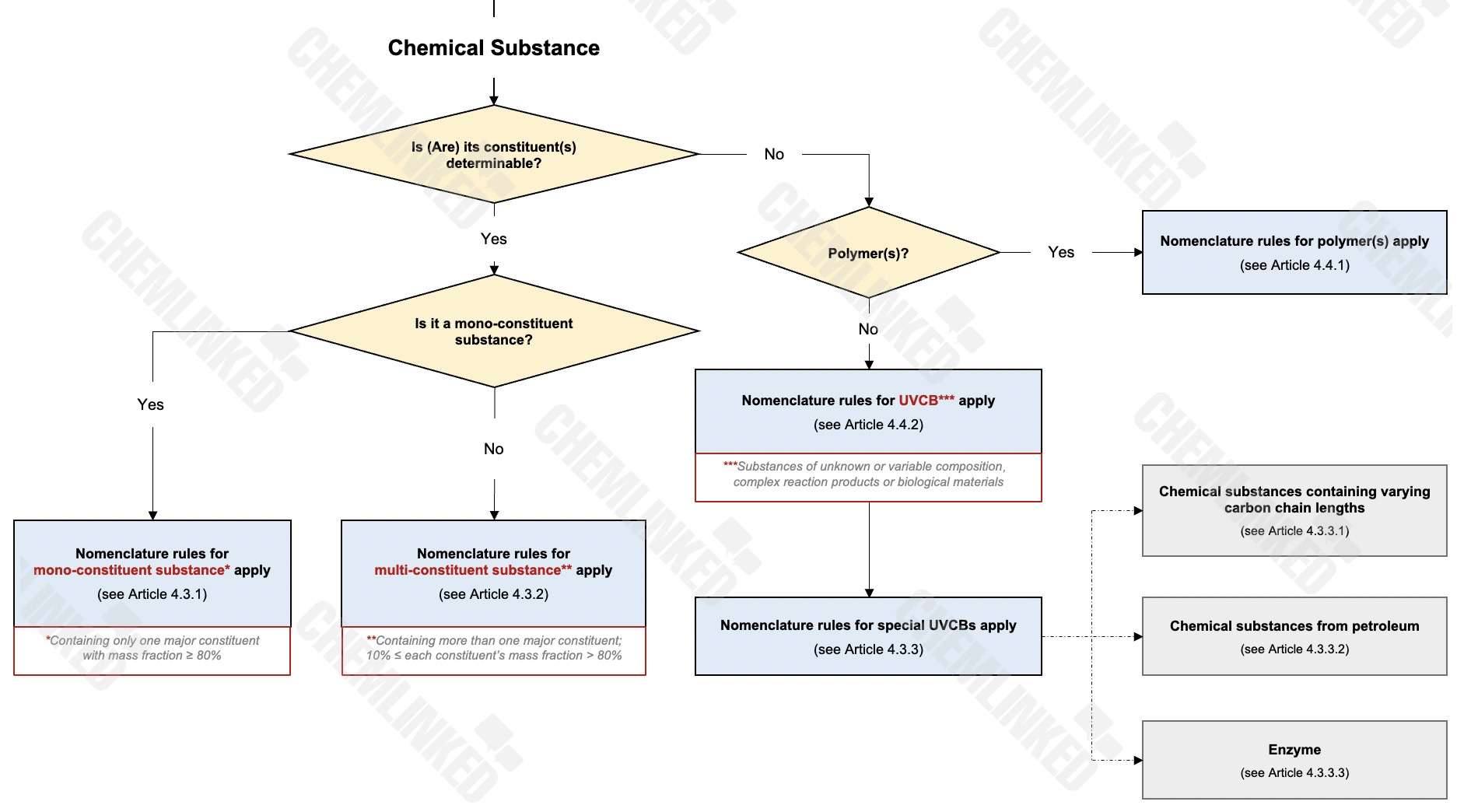 Flowchart of Determination of Nomenclature Rules for Different Types of Chemical Substances
The Draft also includes Annex A (informative), which provides examples of nomenclature for each type of chemical substances. More details can be accessed here.
Background
New chemical registration is an important mechanism in China to prevent new pollutants from entering the environment at the source. There are tens of thousands of new chemical substances registered for environmental management each year. The Inventory of Existing Chemical Substances in China (IECSC) is the only basis for identifying new and existing chemical substances and it’s an important supporting document for new chemical registration under the Measures for Environmental Management Registration of New Chemical Substances (ak.a. MEE Order No. 12). The standardized chemical nomenclature is crucial for chemical identification and their management. However, China's existing technical standards* lack systematic guidance on the chemical nomenclature in the field of environmental management. To address this issue, the MEE proposed in 2020 to develop a technical specification that fully supports the environmental management of chemical substances. After several years of discussions and revisions, the MEE has recently issued the Draft for comments.
*There are three existing technical standards related to the nomenclature of chemical substances in China, including:
|




