Request a Demo
As the first province to pilot China’s “One Enterprise, One Chemical Product, One QR Code” policy, Guangdong has fully implemented the use of hazardous chemical safety information code* (hereinafter referred to as ‘NRCC QR code’) for hazardous chemical management over three years.
*Hazardous chemical safety information code refers to the unique QR code automatically generated after completing the hazardous chemical registration via the national registration platform - Hazardous Chemical Registration Comprehensive Service System launched by the National Registration Center for Chemicals (NRCC) under the Ministry of Emergency Management. It’s different from the Hazchem traceability code implemented in Shanghai and Beijing (see Chempedia - China Hazardous Chemical QR Code).
Drawing from Guangdong’s practical experience, the NRCC and the Guangdong Institute of Safety Production and Emergency Management Science and Technology jointly prepared a local standard to fill the regulatory gap in addressing the hazardous chemicals QR Code application in Guangdong. A draft for approval was opened for public comments in mid-2024 (CL news). On November 11, 2024, Guangdong Administration for Market Regulation issued the local standard namely ’DB44/T 2564—2024 Application specification for safety information code of hazardous chemicals’. It will take effect on February 11, 2025.
#English Translations
DB44/T 2564—2024 Application specification for safety information code of hazardous chemicalsDrawing from Guangdong’s practical experience, the NRCC and the Guangdong Institute of Safety Production and Emergency Management Science and Technology jointly prepared a local standard to fill the regulatory gap in addressing the hazardous chemicals QR Code application in Guangdong. A draft for approval was opened for public comments in mid-2024. On November 11, 2024, Guangdong Administration for Market Regulation issued the local standard namely ’DB44/T 2564—2024 Application specification for safety information code of hazardous chemicals’.This local standard applies to the application of NRCC QR Code, concerning manufacturers, importers, transporters and supervision authorities involving the hazardous chemicals. It further clarifies the exemption criteria and provides more examples to demonstrate how to affix the NRCC QR Code under different conditions. Highlights of this local standard are summarized below.
Styles of NRCC QR Code
The NRCC QR Code has two styles, i.e., standard version and simplified version. Notably, the simplified version can only be used for packaged chemicals in volume less than 1,000 mL or 1,000 cm3.
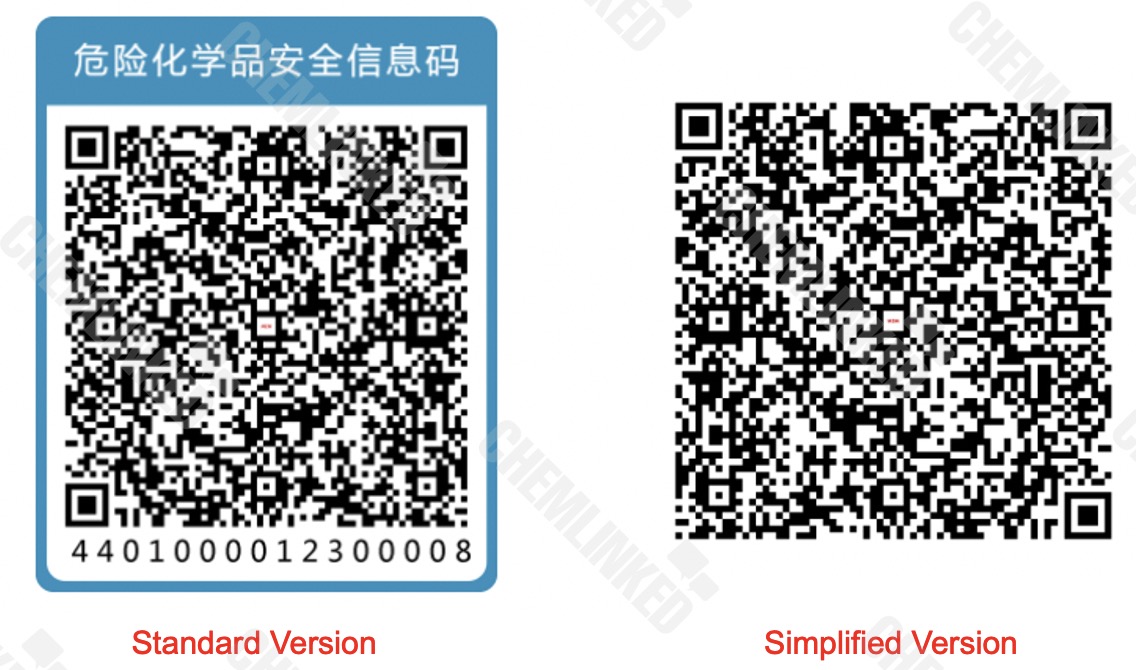
The minimum dimension of the NRCC QR Code is 1 cm by 1 cm, and it shall not be smaller than the hazard pictogram. If the information on the enterprise or chemical has any updates, the updates should be synchronized to the national registration platform to generate a new NRCC QR Code.
Affixing Requirements and Examples
For packaging that has chemical safety label attached:
The NRCC QR Code can be affixed on the bottom right of the label.
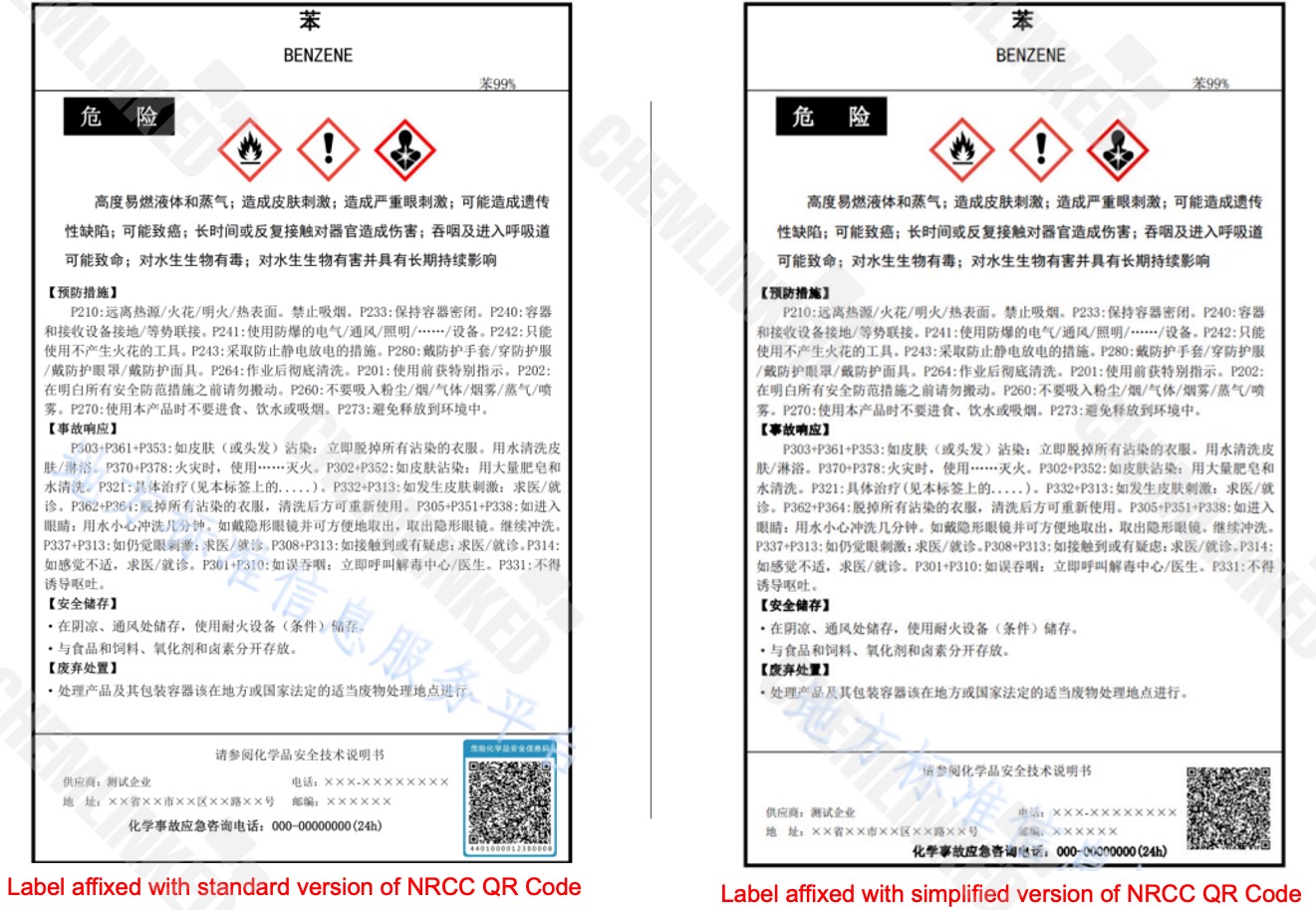
The NRCC QR Code can also be affixed next to the last hazard pictogram on the label.
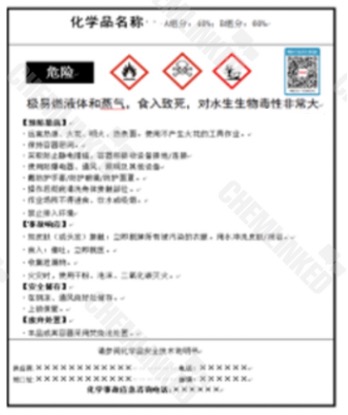
Notably, the position of the NRCC QR Code on the label shall be consistent for the same product of the same enterprise.
For packaging that does not require attaching chemical safety label:
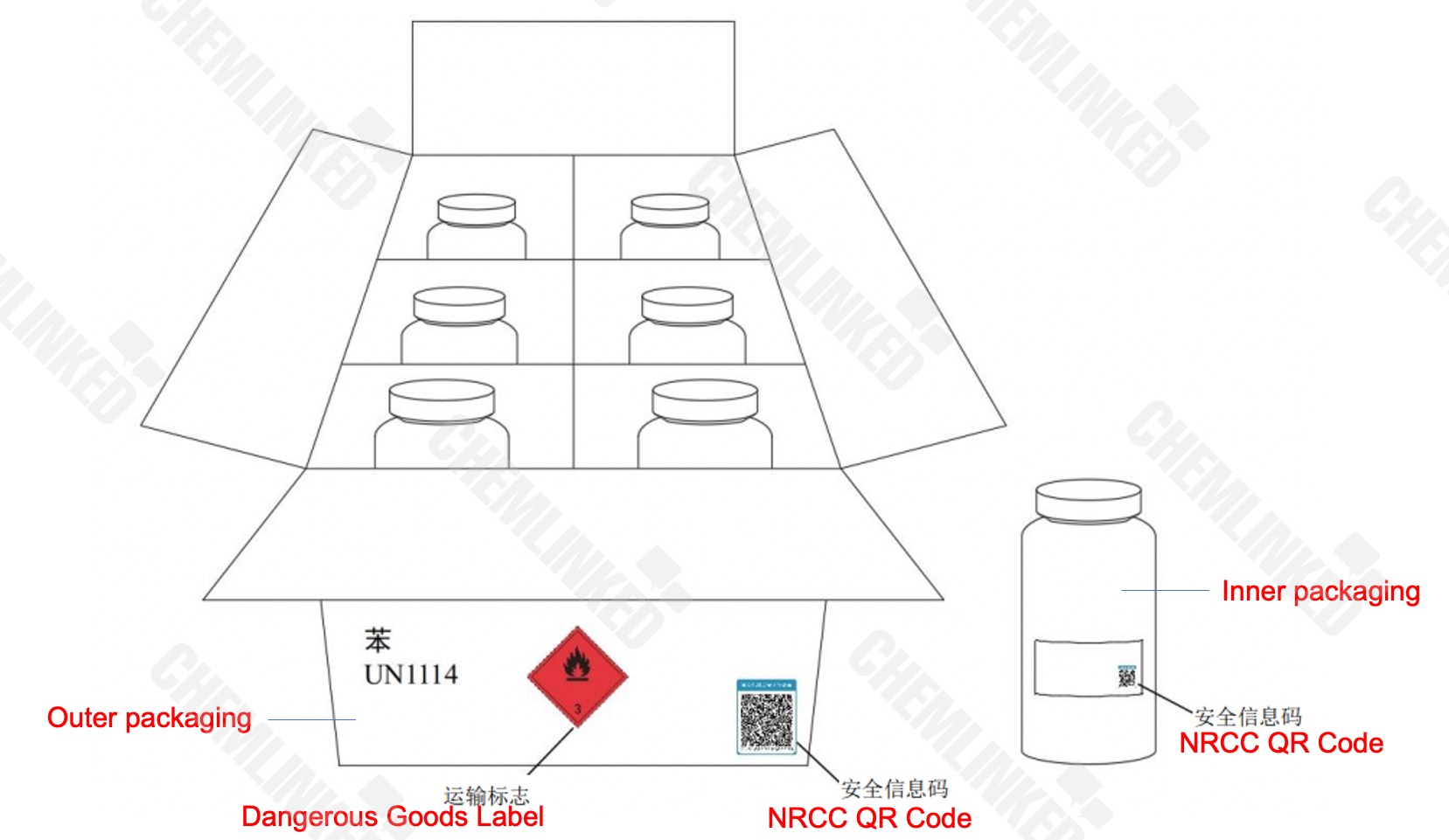
In this case, each layer of such packaging should be affixed with the NRCC QR Code. The location of the NRCC QR Code on the packaging should be prominent and should not cover key information such as trademarks, product names, production dates, expiration dates, marks, and symbols on the packaging. Specific requirements are as following:
The outer packaging of combined packaging should have the NRCC QR Code affixed next to the diamond dangerous goods label/mark. If the diamond dangerous goods label/mark is not required, it can be affixed next to the product name.
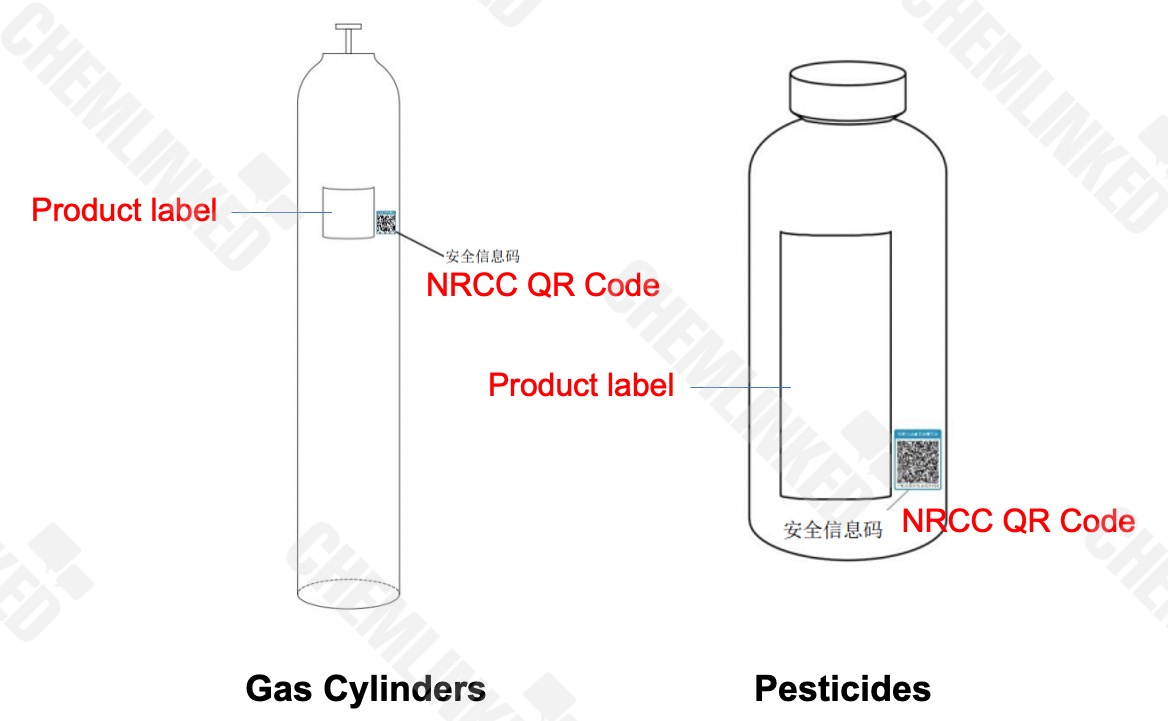
For special products such as gas cylinders and pesticides that have other specific standards, the NRCC QR Code should be affixed close to the product label.
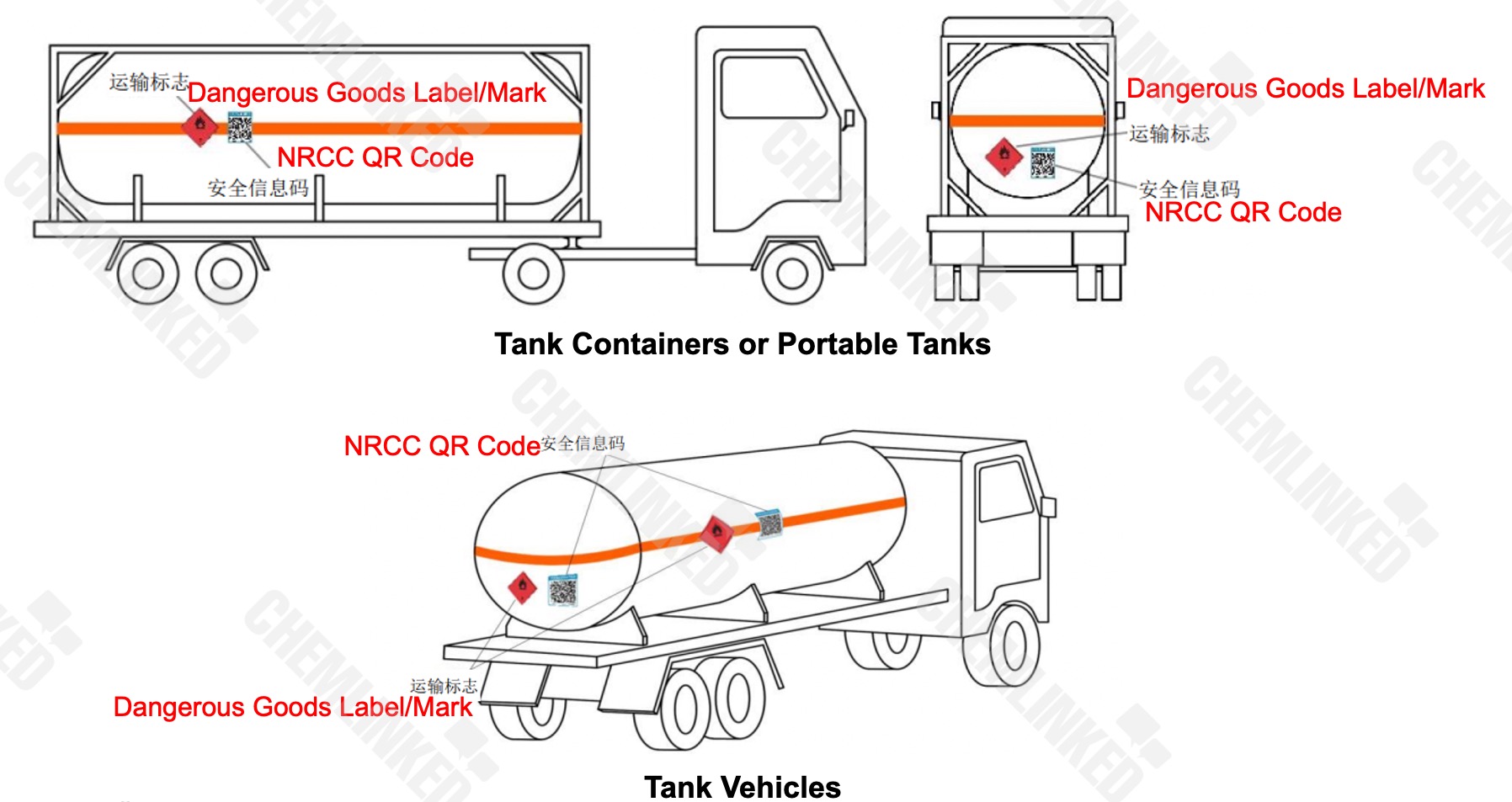
When vehicles use tank containers or portable tanks to transport hazardous chemicals, the corresponding NRCC QR Code should be affixed or hung on the rear end and sidewalls of the tank container or portable tank. When transporting hazardous chemicals by tank vehicles, the corresponding safety information code should be affixed or hung in a prominent position on the vehicle, ensuring that it does not obstruct vehicle lights, license plates, and signboards. The specific affixing or hanging positions of the NRCC QR Code on various end faces or sidewalls may be adjusted according to actual conditions.
For flexible packaging, the NRCC QR Code could be printed, affixed or sewn on it.
Exemptions
For hazardous chemicals with a single package volume not exceeding 100 mL or 100 cm3, the NRCC QR Code does not need to be printed or pasted on the inner packaging, however, it should be printed or pasted on the outer packaging.
For hazardous chemicals intended solely for export, the NRCC QR Code does not need to be printed or pasted on the inner or outer packaging.
For imported hazardous chemicals directly consumed by importers, which will not leave the factory area after entering the factory's storage tanks, the NRCC QR Code does not need to be printed or pasted on the inner or outer packaging.
For household chemical products with individual packages that can be sold separately, the NRCC QR Code does not need to be printed or pasted on the packaging.