Request a Demo
On September 19, 2024, Thailand’s Department of Industrial Works (DIW) invited the public to comment on the draft regulation "Notification on Criteria, Methods and Conditions for Advertising Hazardous Substances under the Responsibility of the Department of Industrial Works B.E. XXXX", which aims to clarify advertising requirements for hazardous substances. Comments are welcome before October 4, 2024.
Background
Nowadays, there is widespread advertising of hazardous substances through electronic media, online platforms, websites, and digital channels. To ensure stakeholders handle these substances correctly and for their intended purposes, and to prevent easy access to hazardous substances, especially cyanide compounds, the DIW has drafted this advertising regulation targeting hazardous substances under its jurisdiction. This initiative mandates that hazardous substance advertisements include instructions or warnings about their use or hazards, limits advertising media, and prohibits advertising where it is necessary to prevent harm to human health, animals, plants, property, or the environment.
Application scope
This draft regulation applies to chemicals in Annex 5 of the List of Hazardous Substances, which are intended for industrial uses and regulated by the DIW.
Proposed requirements
Advertising of hazardous substances must include the following information:
Chemical name, concentration, trade name, intended use, and contact phone number.
Clear hazard warnings, including pictograms, signal words, and hazard statements.
Comprehensive and clear instruction for safe use, avoiding ambiguous or misleading information that could lead to improper use, along with guidance on personal protective equipment.
Advertising of 16 cyanide compounds (see screenshot below) attached to this draft regulation is prohibited on electronic media, including radio, television, online platforms, websites, and digital channels.
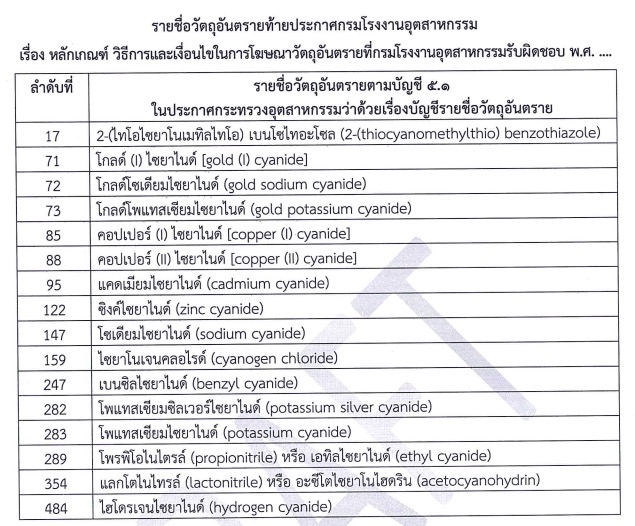 Screenshot of the Draft Advertising Regulation
Advertising of counterfeit hazardous substances, non-compliant substances, degraded substances, or substances that require registration but are not registered is strictly prohibited.
The draft regulation can be accessed here.