

 Request a Demo
Introduction on Law on Chemical
Vietnam's chemical regulatory framework has undergone a significant transformation. The foundational Law on Chemicals No. 06/2007/QH12, enacted in 2008, established comprehensive lifecycle management for chemicals, covering production, trading, import, export, use, and disposal.
On June 14, 2025, the National Assembly approved a major amendment, the Law on Chemicals No. 69/2025/QH15, which officially took effect on January 1, 2026, and fully replaces the 2007 version.
#English Translations
Law on Chemicals (No. 69/2025/QH15 )On June 14, 2025, the Vietnam National Assembly voted to approve the Law on Chemicals (No. 69/2025/QH15). This new law prescribes chemicals, management of general chemical processes; development of chemical industry; chemical information; hazardous chemicals in products and goods; safety and security in general chemical processes. It shall take effect from January 1, 2026.In general, it adheres to the following core policies:Sustainable development of the chemical industry into a modern, fundamental industrySynchronous management of chemicals throughout the entire life cycleManagement of hazardous chemicals in productsImproving the effectiveness of ensuring chemical safetyThis new law represents not merely an update but a structural overhaul of Vietnam's chemical management system. Its core objectives are to foster a sustainable, modern chemical industry while strengthening protections for human health and the environment. Key pillars of the reform include:
Sustainable development of the chemical industry into a modern, fundamental industry
Synchronous management of chemicals throughout the entire life cycle
Management of hazardous chemicals in products
Improving the effectiveness of ensuring chemical safety
Institutional Framework
The Law on Chemicals designated the Ministry of Industry and Trade (MOIT) as the core authority primarily responsible for the state management of chemical-related activities, mainly include the following duties:
Manage chemicals used in industries (including industrial precursors, CWC listed chemicals), and chemicals used in industrial consumer products;
Develop, operate and upgrade national chemical database;
Inspect and examine compliance with regulations on the management of hazardous chemicals in products and goods;
Perform the uniform management of the classification and labeling of hazardous chemicals; chemical registration and declaration and chemical safety information;
Compile and report statistics on the status of chemical safety implementation nationwide;
Carry out international cooperation in chemical activities and chemical safety;
Disseminate information, popularize, and educate on the laws regarding chemicals;
Various other ministries are also directly involved in the chemical management as follows:
Ministry of Science and Technology: Promulgate and appraise technical regulation in the chemical sectors
Ministry of Health: Pharmaceuticals, food additives, food processing aids, germicide, insecticide, etc.
Ministry of Agriculture and Environment: fertilizers, veterinary medicine, plant protection, etc.
Ministry of Construction: Transportation of hazardous chemicals
Ministry of National Defense: Resdual toxic chemicals
Ministry of Public Security: Fire prevention, chemical security and safety
Ministry of Home Affairs: Occupational safety and occupational hygiene in chemical activities
Ministry of Education and Training: Vocational training establishments within national education system
Ministry of Finance: Chemical database funding
This multi-agency approach aims to provide comprehensive oversight across the diverse applications of chemicals in Vietnam. The chemical referred in this pedia page will center on industrial chemicals, which are mainly under the jurisdiction of MOIT.
Implementation Decree to the Law on Chemical
On January 17, 2026, MOIT issued three Government Decrees and two Ministerial Circulars. These supporting regulations took effect on January 17, 2026, and replace the existing Decree No. 113/2017/ND-CP (and its amendments) and Circular No. 32/2017/TT-BCT (and its amendments).
I. Goverment Decrees
Decree No. 24/2026/ND-CP Stipulating the list of chemicals governed by the Law on Chemicals
#English Translations
Decree No. 24/2026/ND-CP Promulgating The Lists Of Chemicals Under The Scope of Law On ChemicalsOn January 17, 2026, the Government of Vietnam published Decree No. 24/2026/ND-CP Stipulating the list of chemicals governed by the Law on Chemicals. This Decree establishes the official lists of chemicals under Law No. 69/2025/QH15 and requires entities engaged in chemical activities in Vietnam to classify their substances according to these lists to meet related licensing, safety, and reporting obligations.Decree No. 25/2026/ND-CP Detailing and guiding the implementation of a number of articles of the Law on Chemicals on development of the chemical industry and chemical safety and security
#English Translations
Decree No. 25/2026/ND-CP Detailing and Measures to Organize and Guide the Implementation of a Number of Articles of the Law On Chemicals Regarding the Development of the Chemical Industry and Chemical Safety and SecurityOn January 17, 2026, the Government of the Socialist Republic of Vietnam published Decree 25/2026/ND-CP providing detailed regulations and measures to implement certain articles of the Chemical Law regarding chemical industry development and chemical safety and security.Decree No. 26/2026/ND-CP Detailing and guiding the implementation of a number of articles of the Law on Chemicals on management of chemical activities and hazardous chemicals in products and goods
#English Translations
Decree No.26/2026/ND-CP Detailing and Guiding the Implementation of a number of Articles of the Law On Chemicals regarding the Management Of Chemical Activities and Hazardous Chemicals in Products And GoodsOn January 17, 2026, the Government of the Socialist Republic of Vietnam published Decree 26/2026/ND-CP detailing and guiding the implementation of certain articles of the Chemicals Law regarding the management of chemical activities and hazardous chemicals in products and goods.II. Ministerial Circulars
Circular No. 01/2026/TT-BCT Detailing and guiding the implementation of a number of articles of the Law on Chemicals and Decree No. 26/2026/ND-CP
Circular No. 02/2026/TT-BCT Detailing and guiding the implementation of a number of articles of the Law on Chemicals and Decree No. 25/2026/ND-CP
Who Are Affected?
Organizations and individuals engaged or involved in chemical-related activities in Vietnam, which mainly include:
Manufacturer
Importer/exporter
Domestic trader
User
Regulated Chemicals
Decree No. 24/2026/ND-CP designates 4 lists of chemicals governed under the Law on Chemicals, including:
1. Annex I. List of Basic Chemicals in the Field of Key Chemical Industries
This list includes 39 chemicals that are fundamental to the chemical industry, such as acetic acid, ammonia, benzene, ethanol, and various industrial gases and acids.
2. Annex II. List of Chemicals subject to Conditional Production and Trading (Conditional Chemicals)
This list contains 786 chemicals. Their production and trade require meeting specific conditions and obtaining a certificate of eligibility from Provincial People's Committee.
3. Annex III. List of Chemicals Requiring Special Control
This list contains 241 chemicals that are under stricter control for import, export, and use due to their high-risk nature, including industrial precursors and chemicals listed under Stockholm and Rotterdam Convention.
Note: If a mixture contain both conditional chemicals and chemicals requiring special control, it shall be considered a mixture subject to special control.
4. Annex IV. List of Hazardous Chemicals Requiring Chemical Incident Prevention and Response Plans
Include both chemicals on Table A of Annex IV and mixtures containing chemical substances specified in Table A that meets the GHS classifications and specified quantities specified in Table B of Annex IV.
In addition to Decree No. 24/2026/ND-CP, the Law on Chemicals itself also designates a List of Banned Chemicals, which are hazardous chemicals under list of banned chemicals and mineral in accordance with Law on Investment (Annex II).
Use ChemCheck to identify if your chemicals are listed in the Vietnam chemical inventory by simply entering CAS number or chemical name. Other information including hazard classification, compliance tips are also available for your reference.
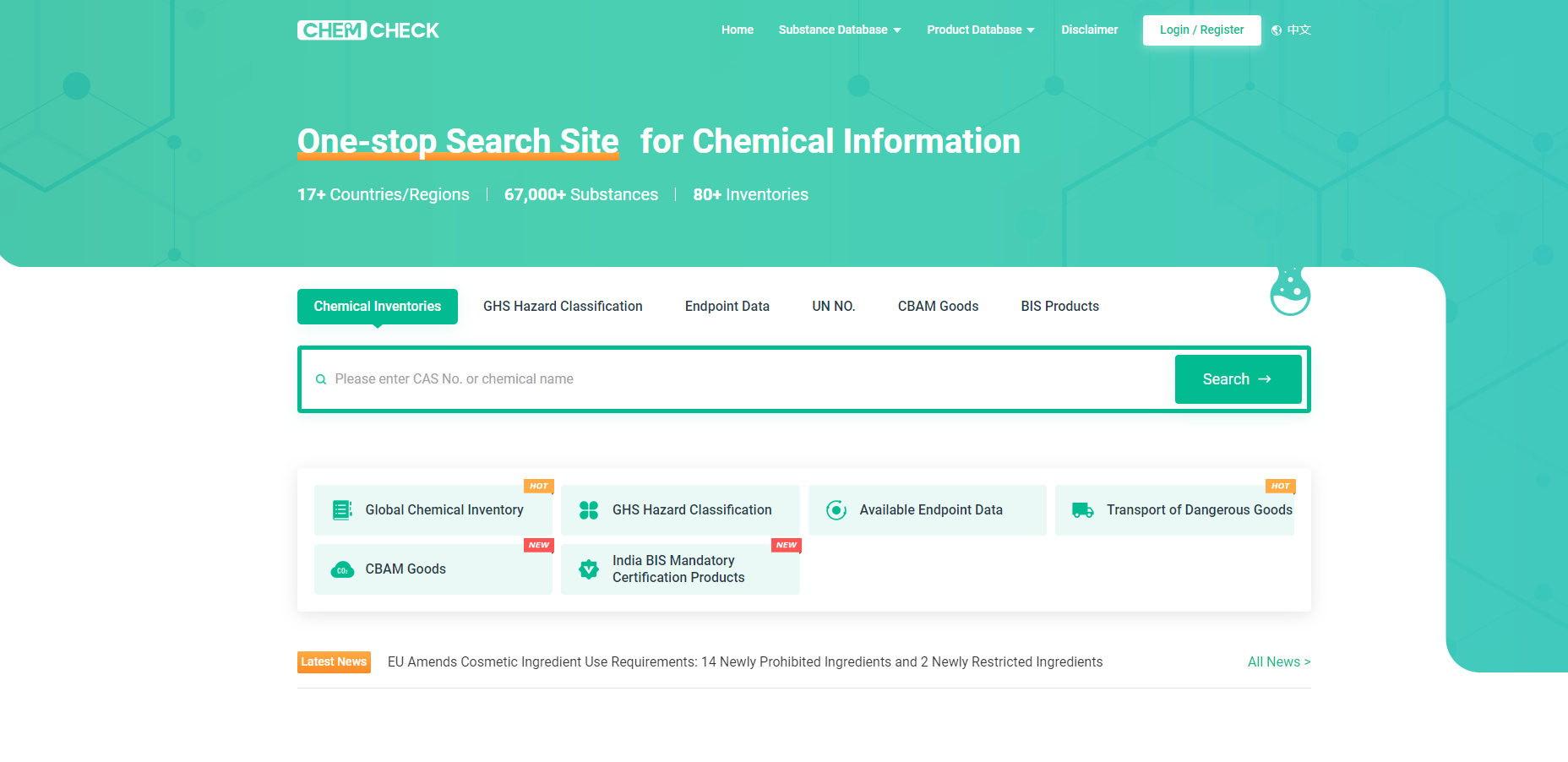 Figure 2 - A Snapshot of Chemcheck website
Obligation for Regulated Chemicals
Vietnam's chemical legislation framework establishes a risk-based management system, with obligations becoming progressively stricter from Conditional Chemicals to Banned Chemicals.
Here is a summary table outlining the key obligations for the main categories of chemicals under the new regulatory framework:
| Category | Primary legal instrument | Requirements | Exemptions |
| Conditional chemicals | Certificate of eligibility | Production/trading: require certificate of eligibility issued by the Provincial People's Committee (PPC) | < 0.1% of concentration in mixtures |
| Chemicals requiring special control | License | Production/trading/export/import: require specific licenses issued by MOIT | Production and trading: < 0.1% of concentration in mixtures Import/export: <1%of goods volume for Group 1 industrial precursor; and < 5% of goods volume for Group 2 industrial precursor |
| Banned chemicals | License |
| < 0.1% of concentration in mixtures |
In addition, the following products are also exempted from certificate of eligibility for conditional chemicals or licenses for chemicals requiring special control where these chemicals are contained within the products:
Pharmaceuticals; germicidal and insecticidal preparations; food; cosmetics;
Animal feed; fertilizers; plant protection drugs, veterinary medicine;
Radioactive substances; construction materials; paints, printing inks;
Products used in the household sector including adhesives, cleaning products, chemical cosmetics;
Gasoline and oil;
Batteries, accumulators, medical equipment, laboratory equipment.
Declaration
All chemicals under Chapters 28 and 29 of the Vietnamese Export and Import Goods List must be declared via the National Single Window before customs clearance. The declared information include:
Declarant identity
Declared chemicals identity
Commercial invoice in Vietnamese (in case of non-commercial item, arrival notice can be replaced)
Safety data sheets (SDS)
The following cases are exempted from declaration:
Import chemicals requiring special control that are already issued license;
Import chemicals < 10kg;
Import new chemicals < 1 kg for testing and evaluation;
Import mixtures that do not fall under Chapter 28 and 29 but contain chemicals that belong to Chapter 28 and 29.
Hazardous Chemicals in Products
The management of hazardous chemicals within products and goods focus on two key areas: internal control during the production process and public disclosure of information. This framework places the responsibility for compliance and information accuracy squarely on the producers and importers.
Before placing the product on the market, producers and importers must declare the following information to the Specialized Chemical Database for each production or import batch:
Name of the product or goods containing the hazardous chemical.
Name of the hazardous chemical.
Hazard characteristics
Content/concentrations
Field of uses
Organizations must also publicly announce information regarding the hazardous chemical content and provide usage recommendations on the product label, at the point of direct supply to the buyer or organizations' website, and maintain records for the annoucned information
Confidential Information
Agencies that receive declaration and reports on chemicals shall keep information confidential at the request of the declarants and reporters. The confidential information includes:
Names and quantities of chemicals produced, imported or traded;
Information relating to technological know-how and trade secrets.
For the protection of community wellbeing and the environment, the following information shall not be considered confidential:
Trade names of chemicals
Names of chemical producers or importers; entities that declare or report chemicals
SDS information, except CBI aforementioned
Information for incident prevention and response
Toxicity and exposure information
Purity of mixtures and hazards of additives and impurities
Implementation Timeline
All issued 5 documents shall take effect from January 17, 2026.
For specific list of chemicals already issued licenses or newly listed chemicals, the Decree No. 26/2026/ND-CP provides transitional period as follows:
| Description | Compliance Deadline |
| For chemicals newly subject to the list of chemicals requiring special control but not previously listed under the list of restricted chemicals promulgated in Decree 113/2017/ND-CP (as amended) nor Decree 33/2024/ND-CP | Dec 31, 2026 |
| For chemicals newly subject to the list of chemicals subject to conditional production and trading | Dec 31, 2026 |
| For import/export of chemicals newly subject to the list of chemicals requiring special control as industrial precursors | Dec 31, 2027 |
