Request a Demo
Overview
As the main legislative piece involved in the chemical management in Thailand, Hazardous Substance Act B.E. 2535 (1992) was initially issued in 1992, took effect on April 6, 1992. It was promulgated to regulate hazardous substances and reduce risks that could be harmful to human health, life, property, and the environment. HSA has been partially revised in 2001 (HSA B.E. 2544), 2008 (HSA B.E. 2551), and 2019 (HSA B.E. 2562).
Two key goals are meant to be realized with the implementation of HSA:
To ensure hazardous substances are only handled by authorized operators, and appropriately handled, transported and disposed.
To impose supervision over the entire supply chain to prevent misuse and abuse of hazardous substances.
A spectrum of obligations is prescribed for chemicals categorized into Type 1 ~ Type 4 hazardous substances, including notification, registration, GHS requirements, licensing requirements, etc. Those involved in the manufacture, import, export, having in possession (sale, use, storage, transport or dispose) of hazardous substances should comply with the HSA.
During 2019 to 2021, the Thai government have proposed several drafts of the REACH-like legislation - Chemical Substance Act, which have received widespread attention (Read more). However, there’s no more progress after the public consultation on its fourth draft in 2021. So far, the management of hazardous substances in Thailand is still implemented following HSA.
Competent Authority
A total of 6 relevant regulatory bodies from 4 ministries are involved in the implementation of the HSA, including Department of Industrial Works (DIW), Department of Agriculture (DOA), Department of Fisheries (DOF), Food and Drug Administration (FDA), Department of Energy Business (DOEB), Department of Livestock development (DOLD). Notably, in Thailand, the same hazardous substances which are used for different purposes will be controlled by different authorities.
Table 1. Competent authorities and management scope
Competent Authority | Ministry | Scope |
Department of Industrial Works (DIW) | Ministry of Industry | Monitoring the operations of factory and industrial chemicals · Factory Act B.E. 2535 (1992) · Hazardous Substance Act B.E. 2535 (1992) |
Department of Agriculture (DOA) | Ministry of Agriculture and Co-operatives | Monitoring the agricultural chemicals |
Food and Drug Administration (FDA) | Ministry of Public Health | Monitoring the consumer chemicals |
Department of Fisheries (DOF) | Ministry of Agriculture and Co-operatives | Monitoring chemicals used in fisheries |
Department of Livestock Development (DOLD) | Ministry of Agriculture and Co-operatives | Monitoring chemicals used in livestock development |
Department of Energy Business (DOEB) | Ministry of Energy | LPG (liquid petroleum gas) and NGV (Natural gas vehicle) |
Regulatory Scope
Definition
Under HSA, hazardous substances (HS) are defined as any of the following:
An explosive;
An inflammable substance;
An oxidizing agent and a peroxide substance;
A toxic substance;
An infectious substance;
A radioactive substance;
A mutagen;
A corrosive substance;
An irritating substance;
Other substances, whether chemical or else, which may be harmful to person, animal, plant, property or environment;
Chemicals that have already been regulated by other laws, e.g., cosmetics, pharmaceuticals, food, fertilizers, etc. are exempted from HSA.
Control List
The List of Hazardous Substances is an important control list under HSA. Its master version was issued in 2013, and partial revisions were issued by the official announcements pertaining to this control list, including:
Notification of MOI on List of Hazardous Substances B.E. 2556 (2013)
Notification of MOI on List of Hazardous Substances (No. 2) B.E. 2558 (2015)
Notification of MOI on List of Hazardous Substances (No. 3) B.E. 2559 (2016)
Notification of MOI on List of Hazardous Substances (No. 4) B.E. 2560 (2017)
Notification of MOI on List of Hazardous Substances (No. 5) B.E. 2562 (2019)
Notification of MOI on List of Hazardous Substances (No. 6) B.E. 2563 (2020)
Notification of MOI on List of Hazardous Substances (No.7) B.E. 2565 (2022)
Notification of MOI on List of Hazardous Substances (No.8) B.E. 2568 (2025)
The most recent partial revision is the List of Hazardous Substances (No.8), dated July 7, 2025 (Read more).
The control list includes 6 annexes, which are regulated by different authorities. See details in Figure 1. This article focuses more on the compliance requirements for hazardous substances intended for industrial uses, which are under the responsibility of DIW.
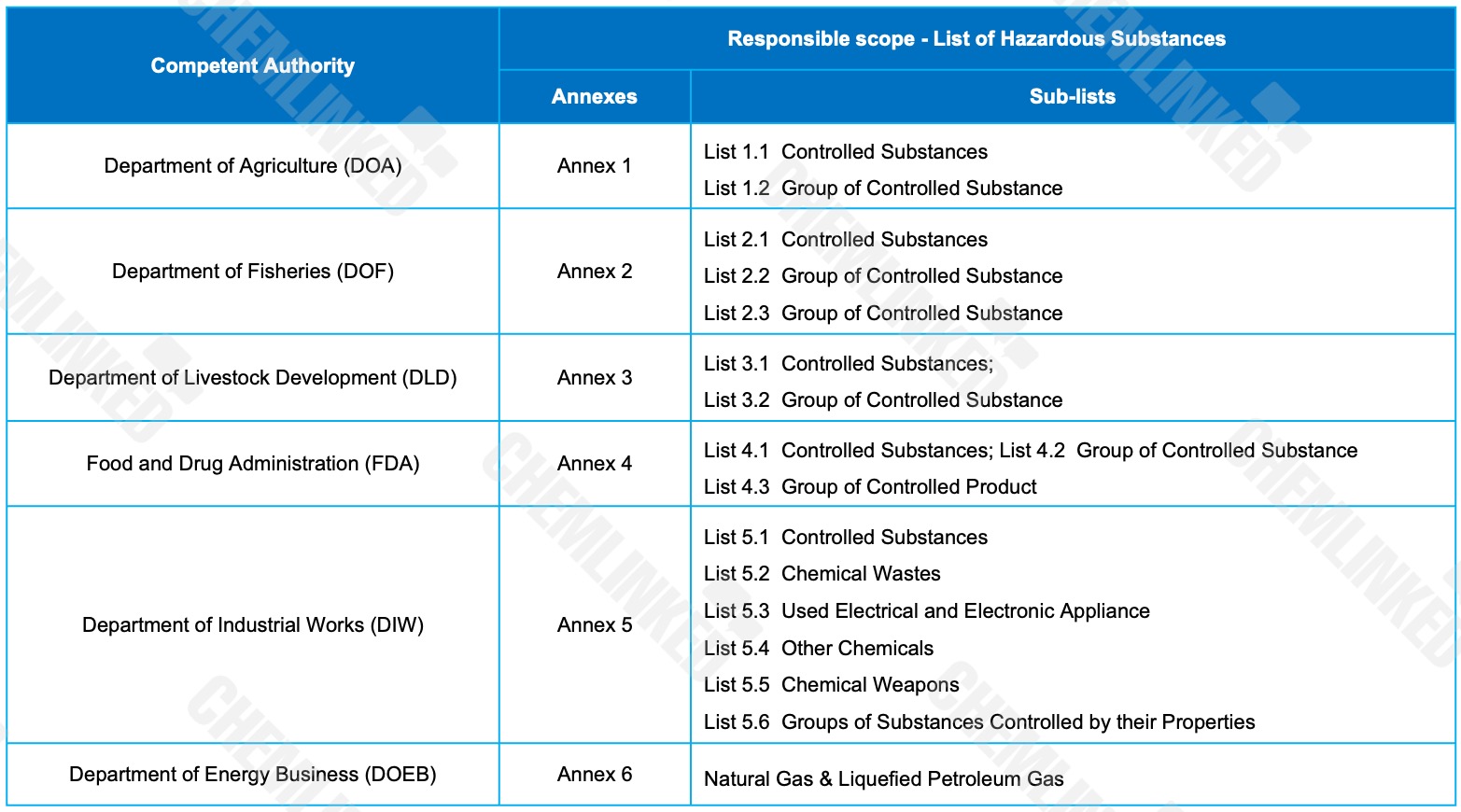
Fig. 1 – Responsible scope of hazardous substances under each competent authority
Key Obligations
Different Obligations for Types 1~4 Hazardous Substances
Under HSA, chemical substances in the control list are classified into Type 1, 2, 3 and 4 hazardous substances, based on their hazards and risks. Type 1 hazardous substances impact human health and the environment less than the other types. Type 4 hazardous substances possess high hazards or risks. For each type of hazardous substance, different obligations apply as summarized in the diagram below.
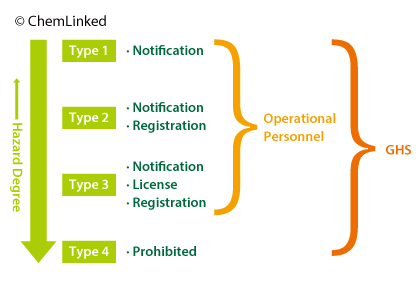 Fig. 2 - Different obligations for 4 types of hazardous substances
Type 1 Hazardous Substance
Notification: The production, import, export, or possession of Type 1 hazardous substances shall be notified to the responsible authority and obtain the 15-digit ID. Certain information and documents are required to be provided; see the checklist for notification of Type 1 hazardous substances.
Type 2 Hazardous Substances
HS Registration: Manufacturers and importers shall register Type 2 hazardous substances with the responsible authority in a specific form (WoAo/AoKo1), prior to the manufacture and import. Certain information and documents (e.g., SDS) are required to be submitted together with the application form for registration. Please refer to the checklist for HS registration application.
HS Notification: Business operators shall notify the responsible authority of the information on the production, import, export or having in possession in compliance with the specific form (WoAo/AoKo5). Certain information and documents shall be submitted as well; see the checklist for notification of Type 2 hazardous substances.
*Notification of Type 2 hazardous substances is different from the notification of Type 1 hazardous substances; more information requirements apply.
Type 3 Hazardous Substances
HS Registration: Manufacturers and importers shall register Type 3 hazardous substances with the responsible authority in a specific form (WoAo/AoKo1), prior to the manufacture and import. Certain information and documents (e.g., SDS) are required to be submitted together with the application form for registration. Please refer to the checklist for HS registration application.
HS License (Permit): Business operators shall submit an application in a specific form (WoAo3) and obtain a license/permit from the responsible authority to produce, import, export, possess or transit any Type 3 hazardous substance. Certain information and documents shall be submitted as well; see the checklist for HS license/permit application.
On-site inspection would be conducted by competent officials once the application for permit/license has been received with complete materials submitted. The following diagram (Fig. 3) presents the procedure for license application. For producers, the inspection will cover the site of the production facility, storage facility, machinery and the accuracy of documents. For importers, exporters, or those having in possession, inspection would be conducted on the site of the storage facility and the accuracy of documents.
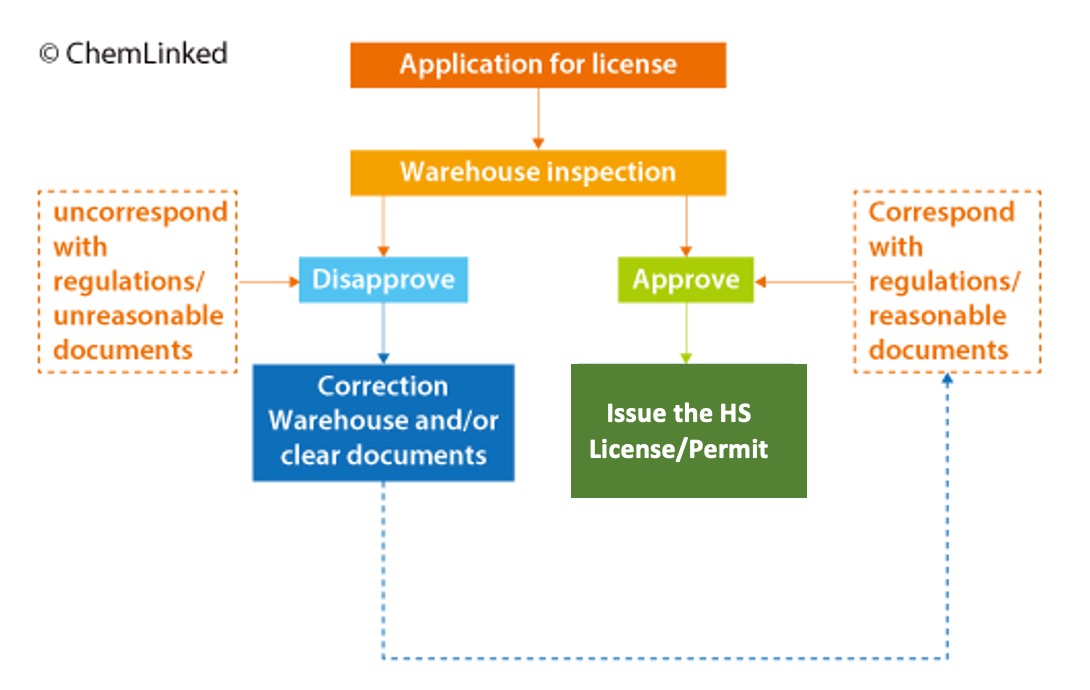
Fig. 3 - Procedure for license application
Type 4 Hazardous Substances
Prohibition: The manufacture, import, export and having in possession of Type 4 hazardous substances is absolutely prohibited in Thailand.
Import/Export Declaration
Each shipment of hazardous substance has to submit import/export declaration to DIW before customs clearance in the specific form (WoAo./AoKo.6), including the following information:
Chemical identification: name, chemical formula and proportion, trade name, common name or abbreviation (if any)
Quantity (of the chemical imported or the container), characteristic of containers
Location of storage facility
Transportation means
Customs port, anticipated arrival date to or departure date from the port
Invoice
Bill of loading
Specific document for the restricted chemicals
DIW works closely with the Customs Department to facilitate the declaration procedure. DIW can record and transmit the acknowledgement to the Customs Department’s database to facilitate the enterprise to clear the Customs processes.
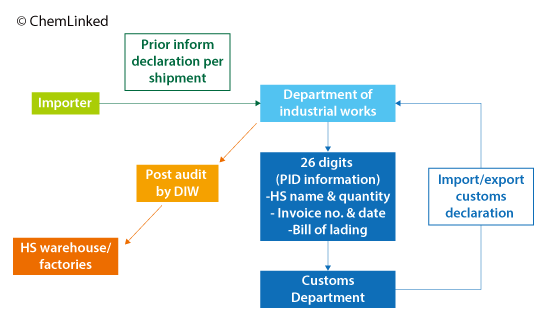 Fig. 4 - Procedure to submit the import/export declaration
100% Composition Disclosure
As one of the unique features incorporated in Thailand's hazardous chemicals management system, DIW would require 100% composition disclosure for evaluation. Companies may choose to keep some composition information to themselves due to CBI concerns. Under such circumstances, the company has to take its own risk since the DIW could only evaluate whether the chemicals are hazardous or not based on the information provided. This undoubtedly could give rise to potential risks of noncompliance. The recommended strategy would be to compare the chemicals of your concern against the hazardous control list.
For importers, it should also be specially noted that Thailand Customs would also inspect the 100% concentration disclosure declaration, to make sure the information provided is consistent with that on the SDS.
(More details about the 100% concentration disclosure, please click here to access ChemLinked Thailand webinar materials.)
GHS Requirements
The implementation of Thailand GHS is two-step action, with GHS coming into force on March 13, 2013 for single substances and March 13, 2017 for mixtures. More information please refer to Chempedia - Thailand GHS.
HS Quantity Report
According to the Notification of MOI on Declaration of Hazardous Substances under Authorization of DIW by Manufacturer, Importer, Exporter, or Possessor (No.2) B.E. 2563 (2020), 206 hazardous substances listed thereof are subject to quantity report in the specific form (WoAo/AoKo.7). The target 206 hazardous substances are selected from List 5.1 ~ 5.5. If the handling quantity of any target hazardous substance exceeds 100 kg per half-year (January ~ June, July ~ December), manufacturer, importer, exporter, or possessor shall report the following information to DIW twice a year:
Substance name
Type of hazardous substance
Chemical formula and proportion
Trade name
HS license number and HS registration number (if any)
Specific quantity info (production, import, export, etc.)
List 5.6 HS Declaration
List 5.6 is a special sub-list in the List of Hazardous Substances, which only includes ten hazard peroperties. According to the Notification of the Department of Industrial Works Re: Declaration of the Production or Import of Hazardous Substances of List 5.6 under Responsibility of the DIW B.E. 2565 (2022), manufacturers and importers of chemical substances that fall under all the following conditions, shall declare the manufacture/import information of the previous calendar year to the DIW before June 30 of the following year:
The chemical substance is not included in Annex 1, 2, 3, 4, 5 (List 5.1 ~5.5), or 6.
The chemical substance possesses any of the ten hazard properties in List 5.6.
The manufacture quantity or import quantity of the chemical substance exceeds 1 t/y.
The declaration shall be performed in form of WoAo./AoKo. 32, including the following information:
GHS classification information
Quantity information on consumer use, commercial use, industrial use, use as intermediate or non-isolated intermediate, etc.
The procedures and requirements are outlined in the illustration below. Following the Notification of MOI on Exemption from Compliance with Declaration of Hazardous Substances of List 5.6 B.E. 2558 (2015), if the List 5.6 HS declaration has been submitted, such chemicals are exempted from import declaration, GHS classification, quantity report, etc.