

 Request a Demo
Introduction
The Toxic and Concerned Chemical Substances Control Act (TCCSCA), previously known as the Toxic Chemical Substance Control Act (TCSCA) was promulgated on Jan 16, 2019. More than 30 subordinate regulations were revised or fleshed out accordingly. The Act, which entails a broader control over chemicals, took effect one year after the official promulgation, while Article 7, Article 54, Article 65, Article 67 and Article 72 became effective immediately.
The full contents of the Act are accessible here (in traditional Chinese and English).
Management Framework
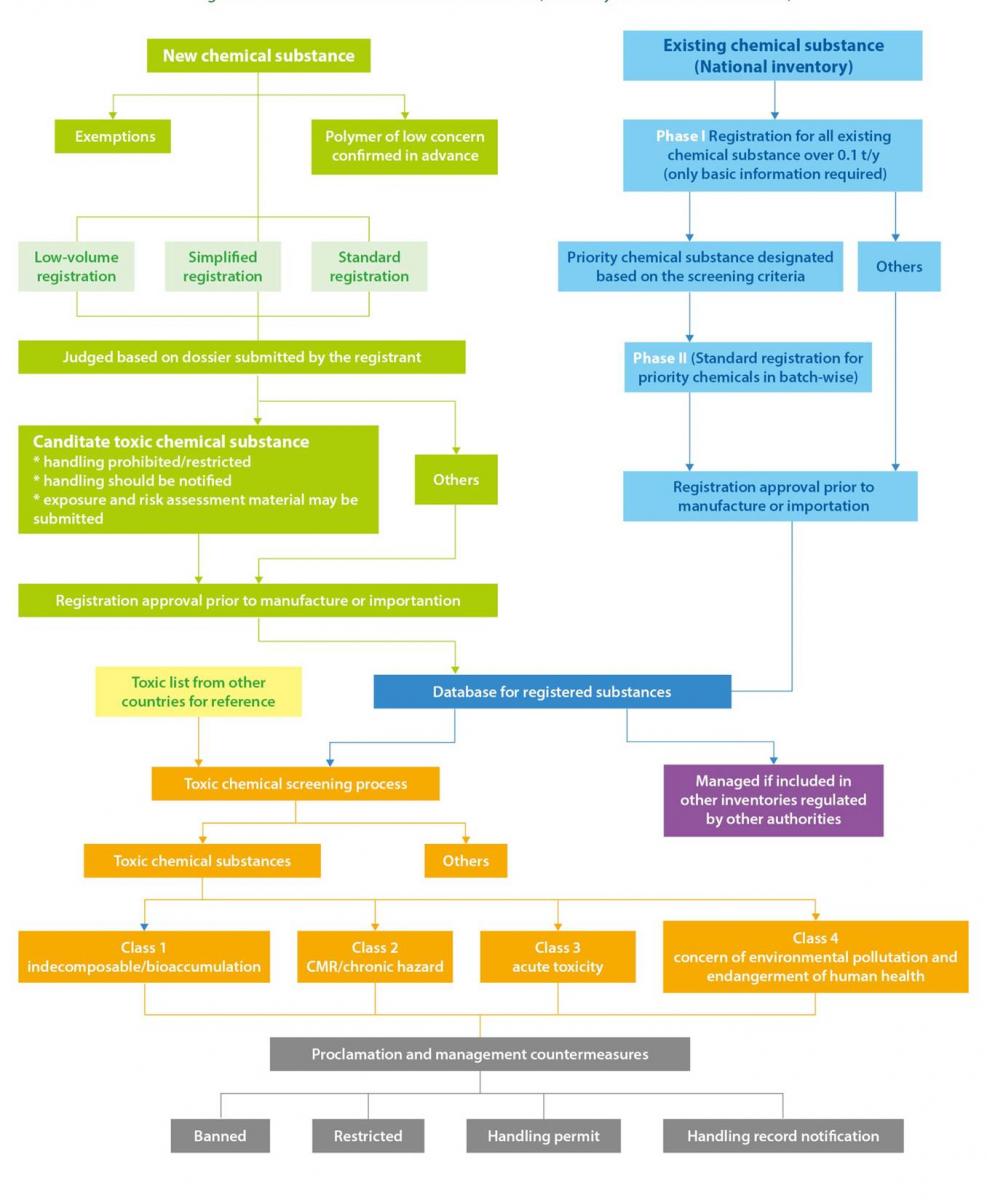 Fig. 1 - Framework of Revised Taiwan TCSCA
Who's Affected
Manufacturers or importers of new and existing chemical substances shall comply with registration. It should be noted that the only representative (OR) rules under EU REACH is not adopted in Taiwan. Taiwan only authorizes domestic importers and manufacturers to appoint a third party representative (TRP) based in Taiwan to assume their chemical registration responsibilities.
For enterprises handling listed toxic chemical substances, corresponding permits, registration or approval should be applied for. Here "Handling" refers to activities such as the manufacture, import, export, sale, transport, use, storage or discarding of chemical substances.
For enterprises handling listed concerned chemical susbatnces exceeding certain quantity announced by the authority, approval should be applied for.
Authority
The Toxic and Chemical Substances Bureau (TCSB) was established under the Environmental Protection Administration (EPA) in 2016 as an agency focused on the source control of chemical substances. However, Taiwan's EPA was upgraded to a full-scale Ministry of Environment in 2023. As part of this upgrade, the TCSB under the EPA transformed to the Chemical Administration (CHA) under the Ministry of Environment.
The official website of the new agency is https://www.cha.gov.tw/mp-1.html
Legislative Progress
Toxic and Concerned Chemical Substances Control Act (TCCSCA) is the most important chemical control law in Taiwan. It has undergone seven amendments since its first promulgation in 1986. The last two amendments are:
· Dec 11, 2013: The Act was revised to introduce the core principle of chemical registration, which requires manufacturers and importers to register their new and existing chemical substances prior to entering Taiwan’s market. Additionally, Taiwan strengthens the management of Class 4 toxic chemical substances. These new requirements took effect after Dec 11, 2014. (see Chemlinked news).
· Jan 16, 2019: The Act was renamed and revised to entail a broader control over chemicals (see ChemLinked news).
Supporting Documents
Followings are some important supporting documents for Taiwan TCCSCA (Find more in ChemLinked regulatory database).
Toxic and Concerned Chemical Substances Control Act Enforcement Rules
Regulation on Registration of New and Existing Chemical Substances
Permit Registration and Approval Regulations for Toxic and Concerned Chemical Substances
Regulations for the Labeling and Safety Data Sheets for Toxic and Concerned Chemical Substances
Fee-charging Standards for Toxic and Concerned Chemical Substances Control Act
...
Existing Chemical Substance Inventory
Based on the Existing Chemical Substance Nomination (ECN) which ended on December 31, 2010, Taiwan Council of Labor Affairs (CLA) compiled the draft Taiwan's Existing Chemical Substance Inventory (TCSI). To update the inventory, on April 18, 2012, the CLA issued the Direction for Supplementary Existing Chemical Substance Nomination (SECN) to guide the SECN on a voluntary basis. Eligible nominators were encouraged to nominate chemical substances during June 1, 2012 to August 31, 2012. Updated on Dec 22, 2012, the inventory covered approximately 79,000 substances.
To further update the TCSI, another round of SECN (Second SECN, SSECN) was carried out on June 1, 2014, which was the last supplementation organized by the MoL (successor of CLA) for nominators to include their substances into the TCSI. The nomination criteria are the same as the last SECN as specified below (Italics).
“Chemical substances imported to or manufactured, handled, used, or sold in Taiwan between January 1st, 1993 and December 31st, 2011, and are not listed in the National Existing Chemical Substance Inventory (draft) as existing chemical substances can be nominated pursuant to this Direction.”‐‐‐Direction of SECN (04/18/2012)
Based on SSECN nomination applications submitted by industry, MOL updated it to include approximately 93,000 substances that were manufactured in or imported into Taiwan between January 1, 1993 and December 31, 2011.
In addition to the ECN, SECN and SSECN carried out by the MoL, EPA held another supplementation, whcih allowed chemicals manufactured or imported to the Taiwanese market before Dec 11, 2014 included into the inventory as existing chemical substances. Companies were required to provide proof of these substances previous manufacture or import before Mar 31, 2015, as specified in the Article 16 of the Regulation on Registration of New and Existing Chemical Substances. The inventory was updated based on the review results of this supplementation. The TCSI currently contains around 101,089 substances following 3 rounds of nominations held by the MoL and the supplementation program held by the EPA. The online search of the inventory is available here.
How to Comply
New Chemical Substance Registration
The associated registration obligations required for new chemicals is specified in the Regulation on Registration of New and Existing Chemical Substances. The completeness of Taiwan's existing chemical substance inventory (TCSI) is a prerequisite for Taiwan new chemical substance registration. Substances not listed in the TCSI are regarded as new chemical substances subject to new chemical substance registration under TCCSCA except they meet the following exemption conditions:
Exemption Conditions:
Naturally occurring substances
Chemical substances accompanied in the machines and equipment for test‐run purpose
Inseparable intermediates from the chemical reaction in the reaction vessel or in the production process
Chemical substances for national security or national defense purposes
Chemical substances under customs supervision
Chemcial wastes produced or releassed from industrial process
By-products or impurities that are of no commerical application
Mixtures (not applicable to the individual chemical constituents of the mixture)
Articles (not applicable if the substances contained in the article will be intentionally released during normal use)
A polymer for which the 2% rule is applicable and listed on the inventory of existing chemical substances
Others already regulated by existing laws and regulations, e.g. agro-pesticides, fertilizers, cosmetics, foods, food addiives, toxic and concerned chemical substances, etc.
* It should be noted that for a chemical substance manufactured or imported as a raw material of the above mentioned items, the chemical substance shall be subject to the provisions of the Regulation on Registration of New and Existing Chemical Substances.
The new chemical substance should be registered before manufacture or importation. Based on the tonnage band and usage information, three registration types will be adopted, including standard registration, simplified registration, and low-volume registration.
 Fig. 2 - New Chemical Substance Registration Types

Fig. 3 - New Chemical Substance Registration Procedures
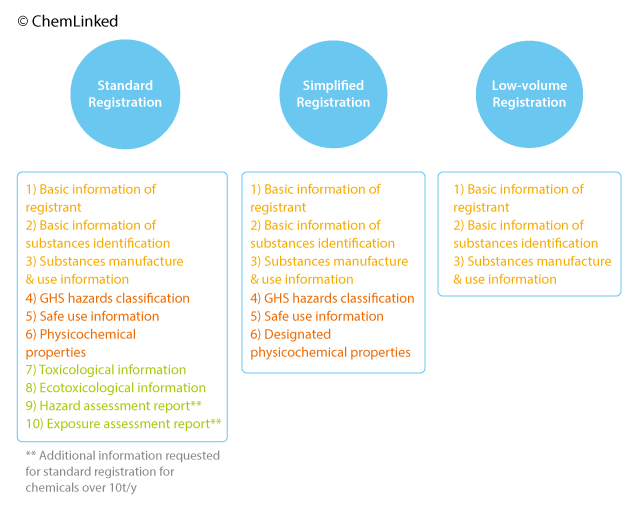 Fig. 4 - Data Requirements of New Chemical Substance Registration
Registration approval is contingent on a number of conditions and may require a number of compulsory handling restrictions to be implemented due to the potential of the substance being classified as a toxic chemical substance or a concerned chemcial substance (See Certificate Sample below). These substances, if further evaluated and categorized officially into the existing four Classes of toxic chemical substances, will be accordingly regulated.
 Fig. 5 - New Chemical Substance Registration Certificate (Example)
Existing Chemical Substance Registration
Phase 1 Registration
All existing chemicals manufactured or imported over 0.1 ton per year are subject to the Phase 1 of Taiwan’s existing chemical registration system, which only requires submission of the most basic information including registrants’ information, chemical name, annual amount and usage information for approval prior to the actual manufacture or importation. Taiwan pre-registration of existing chemical substances finished at the end of March 2016. As of April 1, 2016, the late pre-registration of existing chemical substances has been open (ChemLinked news).
 Fig. 6 - Data Requirements of Phase 1 Registration under Revised Taiwan TCSCA
Phase 2 Registration (Standard Registration)
Based on the information collected, if the substance volume is large and designated as highly hazard or lacking specific data, it will be probably designated as a priority chemical substance (PEC) subject to the mandatory Phase 2 standard registration.
The standard registration of the first batch of 106 PECs (≥ 1 t/y) in Taiwan commenced in 2020. The original deadline was set for the end of 2021 or 2022, depending on the volume when applying for phase 1 registration (pre-registration/late pre-registration) and the date on which the phase 1 registration number is obtained. However, this deadline has been extended to the end of 2024 due to the COVID-19 pandemic. It should be noted that obtaining the registration code by the deadline is necessary, which differs significantly from the EU REACH, as Taiwan requires each application to be reviewed and assigned a registration code upon approval.
As per the revised Regulation on Registration of New and Existing Chemical Substances (ChemLinked news), registrants now only need to submit partial information (items 1-7) to obtain a registration code for PEC standard registration. The hazard and exposure assessment information (items 8~9 required for Bands 2~4 standard registration) can be submitted later within the allocated time. Diversified data, including test reports, literature reviews, QSAR, test plans, and international public database data, can be used for standard registration. The authority has prepared guidance documents on the use of predictive toxicology data, including the QSAR ToolBox User Manual, Overview of Validation Methods of QSAR Model,Principles on Grouping of Chemicals, and Read-Across Assessment Framework.
Since the registration deadline for the first batch of 106 PECs passed on December 31, 2024, nearly all registrants have completed their submissions and obtained their registration codes. As for the second batch of PECs, further developments will need to be awaited.
Joint Submission
Joint registration is not mandatory. Two or more manufactures or importers applying for registration of the same new chemical substance may jointly or successively submit application for registration approval. Tonnage accumulation is required for joint submission, which may result in higher data requirements. For existing chemical substances, the registrant having finished standard registration with higher tonnage levels can let the enterprises of the same level or enterprises with lower tonnage levels buy the LOA (letter of access) and give them access to the joint submission with a data token. However, for registration of higher tonnage levels, the data cannot be passed in the form of data token from the registrant with a lower tonnage level. The data should be purchased from the data holder and complete additional experiments required by higher level to complete the registration. Cost sharing agreements are negotiated by the registrants, and the EPA will intervene to coordinate only on request.
Toxic Chemicals Management
Taiwan EPA announces toxic chemical substances as Class 1, Class 2, Class 3 or Class 4 according to the classification criteria given below.
Class 1 toxic chemical substances: those chemical substances that are not prone to decompose in the environment or that pollute the environment or endanger human health due to bioaccumulation, bioconcentration or biotransformation.
Class 2 toxic chemical substances: those chemical substances that cause tumors, infertility, teratogenesis, genetic mutations or other chronic diseases.
Class 3 toxic chemical substances: those chemical substances that endanger human health or the lives of biological organisms immediately upon exposure.
Class 4 toxic chemical substances: those chemical substances for which there is concern of pollution of the environment or the endangerment of human health.
Taiwan's toxic chemical substances list (TCSL) contains 488 types of toxic chemical substances (download list here, updated on April 24, 2024). Some overlap exists between Class 1, Class 2 and Class 3 toxic substances. So far, more than 3,900 companies are involved in the handling of toxic chemicals.
Toxic chemical substance handlers shall apply for permits, registration documents and approval documents for toxic chemical substances of Class 1, 2 or 3 with the corresponding competent authority of municipality, county or city level. However, when the total quantity handled is lower than the large-scale handling standard official released, the handler can apply for the approval documents rather than the permit or registration (see details).
For Class 4 toxic chemicals, which are characterized by their heightened potential for damage to human health and the environment, it is necessary to apply for approval documents prior to commencement of commercial operations. It is also necessary to detail information on toxicity and pollution control measures on containers, packaging, handling sites and facilities, and prepare SDS for reference.
Concerned Chemicals Management
Concerned chemicals are those aside from Class 1~4 toxic chemical substances, that to pollute the environment or are a suspected threat to human health based on substance characteristics or public consumer issues of domestic or foreign concern. So far, there are 18 concerned chemicals (download list here, updated on Jan 12, 2023). More than 1,500 companies are involved in the handling of concerned chemicals.
For management of concerned chemical substances, the authority designates substances, and announces the corresponding control concentration standards and graded handling quantities. Only necessary operations shall be announced and regulated. The handler shall produce regular reports concerning the specified handling of concerned chemical substances, and such records must be properly preserved for future reference.
