

 Request a Demo
1 Background
Over the past years, China has been devoted to studying new pollutants and improving management capacity. At the National Conference on Ecological Environmental Protection held in May 2018, Chinese President Xi Jinping pointed out that special and prospective studies should be conducted on the management of new pollutants. In 2020, China’s 14th Five-Year Plans (2021-2025) stipulated that a greater focus should be placed on the new pollutants treatment. In many official documents issued in 2021 by the Communist Party of China Central Committee and the State Council, the target of strengthening new pollutants treatment was reaffirmed repeatedly.
On May 24, 2022, the Chinese General Office of the State Council officially released the Action Plan for New Pollutants Treatment (hereinafter referred to as the National Action Plan), which shows China’s ambition to facilitate the management of new pollutants. The National Plan requires chemical information survey and environmental risk assessments,thereby accurately identifying new pollutants of high-risk and imposing full-packaged and targeted measures to curb new pollutants emerging at source and reduce emissions.
2 Concept of New Pollutants
New pollutants (a.k.a. “emerging pollutants”), in most cases, come from the production and use of toxic and hazardous chemicals. They can be new chemicals considered toxic and hazardous, or existing chemicals that have been produced and used for many years but whose hazards are not recognized or effectively managed. According to the National Action Plan, there are four major types of new pollutants of international concern, i.e., persistent organic pollutants (POPs), endocrine disruptors, antibiotics and microplastics. They have common properties such as biological toxicity, environmental persistence, bioaccumulation, etc., which pose risks to the environment and human health.
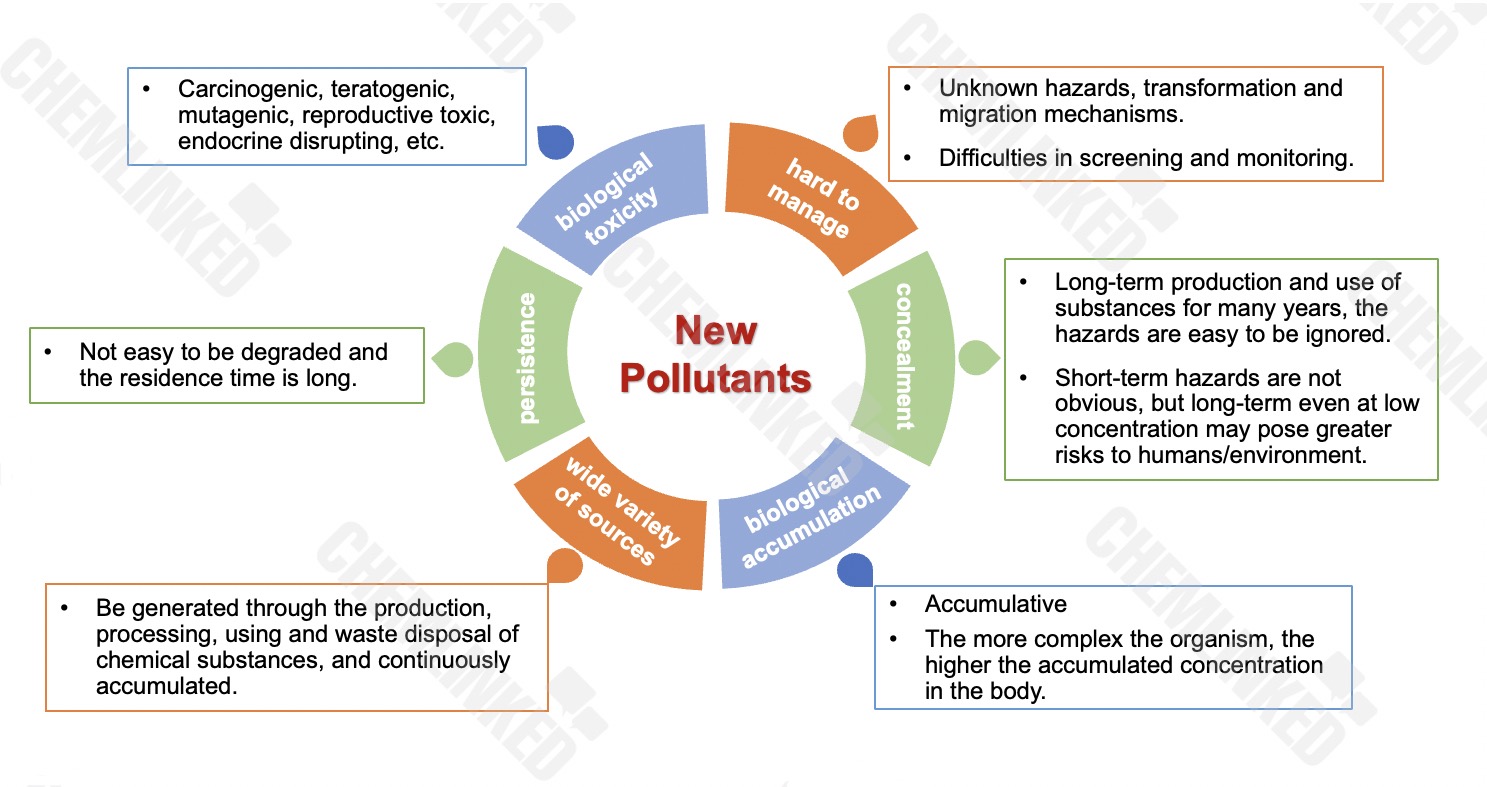 Figure 1 - Common Properties of New Pollutants
3 Overall Approach to Management
3.1 Risk Screening, Risk Assessment, Risk Control
The general idea of the National Action Plan is to identify new pollutants that require priority risk control by screening out toxic and hazardous chemicals and assessing their environmental risks. The identified new pollutants will be controlled throughout the whole lifecycle, including source control (prohibitions/restrictions on production and use), emission reduction during the process, and end-of-pipe treatment.
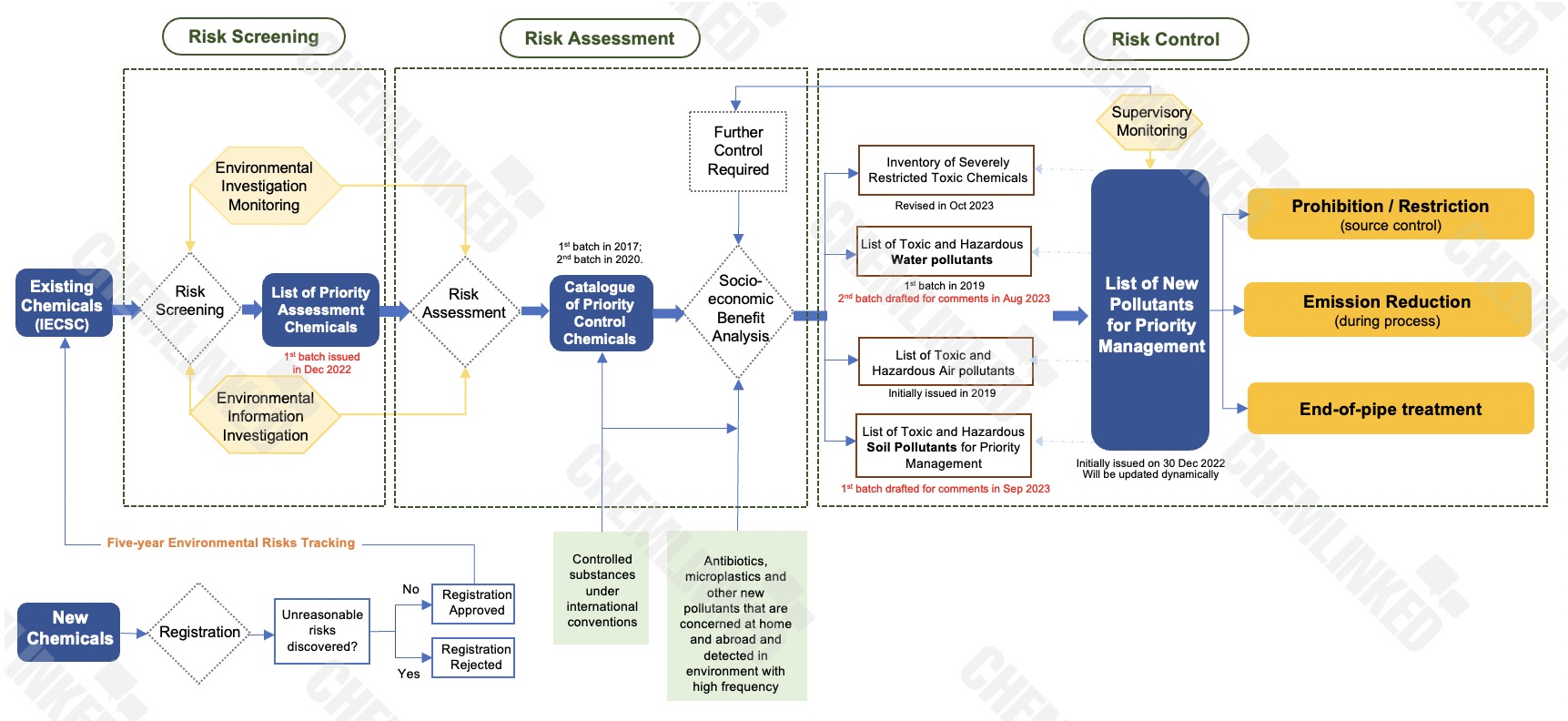 Figure 2 – New Pollutants Treatment Roadmap
Based on the hazard level and exposure scenario information, if chemicals possess properties such as high persistence, high accumulation, toxicity, etc., and have the possibility of being released into the environment, they will likely be considered new pollutants. More concentration will be paid to those with long-term and chronic hazards. The flowchart below shows the procedure of screening out toxic and hazardous chemicals.
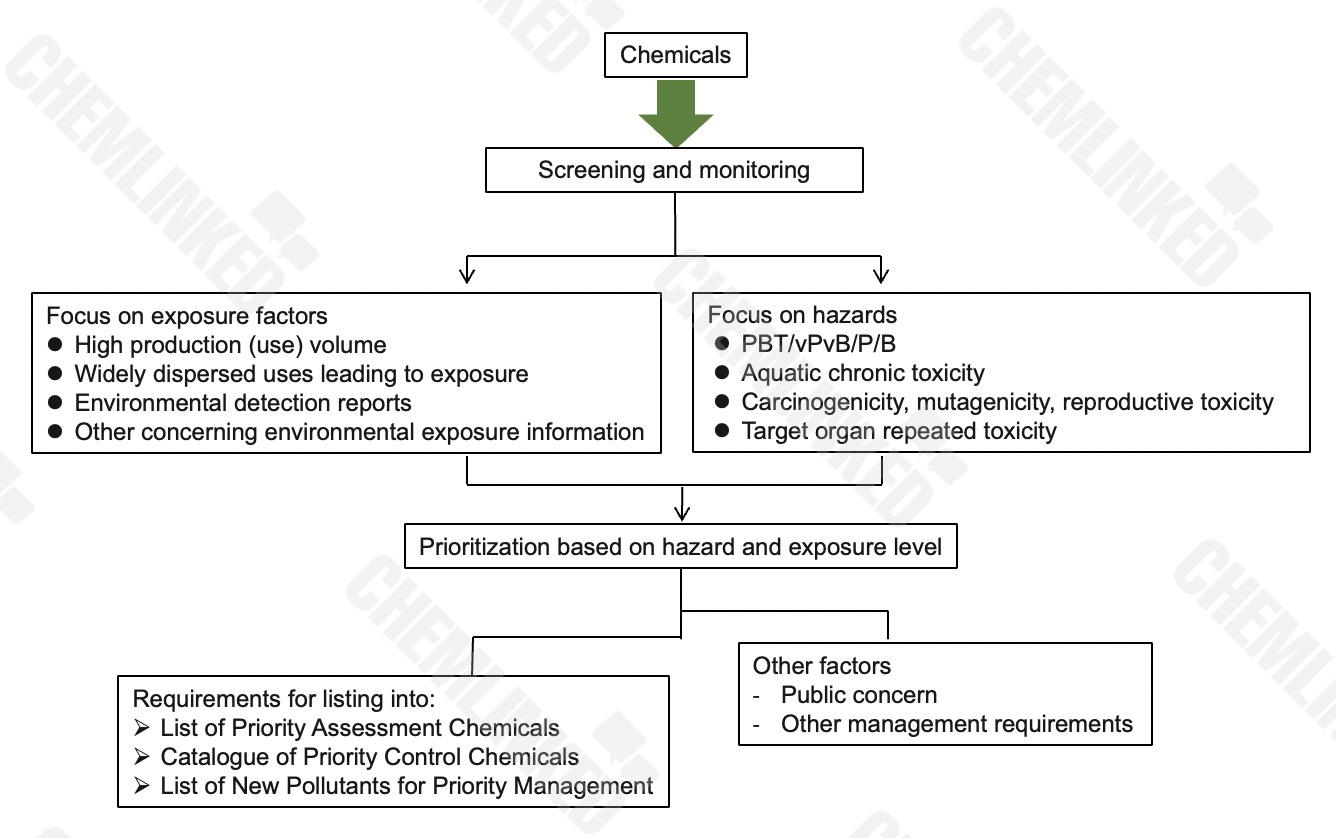 Figure 3 - Screening Procedure
Chemicals considered toxic and hazardous will be prioritized for risk assessment according to their hazard level and exposure level. As per the risk assessment results, chemicals with higher risk are expected to be listed in the Catalogue of Priority Control Chemicals, which serves as a reference for designating toxic and hazardous pollutants in water, air or soil. Among them, based on the socioeconomic benefit analysis and control conditions in the country, new pollutants will be designated for priority management and provided with specific risk control measures, for example,
Prohibitions from production, use and processing, import and export.
Prohibitions or restrictions on the usage for producing certain products (e.g., pesticides, paint remover, cosmetics).
Concentration limits in certain products (e.g., cleaning agents).
Emission limits, early-warning of environmental risks, etc.
The National Plan requires incorporation of concentration limits for the designated new pollutants into mandatory national standards for products like toys, school supplies, etc., and supervision of their implementation.
3.2 One Type of New Pollutant, One Control Policy
Following the National Plan, the first national list of new pollutants, namely List of New Pollutants for Priority Management (2023) was issued on December 30, 2022, took effect on March 1, 2023. Currently, the National List includes fourteen types of new pollutants as shown in the table below, most of which are POPs under the Stockholm Convention. Each type of new pollutant in the National List is provided with specific control measures with reference to international conventions or even stricter.
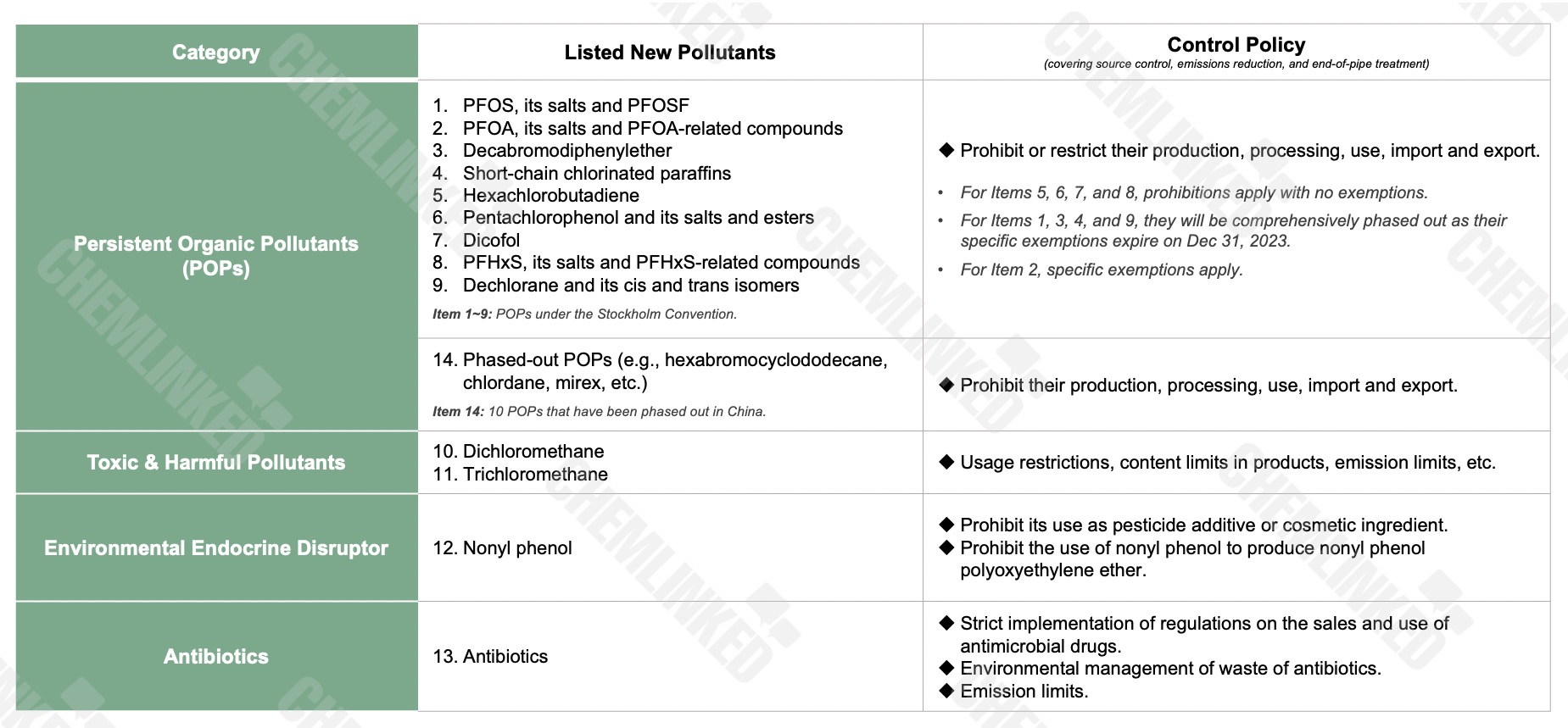 Figure 4 – Interpretation of the 2023 National List
By the end of 2023, China has comprehensively phased out eight types of new pollutants included in the National List (excluding Item 14 - Phased out POPs). Their import, export, manufacture, process and use have been prohibited in China since January 1, 2024 (read more). With understanding of chemical substances’ environmental hazards and health hazards deepens and the monitoring technology continues to develop, the number of new pollutants that may be identified will continue to increase. As required, this National List will be dynamically updated.
3.3 Key Chemical Lists of Concern
High attention should also be paid to the following important chemicals lists in China, which would likely lead to dynamic updates of the National List.
List of Priority Assessment Chemicals (1st batch in 2022*)
*As required in the National Plan, the environmental risk assessment of the first batch of priority assessment chemicals shall be completed by 2025. Based on the assessment results, some high-risk chemicals will be prioritized for priority control.
Catalogue of Priority Control Chemicals (1st batch in 2017; 2nd batch in 2020)
List of Toxic and Hazardous Water pollutants (1st batch in 2019; 2nd batch drafted for comments in Aug 2023)
List of Toxic and Hazardous Air pollutants (1st batch in 2019)
List of Toxic and Hazardous Soil Pollutants for Priority Management (1st batch drafted for comments in Sep 2023)
New pollutants in the National List will be also listed to the following chemicals lists based on control measures.
Catalogue of Goods Prohibited from Import (latest batch issued in 2023)
Catalogue of Goods Prohibited from Export (latest batch issued in 2023)
Catalogue for Guiding Industry Restructuring (latest version issued in 2023)
Inventory of Severely Restricted Toxic Chemicals (latest version issued in 2023)
4 Key Strategies
In China, new pollutants treatment started relatively late and has a weak foundation, facing many shortcomings in areas such as laws and regulations, management systems, technological support, and resource allocation. To address these issues, the National Plan put forward several tasks, including strengthening the establishment of legal framework and regulatory systems, formulating or updating a series of technical standards, implementing chemical information surveys, enhancing the new chemical registration enforcement, etc.
4.1 Legal Framework Establishment
4.1.1 Specific Legislation
Given the growing concern about new pollutants, it is crucial for China, one of the world’s major gathering regions for the research, production, import and processing of chemicals, to promulgate specific laws and regulations for the environmental management of chemical substances. In 2019, with the goal of effectively overseeing both existing and new chemicals, the Regulations on Environmental Risk Assessment and Control of Chemical Substances was drafted. However, the legislative process encountered several obstacles that led to delays.
The MEE aims to advance this legislation, but it could significantly impact the chemical industry, particularly small and medium-sized enterprises, which may face increased compliance costs and restrictions or prohibitions on the production of certain chemicals. Additionally, creating such overarching legislation requires collaboration among various departments, which currently lack coordinated management. Without a cross-departmental mechanism for addressing chemical substances, it is challenging to build a united effort to support the legislation.
As per the National Plan, to enhance the management of new pollutants treatment, the regulation will be renamed as Regulation on Environmental Management of Toxic and Hazardous Chemical Substances, with the applicable scope narrowed to focus specifically on toxic and hazardous chemicals that are the major contributors to new pollutants. The MEE is making efforts to accelerate this legislation process.
4.1.2 Robust System of Technical Standards
In addition to specific legislation, the National Plan calls for establishing a robust system of technical standards to support environmental risk assessment and control. On October 16, 2024, the Systematic Framework for Technical Standards on Environmental Risk Assessment and Control of Chemical Substances (2024) was officially released. It comprises of three sub-systems, separately targeting environmental risk screening, environmental risk assessment and environmental risk control (read more).
Several guidelines and standards have been established to regulate and guide the screening and assessment process. These include:
HJ 1229-2021 Guidelines for Screening of Priority Assessment Chemical Substances
HJ/T 420-2008 Guidelines for the Generic Name of New Chemical Substances
HJ 1357-2024 Technical Specification for Nomenclature of Chemicals for Environmental Management
Technical Guidelines for Environmental and Health Hazard Assessment of Chemical Substances (Trial)
Technical Guidelines for Environmental and Health Exposure Assessment of Chemical Substances (Trial)
Standard System Framework for Monitoring New Pollutants in Ecological Environment (Draft)
Technical standards on environmental risk control measures for new pollutants are currently the most lacking. There’s no existing standard in place. In this regard, technical standards to be developed are divided into the following categories, i.e., source prohibition and restriction, process emission reduction, and end-of-pipe treatment. The MEE plans to develop standards on the limited use of toxic and hazardous chemical substances in products with supportive testing standards. Innovative alternatives are also fostered and supported within the Framework.
A group standard titled T/CSES 151-2024 Technical Guidance for the Assessment of Green Alternatives was formulated by South China Institute of Environmental Science (SCIES) in August 2024. Other technical standards or guidelines that are scheduled for development include:
Normative technical guidance for environmental impact assessment of new pollutants
Technical guidance for best industrial practices on emission reduction of new pollutants
Technical specification for environmental pollution control of new pollutants
Emission limit standards and supportive analytical testing methods
4.2 Enhancing New Chemical Registration
The environmental management registration system for new chemical substances is a key source control measure outlined in the National Plan. Since 2003, China has maintained a registration system for new chemical substances. Currently in effect is the Measures for Environmental Management Registration New Chemical Substances (MEE Order No. 12), which took effect on January 1, 2021.
New chemical substances refer not only to newly developed materials but also to substances not listed in the Inventory of Existing Chemical Substances in China (IECSC). The IECSC, initially issued in 2013, has been supplemented several times and now includes approximately 47,000 substances. Among them, over 130 substances are subject to new usage environmental management as new chemical substances if they are used for industrial applications other than the permitted uses specified in IECSC.
The National Plan stipulates to reinforce the law enforcement of new chemical registration. Stricter supervision and more frequent on-site inspections will be carried out. The MEE urges enterprises to verify whether their substances are identified as new chemical substances requiring registration and emphasizes the importance of improving the quality of environmental risk assessment reports, testing data, and dossier preparation. The penalties for violating enterprises are strengthened. For more compliance requirements for new chemical registration, please refer to China New Chemical Substances Registration (MEE Order No. 12).
4.3 Chemical Information Survey
The National Plan aims to complete the initial round of surveys on the basic environmental information of key chemical substances in key industries, as well as the survey on the detailed environmental information of the first batch of priority assessment chemicals, by the end of 2023. Establishing a system for conducting these environmental information surveys of chemical substances is urgently needed. In August 2023, the National Bureau of Statistics made public the System for the Statistical Survey of Environmental Information on Chemical Substances to clarify the application scope and requirements for conducting the surveys.
4.3.1 Competent Authority
The MEE is the leading authority responsible for organizing and implementing the chemical information survey system. The departments of ecology and environment at the provincial, municipal, district level, etc. are responsible for developing local work plans for these chemical information surveys within their respective jurisdictions. They must complete information collection, review, and reporting to superior department within the specified timeframe. The main information from these surveys will be included in the annual ecological and environmental statistics report and made publicly available.
4.3.2 Target Chemicals
The surveys include basic environmental information survey, detailed environmental information survey, priority management information survey, and international conventions implementation information survey. For different surveys, the scope of target chemicals is different (see table below).
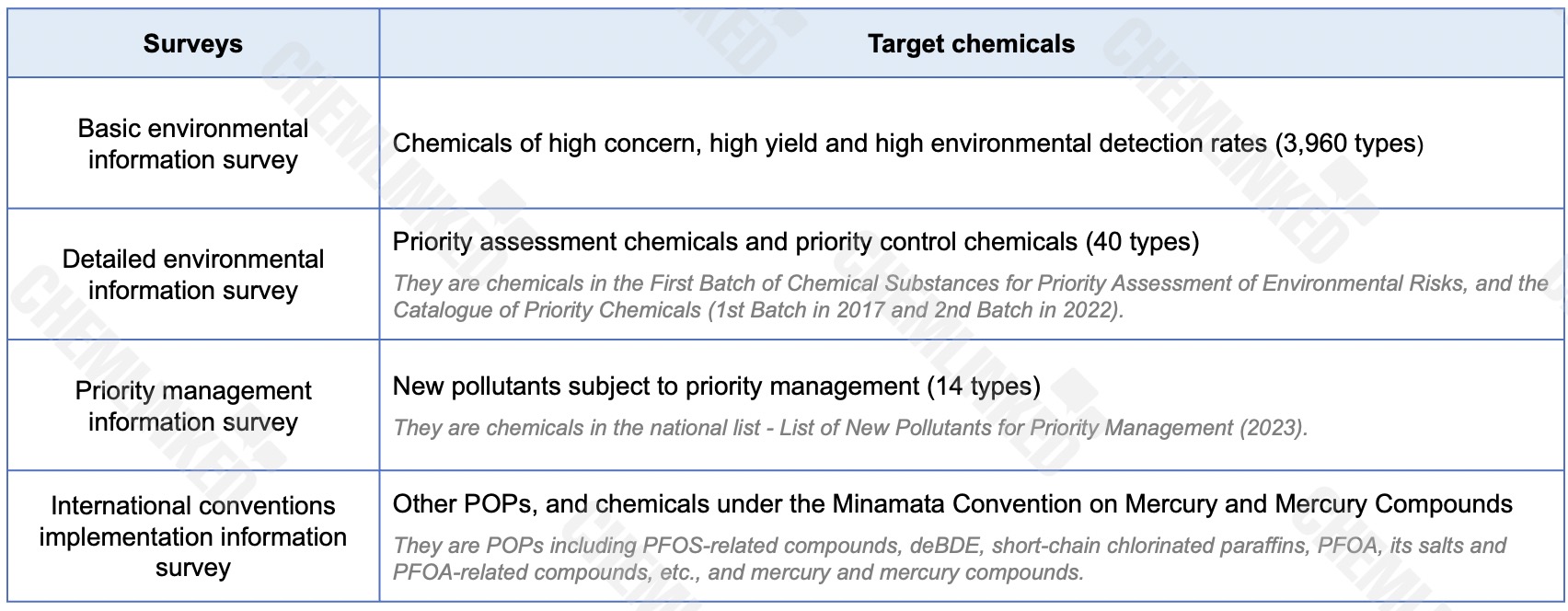 Figure 5 – Chemicals Subject to Surveys
4.3.3 Target Industries
The scope of industries requiring chemical investigations covers 120 sub-categories under the category of "Manufacture (13-43)" in GB/T 4754 Industrial Classification for National Economic Activities, covering textile, paper and paper products, chemicals and chemical products, pharmaceuticals, medicinal chemical and botanical products, rubber and plastics products, fabricated metal products, etc.
4.3.4 Survey Content and Frequency
Enterprises need to determine whether their industry is within the target industries that require taking part in the surveys, and then make clear whether the chemicals they handle are within the target chemicals subject to the surveys. If all are "yes", they shall fill out the corresponding survey forms and submit them via the specific online platform - National Environmental Information Management System for Chemical Production and Use. For different surveys, the required content and the submission frequency are different (see table below).
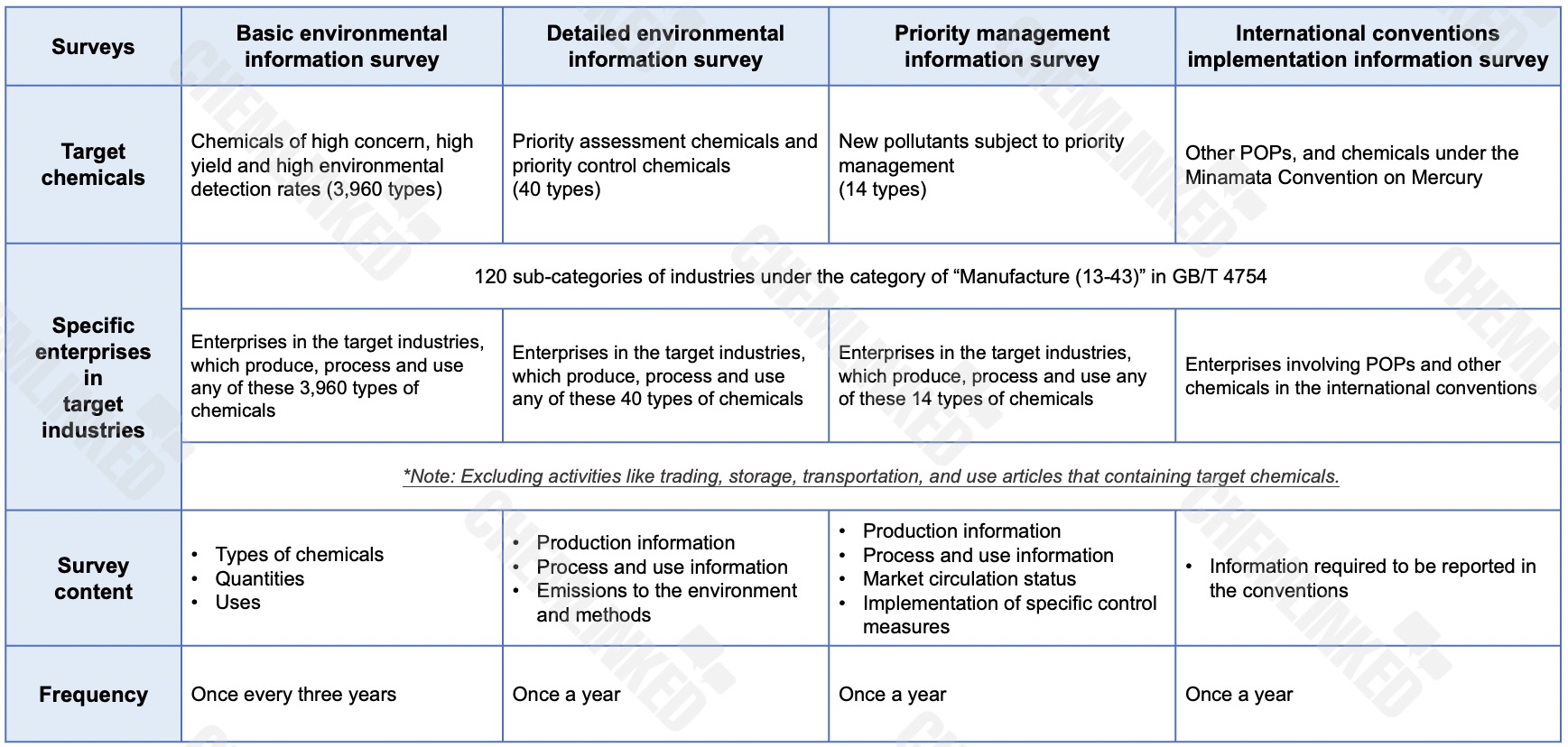 Figure 5 – Survey Requirements
5 Local Implementation
Following the National Plan, all provincial administrative regions of China, such as such as Zhejiang, Tianjin, Jiangsu, Sichuan, etc., have successively released their local work plans for new pollutants treatment to push forward the management of new pollutants based on local situations. Local authorities could carry out the local control policies for the new pollutants in the National List based on the technical feasibility and economic & social impact. That is to say, the control policy for the same type of new pollutants may be different in different provinces or cities, which shall not be less stringent than those prescribed in the National List. In addition, local authorities can develop local list of new pollutants for priority management, with supplementation of more types of new pollutants compared with the National List.
Take Shanghai for example. On January 13, 2023, the Shanghai Municipal Bureau of Ecology and Environment (SMBEE) officially released the Shanghai Work Plan for New Pollutants Treatment, which came into force on February 1, 2023. Most of the content in Shanghai Local Plan is the same with the National Plan, however, there are some localized tasks and targets. More specifically:
Following the Shanghai Local Plan, the SMBEE released the Shanghai List of New Pollutants Subject to Priority Management in early February 2023 based on local conditions. Compared with the National List (including 14 types of new pollutants), the Shanghai List adds 2 more types of new pollutants – ‘microplastics’ and ‘bisphenol A (BPA)’ with the corresponding control measures, as well as some additional local requirements for nonyl phenol and antibiotics (read more).
The Shanghai Local Plan directly points out the target chemicals subject to environmental risk assessment that shall be completed by 2025, including:
Antibiotic;
Perfluorooctane sulfonic acid and its salts and perfluorooctanesulfonyl fluoride (PFOS);
Perfluorooctanoic acid and its salts and related compounds (PFOA);
Perfluorohexylsulfonic acid and its salts and related compounds (PFHxS);
Nonylphenol;
Dichloromethane;
Trichloromethane; and
Bisphenol A, etc.
Shanghai Local Plan emphasizes further assessment of the environmental health risk of bisphenol A in Shanghai's chemical industry park. Strict control shall be carried out for new reconstructions and expansion projects of new pollutants with environmental and health risks in Shanghai.
Shanghai Local Plan requires actions to reduce the ecological and environmental risks of perfluorinated compound emissions, e.g.,
Phase out the purchases of fire-extinguishing foam products containing PFOS-related chemicals; and
Complete the harmless disposal of fire-extinguishing foam products containing PFOS-related chemicals in the existing installations in Shanghai's industrial parks.
In addition, according to the National Plan and some local plans (e.g., Zhejiang, Tianjin, Hainan, etc.), pilot projects for new pollutant treatment will be conducted in selected enterprises and industrial parks in the followings:
Key river basins: Yangtze River, Yellow River, key drinking water sources, key estuaries, key bays, etc.
Key areas: Beijing-Tianjin-Hebei region, Yangtze River Delta, Pearl River Delta, etc.
Key industry sectors: petrochemical industry, rubber, resin, coatings, printing and dyeing, etc.
